Category Archives: Working Women

Working Women

Attractive Appearance Helps Men Gain Business Funding

Laura Huang

Laura Huang

Entrepreneurs create jobs and contribute to economic growth with early investment by financial backers who trust the perceived business proposal’s viability and the founders’ previous experience.

Alison Wood Brooks

Alison Wood Brooks

Additional implicit criteria for new venture-funding include gender and physical attractiveness, asserted Harvard’s Alison Wood Brooks, Laura Huang of Wharton, MIT’s Sarah Wood Kearney and Fiona E. Murray.

Sarah Wood Kearney

Sarah Wood Kearney

Brooks and colleagues enlisted 60 experienced investors to:

  • Evaluate videos of 90 randomly-selected presentations by entrepreneurs at three pitch contests in the US,
  • Comment on presenters’ appearance and effectiveness.
Fiona E. Murray

Fiona E. Murray

Male presenters who were rated more attractive were 36% more likely to receive funding than men judged as less attractive, but there was no difference in funding rates for women based on attractiveness ratings.

In a separate study, investors evaluated identical pitches delivered by a man or a woman, and rated male-narrated pitches as more persuasive, logical and fact-based compared with the same presentation delivered by a woman.

These finding suggest that financial backers favor attractive male entrepreneurs, leaving women entrepreneurs – attractive or not – at a disadvantage in creating new businesses, jobs, and economic growth.

This finding underscores financial backers’ preference for male entrepreneurs’ proposals, based on attractive men’s greater perceived persuasiveness than women or less attractive men.
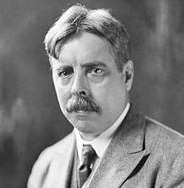
Edward Thorndike

Edward Thorndike

Previous blog posts have noted the “halo effect” of physical attractiveness leading to positive attributions of intelligence, competence, and likeability, originally described by Columbia’s Edward Thorndike.

Woods’ latest findings point to the double advantage enjoyed by attractive men seeking new venture funding.
Aspiring women entrepreneurs, on the other hand, continue to encounter significant unacknowledged disadvantages, not improved by physical attractiveness.

Eleanor Holly Buttner

Eleanor Holly Buttner

However, these findings were not confirmed by University of North Carolina’s E. Holly Buttner and Benson Rosen in their investigation of bank loan officers’ funding decisions.

Loan officers, who typically make funding decisions based on the business plan and interview with the entrepreneur, evaluated a:

  • Business plan or
  • Business plan plus a videotaped interview conducted by a loan officer with a male or female entrepreneur seeking a loan to start a business.
Benson Rosen

Benson Rosen

Bankers rated their likelihood of:

  • Recommending loan approval of the requested amount,
  • Making a counteroffer of a smaller amount, which they specified.

This study found no difference in funding decisions for male entrepreneurs compared with female entrepreneurs presenting the same business case.
In fact, loan officers made larger counteroffers to female entrepreneurs when considering both the business plan and the loan application interview.

Student volunteers’ loan funding decisions were compared with loan professionals, and the younger generation of lay people made larger counteroffers to the male entrepreneur instead of the female when they evaluated both the business plan and the loan interview,
Loan officers, in contrast, made significantly more cautious and conservative funding decisions than student participants.

Buttner and Benson recommended that female entrepreneurs ask to meet with loan officers to present their business proposals because this personal contact resulted in more successful funding of requested loans.

John Becker-Blease

John Becker-Blease

Another source of funding is “angel investors,” and Oregon State University’s John R. Becker-Blease and Jeffrey E. Sohl of University of New Hampshire found no difference in funding for male and female entrepreneurs.
They noted that women seek private investments substantially lower rates than men, but they are equally likely to receive investment.

However, when the “angels” are women, female entrepreneurs are more likely to seek financing and are as likely to receive the requested funding.
Jeffrey Sohl

Jeffrey Sohl

Women entrepreneurs may still face obstacles in starting new ventures,  a barrier shared with less attractive males.

-*How do you mitigate biases based on gender or attractiveness when asking for funding – for a business, initiative, or idea?

RELATED POSTS:

©Kathryn Welds

Self-Stereotypes Still Limit Women’s Performance

A common cultural stereotype in the U.S. is that women perform more poorly than men on quantitative tasks and that Asians perform better than other groups.

Larry Hedges

Larry Hedges

Susan L Forman

Susan L Forman

Test performance data support these perceptions, according to separate findings by Northwestern’s Larry V. Hedges and Amy Nowell, then of University of Chicago, as well as by Susan L. Forman and Lynn Arthur Steen of St. Olaf College.

Lynn Arthur Steen

Lynn Arthur Steen

Asian-American women are susceptible to two conflicting stereotypes regarding quantitative performance.
-*Which stereotype most influences performance?

Margaret Shih

Margaret Shih

UCLA’s Margaret Shih, Todd L. Pittinsky of SUNY, 
and Stanford’s Nalini Ambady activated ethnic identity or gender identity before Asian-American women competed a mathematics test.

Todd Pittinsky

Todd Pittinsky

Volunteers performed better when their Asian ethnic identity was activated, but worse when their gender identity as females was activated, compared with participants who had neither identity activated.

Nalini Ambady

Nalini Ambady

The stereotype threat of gender identity contributed to poorer performance among individuals who could perform better.

Claude Steele

Claude Steele

This effect was demonstrated among African-American students, who were stereotyped to be poor students.
These volunteers underperformed compared with white students in a study by Stanford’s Claude Steele and Joshua Aronson of NYU.

Joshua Aronson

Joshua Aronson

Yale’s Becca Levy demonstrated the same effect by priming elderly participants with a negative stereotype of older people.

Becca Levy

Becca Levy

These volunteers performed more poorly on a memory task in contrast to their superior performance when they were primed with a positive stereotype of aging.

Individuals vulnerable to stereotype threat can mitigate effects by symbolically disconnecting from the self-reputational threat, according to Shen Zhang, then of University of Wisconsin with University of British Columbia’s Toni Schmader and William M. Hall.

Toni Schmader

Toni Schmader

They asked male and female volunteers to complete a math test using their real name or a fictitious name.
Women who used a fictitious name performed significantly better than those who used their actual names, and they reported less self-threat and distraction.

Zhang and team posited that women performed better when they were not part of a group attributed with poorer math performance.

In contrast, male participants performed equivalently when completing the math problems using real and fictitious names, suggesting that stereotype threat is not activated for men during quantitative tasks.

Stereotyping by others and even oneself can undermine task performance, yet consciously refuting the preconception may mitigate these effects.

-* What other approaches do you use to reduce and manage stereotype threat?

Follow-share-like http://www.kathrynwelds.com and @kathrynwelds

RELATED POSTS
:

Twitter  @kathrynwelds
Blog – Kathryn Welds | Curated Research and Commentary  
Google+
LinkedIn Open Group Psychology in Human Resources (Organisational Psychology)
Facebook Notes

©Kathryn Welds

Clothing Influences Thinking and Behavior, not Just Others’ Perceptions

A previous post highlighted the influence of the body on thinking, through “embodied cognition.”

Hajo Adam

Hajo Adam

An extension of this idea is “unclothed cognition,” the impact of clothing on thinking and behavior, according to Rice University’s Hajo Adam and Adam Galinsky of Northwestern University.

Adam and Galinsky considered the symbolic meaning of clothing and wearer’s physical experience by evaluating the impact of wearing a lab coat on participants’ task performance.

Adam Galinsky

Adam Galinsky

Before the experiments, volunteers said in a survey that they associated “attentiveness” and “carefulness” with “a lab coat.”
Next, participants completed a Stroop Test, a task that requires selective attention to differentiate words in incongruent colors (“red” presented in green letters), while wear a lab coat or their street clothes.

Volunteers performed better when they wore a lab coat than when they completed the same tasks while wearing street clothes.

In other experiments, Adam and Galinsky described the lab coat to some participants as a “doctor’s coat” and to others as a  “painter’s coat.”
Volunteers who wore a “doctor’s coatperformed better on sustained attention tasks and were better able to discriminate features in nearly-similar images, than those who wore a  “painter’s coat.” 

Joshua Davis

Joshua Davis

Clothing’s symbolic meaning as visual communication can influence the viewer’s attributions and the wearer’s behavioral alignment with the role suggested by clothing, argued Joshua I. Davis of Barnard College, who studied the effect of BOTOX injections on emotional experience.

Sandra Forsythe

Sandra Forsythe

Clothing’s impact on others’ evaluation of the wearer was further detailed by Sandra Forsythe, now of Auburn University collaborated with University of Tennessee’s Mary F. Drake, and Charles E. Cox.
They videotaped simulated job interviews of women wearing various styles of dress, and found that more than 75 human resources professionals recommended hiring female job applicants who wore more “masculine” attire than those wearing other styles of dress.

Norah Dunbar

Norah Dunbar

Clothing’s influence on the viewers’ impression of others’ credibility was investigated by University of Oklahoma’s Norah E. Dunbar and Chris Segrin of University of Arizona guided by their colleague Judee Burgoon‘s expectancy violation theory.

Chris Segrin

Chris Segrin

Two instructors gave lectures in undergraduate college classes, wearing either expected “appropriate” attire for this role, or wearing unconventionally casual clothing.
The instructors also provided either high interpersonal support or less rewarding interactions.

Judee Burgoon

Judee Burgoon

Dunbar and Segrin found that students were less influenced by unexpected attire when the instructor provided more social rewards.
They suggested that interpersonal demeanor can be even more influential than clothing in determining impressions of credibility and likability.

Similarly, the impact of clothing on judgments of competence and achievement for both students and teachers in Ohio high schools was demonstrated in research by Bowling Green State’s Dorothy Behling with Elizabeth Williams.

Anat Rafaeli

Anat Rafaeli

Clothing’s influence on impression formation and related organizational dynamics is based on attributes, homogeneity and conspicuousness, posited Anat Rafaeli of Technion, and Boston College’s Michael Pratt.

Michael Pratt

Michael Pratt

Clothing has been considered an important influence on others’ perception of the wearer, and Adam and Galinsky’s studies offer evidence that clothing can affect the wearer’s actual task performance.

-*How has clothing changed your workplace behavior and performance?
-*How do others treat you different depending on your attire?

Follow-share-like http://www.kathrynwelds.com and @kathrynwelds

RELATED POSTS:

Twitter  @kathrynwelds
Blog – Kathryn Welds | Curated Research and Commentary  
Google+
LinkedIn Open Group Psychology in Human Resources (Organisational Psychology)
Facebook Notes:

©Kathryn Welds

Managerial Gender Bias in Granting Flex Time, Backlash Against Men Flex-Time Seekers

Managers hold gender biases in granting flex time requests, and most employees inaccurately anticipate managers’ likelihood of approving these proposals, found Yale’s Victoria Brescoll with Jennifer Glass of University of Texas-Austin and Harvard’s Alexandra Sedlovskaya.

Victoria Brescoll

Victoria Brescoll

Men across job levels were more likely than women to receive flex time to pursue career advancement or to address family issues, found their survey of 76 managers.

Jennifer Glass

Jennifer Glass

Men in high-status jobs were more likely receive approval for career development, and men in low-level jobs tended to get flex time for family issues.
Both groups were more likely than women to receive requested work schedule accommodations.

Women in low-status jobs with childcare requirements were among the least likely to receive accommodations from their managers.
In addition, all employees tended to overestimate the likelihood of receiving a flexible work schedule and underestimate “backlash” after the request.

Women in high-status jobs requesting flextime for career advancement were most likely to expect their requests would be granted, yet they had a lower approval rate than men in high-status jobs.
Conversely, these schedule-accommodated men were least likely to believe they would receive flextime for career development reasons, yet they often received approval.

Brescoll suggested that men in high-status positions who are granted flex time to pursue career development achieve more rapid career advancement.
In contrast, women in high-status roles who request flex time for the same purpose may “…be suspected of hiding the true reason for their request, or they may be viewed as less deserving of further training because it’s assumed that they’ll leave their jobs in the future.”

Women in the workplace encounter a “gendered wall of resistance” (schedule accommodation denials due to gender), whereas men face “status-specific resistance” (objections based on reason for flex time request), according to Brescoll.

Employees’ lack of awareness of managerial bias in granting flextime coupled with realistic concern about negative consequences of workplace accommodation requests can lead to lower productivity, unnecessary turnover and persistent social problems like child poverty and lack of upward mobility for low-wage workers.

Laurie Rudman

Laurie Rudman

In fact, volunteers attributed more “feminine” traits (weakness, uncertainty) and fewer “masculine” traits (competitiveness, ambition) to male leave requestors, found Laurie Rudman and Kris Mescher of Rutgers University.

Kris Mescher

Kris Mescher

Rudman and Mescher asked volunteers of both genders and diverse ethnic backgrounds to evaluate fictional vignettes concerning men who requested a 12-week family leave to care for a sick child or an ailing mother.

Participants attributed poor organizational citizenship (“bad worker stigma”) to men who requested family leave and recommended organizational penalties (e.g., demotion, layoff, ineligibility for bonus) for them.

When men were viewed with the “feminine stigma” of “weakness” and other traditionally-feminine characteristics, they were more likely to incur organizational penalties.

Joseph Vandello

Joseph Vandello

Jennifer Bosson

Jennifer Bosson

The impact of these stigmas on men seeking flexible work arrangements was confirmed in related research by University of South Florida’s Joseph Vandello, Vanessa Hettinger, Jennifer  Bosson, and Jasmine Siddiqi.

Their experimental study found that volunteers assigned lower job evaluations, less masculine and more feminine traits to employees who requested flex time than those with traditional work arrangements.

Jasmine Siddiqi

Jasmine Siddiqi

However, evaluators judged requestors as “warmer” and more “moral,” suggesting that flexibility-seeking employees may be more well-liked and judged as a desirable work colleague.

-*How do you counteract implicit biases in approving workplace flexibility arrangements?

RELATED POSTS:

Twitter@kathrynwelds
Blog: – Kathryn Welds | Curated Research and Commentary
Google+
LinkedIn Open Group Psychology in Human Resources (Organisational Psychology)
Facebook Notes:

©Kathryn Welds

Women’s Branding – Impact of Rebranding at Marriage, Divorce

Oscar Wilde

Oscar Wilde

Playwright, esthete, and bon vivant Oscar Wilde anticipated current attention to personal branding in his comment, “Names are everything.”

It is well-known that women who change their names at marriage are more difficult to find and connect to their pre-marriage professional accomplishments.
This is a “Brand Equity Risk,” and may result in reduced “personal brand value.

However, “rebranding” at marriage was prevalent among about 19,000 women who married in 2012, surveyed by TheKnot.com and www.WeddingChannel.com.
A significant majority – 86 percent – changed their birth names to their husband’s surname, with just 14% choosing another option such as:

  • Retaining their original name (<8%),
  • Hyphenating both partners’ last names (6%),
  • Creating a new surname, often from parts of each partner’s name.
Brian Powell

Brian Powell

Just three years before, Indiana University’s  Brian Powell and Laura Hamilton of University of California – Merced, found that that significantly fewer respondents – 71 percent of 815 survey participants – believed a woman should change her name at marriage, and half of those said it should be legally required.

Laura Hamilton

Laura Hamilton

This suggests that there is an increasing sentiment toward rebranding at marriage.

Richard Kopelman

Richard Kopelman

However, Baruch College’s Richard Kopelman, with  Rita Shea-Van Fossen of Ramapo College, Eletherios Paraskevas, Sacred Heart University’s Leanna Lawter, and David Prottas of Adelphi University, reported significantly decreasing incidence of women changing birth names at marriage from the 1990s to the 2000s. 

Claudia Goldin

Claudia Goldin

Likewise, Harvard’s  Claudia Goldin and Maria Shim, found a similar trend in their evaluation of  New York Times‘ marriage announcements, Massachusetts birth records, and Harvard alumni records: Fewer college-educated women kept their birth names in 2004 than in the 1970s and 1980s.

Maria Shim

Maria Shim

They noted that older brides and those who graduated from elite educational institutions were more likely to retain their original names, as were  those with occupations in arts, writing, and media.

Rita Shea-Van Fossen

Rita Shea-Van Fossen

Wayne State University’s Ernest Abel and Michael Kruger echoed Goldin and Shim’s finding that older brides are more likely to retain their original “brand.”

Ernest Abel

Ernest Abel

Women who married between ages 35 and 39 were six times more likely to keep their original names than women who married when they were 20 to 24 years old, reported Abel and Kruger in their analysis of 2575 wedding announcements in the New York Times.
They found that women who married in 2007–2008 were three times more likely to retain their birth names than those married in 1990–1991.

Stephanie Coontz

Stephanie Coontz

Diana Boxer

Diana Boxer

Stephanie Coontz of Evergreen College said that many of the women who changed their names in the 1970s did so as a counterpoint to marital inequality in obtaining credit, renting an apartment, and owning real property.
Other cross-cultural gender-specific identity practices were outlined by University of Florida’s Diana Boxer and Elena Gritsenko’s Women and surnames across cultures: reconstituting identity in marriage.

Education, age, religious affiliation, cultural traditions, and sentiment seem to over-ride typical advice for building a brand:  Repeated exposure to a consistent message over time.
Brand strategists who consider threats to corporate brand value could contribute to post-marriage rebranding decision-making by quantifying the potential long-term financial impact of women’s  nominal changes after marriage and marital dissolution.

-*What are the benefits to personal brand value of keeping or changing original names?

RELATED POSTS:

Twitter:    @kathrynwelds
Blog: – Kathryn Welds | Curated Research and Commentary
Google+:
LinkedIn Open Group Psychology in Human Resources (Organisational Psychology)
Facebook Notes:

©Kathryn Welds

Stigma Contagion When Women Predominate in Groups

Women in Engineering or Information Technology organizations may find themselves the only person using the women’s restroom, one advantage in light of well-documented workplace challenges associated with minority status.
Men face similar challenges when they work in Human Resources, Marketing, or Communications, where more women are employed.

Rosabeth Moss Kanter

Rosabeth Moss Kanter

Vicki Belt

Vicki Belt

Despite potential isolation of experiencing gender minority status, Harvard’s Rosabeth Moss Kanter advised women who wish to advance: ”avoid the Ps: Personnel, Public Relations, Purchasing, to avoid being “pigeonholed in a female ghetto.
This recommendation was validated by Vicki Belt, then of University of Newcastle, and noted that technical women often intentionally avoided female-dominated groups.

Tessa West

Tessa West

In fact, both women and men held implicit biases against women-dominated groups, found Research by NYU’s Tessa West, Madeline Heilman, Lindy Gullett, and Joe Magee with Corinne Moss-Racusin of Yale University.

Madeline Heilman

Madeline Heilman

The team organized five-person groups to perform “a male-typed cooperative task” as quickly as possible.
Groups differed in proportion of women to men:

  • 2 women and 3 men
  • 3 women and 2 men
  • 4 women and 1 man.
Lindy Gullett

Lindy Gullett

Groups with more women performed equally well as the group with more men.

Joe Magee

Joe Magee

However, when the number of women increased in the work groups, participants’ evaluations of  the group’s effectiveness decreased. Similarly, both women and men offered lower ratings participants’ contributions when more women were in the work group.
Both men and women in the same group judged their own team mates more harshly when their groups have a greater proportion of women.

Corinne Moss-Racusin

Corinne Moss-Racusin

Group gender composition also negatively affected team cohesiveness:  After 10 weeks, those who worked in groups with more women said they were less interested in working together again.

West and team suggested that women in work groups may be subject to “stigma-by-association,” when negative evaluations of a stigmatized individual spread to an associated individual.
As a result, men who work with women may be subject to a “contagion effect” and may be perceived as having similar stereotypic strengths and weaknesses.

Carol Kulik

Carol Kulik

Hugh Bainbridge

Hugh Bainbridge

The prevalence of stigma-by-association in the workplace was conceptualized by University of South Australia’s Carol Kulik with Hugh Bainbridge of University of New South Wales and University of Melbourne’s Christina Cregan in a “masculine” performance task.
Women were evaluated as less competent at “masculine” tasks, and this negative evaluation was also assigned all group members through stigma contagion.

Michelle Haynes

Michelle Haynes

NYU’s Heilman extended her work on women’s perceptions of their capabilities in an ingeniously-designed study with Michelle Haynes of the University of Massachusetts, Lowell.

They asked participants to work remotely with another person on tasks traditionally associated with a male role:  Acting as a managing supervisor at an investment company.
Volunteers were paired with male or female “partners,” but each volunteer actually acted alone without a teammate.

When female participants received positive group feedback, they “gave away” credit to men “teammates” unless their contribution was specific and indisputable.
However, women showcased their accomplishments when they worked with female “partners.”
Women systematically undervalued their contributions to group problem-solving when they collaborated on teams with men, but not when they work with other women.

This study demonstrated that women’s expectations and beliefs about their work contexts, themselves, their peers, and organizational superior influence how they construe group feedback on performance.
Women may continue to limit their advancement when they implicitly accept micro-inequities and limiting performance stereotypes.

Anita Wooley Williams

Anita Wooley Williams

An unexpected positive finding about women’s role in work groups emerged from work by Carnegie Mellon University‘s Anita Williams Woolley, with Christopher F. Chabris of Union College, and MIT’s Alexander Pentland, Nada Hashmi, and Thomas W. Malone, who demonstrated that the “collective intelligence” of collaborative group members exceeds the cognitive abilities of individual members.

Christopher Chabris

Christopher Chabris

In fact, the average and maximum intelligence of individual group members did not significantly predict the performance of their groups overall.

Alexander Pentland

Alexander Pentland

This means that a group’s performance is more dependent on interaction behaviors and norms than on individual cognitive capabilities.
These findings support Emotional Intelligence theory’s assertion that self-management and interpersonal behaviors are more important to individual achievement than measured intelligence.

Nada Hashmi

Nada Hashmi

Wooley’s team assigned nearly 700 volunteers to groups ranging between two and five members to work on visual puzzles, negotiations, brainstorming, games and complex rule-based design assignments.
Collective intelligence of each group accounted for only about 40 percent of the variation in performance on this wide range of tasks.

Thomas W. Malone

Thomas W. Malone

The remaining 60% contribution to collective intelligence depends on members’ “social sensitivity“:  Accurately perceiving each other’s emotions, and ability to more equally share conversational turns.
Groups with more women excelled in both capabilities, and the team noted that accurate social perception and conversational turn-taking skills that may be further developed with attention and effort.

-*How can workplace Inclusion and Diversity programs mitigate the impact of stigma-by-association?

RELATED POSTS:

Twitter:    @kathrynwelds
Blog – Kathryn Welds | Curated Research and Commentary 

Google+:
LinkedIn Open Group Psychology in Human Resources (Organisational Psychology)
Facebook Notes:

©Kathryn Welds

How Effective are Strategic Threats, Anger, and Unpredictability in Negotiations?

Most researchers conclude that negotiators who establish a collaborative atmosphere for a “win-win” solution achieve superior results.

Marwan Sinaceur

Marwan Sinaceur

However, Marwan Sinaceur of  INSEAD and Stanford’s Larissa Tiedens investigated the potentially-risky tactic of employing strategic anger in negotiations, and found that anger expressions increase expressers’ advantage and “ability to claim value” when negotiation partners think they have few or poor alternatives.

Larissa Tiedens

Larissa Tiedens

Sinaceur and Tiedens suggested that anger expression communicates toughness, leading most non-angry counterparts to concede more to an angry negotiator.
However, other studies report that people have more negative reactions when women display anger,

-*But what about the impact of “strategic” expressions of anger that aren’t actually felt?

Stephane Cote

Stephane Cote

Ivona Hideg

Ivona Hideg

University of Toronto’s Stéphane Côté collaborated with Ivona Hideg of Wilfrid Laurier University and University of Amsterdam’s Gerben van Kleef to evaluate the impact of surface acting (showing anger that is not truly felt) on the behavior of negotiation counterparts.

They found that disingenuous anger expressions can backfire, leading to intractable, escalating demands, attributed to reduced trust.

Gerben van Kleef

Gerben van Kleef

In contrast, “deep acting” anger that is actually felt, decreased negotiation demands, as demonstrated in Sinaceur and Tiedens’ work.

-*Are threats more effective than expressing anger in eliciting concessions in negotiation?

Christophe Haag

Christophe Haag

Sinaceur and team collaborated with Margaret Neale of Stanford and Emlyon Business School’s Christophe Haag, and reported that threats delivered with “poise,” confidence and self-control trump anger to achieve great concessions.
A potential negotiation “work-around” is expressing inconsistent emotions in negotiations.

Adam Hajo

Adam Hajo

Saraceur teamed with van Kleef with Rice University’s Adam Hajo, and Adam Galinsky of Columbia, and found that negotiators who shifted among angry, happy, and disappointed expressions made recipients feel less control over the outcome, and extracted more concessions from their counterparts.

Adam Galinsky

Adam Galinsky

Emotional inconsistency proved more powerful than expressed anger in  extracting concessions, so women may achieve superior negotiation outcomes with varied, unpredictable emotional expression.

-*How do you use and manage emotional expression in negotiations?

RELATED POSTS:

©Kathryn Welds

Air Time Matters: Speak Up in the First Five Minutes of a Meeting

More than thirty years ago, University of Florida’s Marvin Shaw observed that participation in small group approximates the 80/20 Principle:

Marvin Shaw

Marvin Shaw

In a 5 member team, 2 members make 70% of comments
In a  6 member team, 3 members make 70% of comments
In a  8 member team, 3 members make 67% of comments

Most of the comment contributors were men, and those who speak most are typically viewed as most influential, according to Melissa Thomas-Hunt of University of Virginia.
This suggests that women can be at a disadvantage in groups if they don’t speak up.

Melissa Thomas-Hunt

Melissa Thomas-Hunt

Thomas-Hunt found that women were less influential in small groups even when they possessed specific expertise in survival skills, a stereotypically male endeavor.
Further, women with elite knowledge were judged as less expert by others.

Conversely, men who possessed expertise were more influential than expert women.
Overall group task performance was affected by these dynamics:  Groups with a female expert made less accurate assessments than groups with a male expert, perhaps because females’ expertise was discounted or ignored due to gender-related expectations for specific competencies.

Christopher Karpowitz

Christopher Karpowitz

Women spoke less when there are fewer women in a group, but not when women predominated and decisions were made by majority rule, according to Christopher Karpowitz of Brigham Young University, Princeton University’s Tali Mendelberg and Lee Shaker of Portland State University.

Tali Mendelberg

Tali Mendelberg

They also found that women spoke equally in small groups when there were few women but the decision required unanimous vote.
One implication is that women benefit from building consensus when they are in the minority.

Powerful women who talk more than male counterparts incur backlash from both male and female observers, according to Victoria Brescoll of Yale.

Victoria Brescoll

Victoria Brescoll

In an experimental study, both female and male volunteers read about a female CEO who talked longer than others.  They judged her as significantly less competent and less suitable for leadership than a male CEO who was reported to speak for the same amount of time.

A high-power woman who talked much less than others was judged as equally competent and capable of leading as a high-power man who talked much more than others.
Raters were less generous in their ratings of a high-power male who talked much less than others:  He was judged as equally incompetent and unsuitable for leadership as a high-power female who talked much more than expected.

This suggests that both men and women are punished for behaviors different from gender-role expectations.

Lee Shaker

Lee Shaker

Women’s tendency not to speak up in groups begins well before they enter the workplace, found Harvard’s Catherine Krupnick.
She and her team investigated differences between male and female students’ participation in classroom discussion and the impact of the instructor’s gender on students’ participation.

They reviewed videotapes of 12 women and 12 men instructors, and concluded that male students talked two and a half times longer than female students when the instructor was male and the majority of the students were male — a frequent situation in many educational and work organizations.
On the other hand, female students spoke almost three times longer when instructors were female.

Women students were interrupted more frequently than their male counterparts, most often by other women, and leading them to withdraw from the discussion for the remainder of the class.

Krupnick posited that women’s lower participation in classrooms – and perhaps in other small groups – may be explained by their:

  • Unwillingness to compete against men,
  • Vulnerability to interruption,
  • Unwillingness to interject into men’s and other women’s long uninterrupted statements, known as “discourse runs,”
  • Individual differences in assertiveness, confidence, and speed of formulating responses.
Elizabeth Aries

Elizabeth Aries

Amherst’s Elizabeth Aries noticed that groups composed entirely of women students tended to have a participatory style in which women took turns and spoke for about equal amounts of time throughout the class hour.

In contrast, male groups appeared more contest-like, with extremely uneven amounts of talk per man.
They competed by telling personal anecdotes or raising their voices to establish hierarchies of participation, and this competitive style persisted in mixed-gender groups.

Kathleen Welch-Torres, then of Yale, compared women’s and men’s assertiveness in class discussions at Yale and Brown (mixed-gender institution) with women’s class participation at Wellesley and Smith (single-gender).
She reported that women at both of the mixed-sex institutions were verbally less assertive than men, by using “hedges,” qualifiers and questioning intonations.
However, women at the single-gender institutions Smith and Wellesley were more assertive than women at Yale and Brown and more assertive than men at the coeducational institutions.

Larraine Zappert

Larraine Zappert

Kendyll Stansbury

Kendyll Stansbury

Welch-Torres linked these behaviors to measures of self-esteem and her findings are similar to those of Stanford’s Laraine Zappert and Kendyll Stansbury  who reported that female graduate students held lower self-esteem, less trust in their judgments, and greater fear of making mistakes than male graduate students.

Recommendations to help women move toward fuller participation in small groups from Melissa Thomas-Hunt and Margaret Neale of Stanford include:

Margaret Neale

Margaret Neale

  • Before a meeting:
    • Ask trusted attendees to:
      • Support your ideas during the meeting,
      • Solicit your input in the meeting,
    • Refer to your specific expertise during the meeting,
    • Set a goal for number of contributions in the first five minutes of a meeting.
    • In a meeting:
      • If interrupted: Restate, rephrase and provide specific evidence based on expertise,
      • Showcase  others’ expertise by soliciting their input,
      • Create environment in which  other participants have equal opportunity to participate,
      • Urge members to consider each alternative, rather than disregarding suggestions presented by “lower status” individual.

-*How do you ensure that your expertise is recognized and influential in small group settings?

*What “best practices” do you apply to ensure active participation by women and minority-group members?

RELATED POSTS:

Twitter:    @kathrynwelds
Google+:
Blog: – Kathryn Welds | Curated Research and Commentary
LinkedIn Open Group Psychology in Human Resources (Organisational Psychology)
Facebook Notes:

©Kathryn Welds

Facades of Conformity and Surface Acting: Stress for Women, Minorities

David Wagner

David Wagner

When employees mask their true feelings in work situations, they may engage in “surface acting” — or displaying appropriate, but unfelt facial expressions, verbal interactions, and body language.

Christopher Barnes

Christopher Barnes

Surface acting at work was associated with emotional exhaustion, work-to-family conflict, and insomnia outside of work for more than 70 volunteers in a high stress public service occupation, according to Singapore Management University’s David T. Wagner, Christopher M. Barnes of University of Washington and Brent A. Scott of Michigan State University.

Arlie Hochschild

Arlie Hochschild

Emotional labor” is Arlie Hochshild’s earlier term for “surface acting” in customer service interactions, in which employees present prescribed verbalizations and emotions, even when they are not genuinely felt.

She contrasted “surface acting” with “deep acting” in which the person:

  • Exhibits the emotion actually felt,
  •                              Uses past emotional experiences to elicit real emotion and empathic connection with others, in a form of “organizational method acting.
Christina Maslach

Christina Maslach

Surface acting can lead to occupational “burnout,” characterized by emotional exhaustion and detachment from others and reduced workplace performance, noted University of California Berkeley’s Christina Maslach and Susan Jackson.

In addition, Recipients of “surface acting” usually detect that it’s an inauthentic display, according to University of Tampere Veikko Surakka and Jari K Hietanen of University of Helsinki.

Celeste Brotheridge

Celeste Brotheridge

By contrast, deep acting has been associated with a greater sense of personal accomplishment in research by University of Regina’s Celeste Brotheridge and Alicia Grandey of Penn State.

Patricia Hewlin

Patricia Hewlin

Surface Acting can also take a toll, resulting in generalized stress and reduced quality of life outside of work, according to Georgetown’s Patricia Hewlin, and supported by separate findings by University of Lethbridge’s Karen H. Hunter, Andrew A. Luchak of University of Alberta and Athabasca University’s Kay Devine.

They identified stress-inducing behaviors including:

Even people not performing customer-facing roles may encounter situations in which they must behave in “appropriate” ways inconsistent with their true feelings, and experience similar stress spillover from “surface acting” at work.

-*How do you prevent “burnout” when workplace settings seem to require “surface acting”?

-*In what organizational contexts have you observed “Facades of Conformity” and their consequences?

Follow-share-like www.kathrynwelds.com and @kathrynwelds


RELATED POSTS:

LinkedIn Open GroupPsychology in HR (Organisational Psychology)
Twitter: @kathrynwelds
Google+:
Facebook Notes:
Blog: – Kathryn Welds | Curated Research and Commentary
Google+

©Kathryn Welds

 

When Appearance Matters for Career Development

Linda Jackson

Linda Jackson

Numerous social science studies link perceived attractiveness with perceived competence and likeability, including a meta-analysis by Michigan State University’s Linda JacksonJohn E. Hunter and Carole N. Hodge.
They found that physically attractive people are perceived as more intellectually competent, based on their research on “status generalization” theory and “implicit personality” theory.

Women who wore cosmetics were rated more highly for attractiveness, competence, likability and trustworthiness when viewed for as little as 250 milliseconds.
However, when raters looked at the faces for a longer period of time, ratings for likability and trustworthiness changed based on specific makeup looks even though volunteers accurately distinguished between judgments of facial trustworthiness and attractiveness.

Nancy Etcoff

Cosmetics differentially affected automatic and deliberative judgments, found Massachusetts General Hospital’s Nancy Etcoff and Lauren E. Haley collaborating with Shannon Stock of Dana Farber Cancer Institute and Boston University’s David M. House as well as Sarah A. Vickery of Procter & Gamble.

Sarah Vickery

Sarah Vickery

Attractiveness was significantly related to positive judgments of competence, but had a less systematic effect on perceived social warmth.
Integrating these findings, the team concluded that attractiveness “rivets attention, and impels actions that help ensure the survival of our genes.”

Although most people recognize the bias inherent in assumptions that attractive people are competent and that unattractive people are not, this correlation is important in impression management in the workplace, as well as in the political arena.

-*Where have you seen appearance exert an influence in workplace credibility, decision-making and role advancement?

RELATED POSTS:


©Kathryn Welds