Category Archives: Thinking

Thinking

Developing Executive Self Awareness to Enhance Leadership Impact

Vicki Swisher

Lack of self-awareness among organizational leaders is pervasive and costly, according to Korn Ferry’s Vicky Swisher and Evelyn Orr.
They studied executives using the FYI: For Your Insight assessment tool, based on research from FYI for Insight: 21 Leadership Characteristics for Success and 5 That Will Get You Fired.

Evelyn Orr

Evelyn Orr

Executives’ most significant blind spots were:

• Making tough people calls,
• Demonstrating personal flexibility, adapting approaches to new circumstances.

Similarly,  the top leadership problems were:
• Not inspiring employees, not building talent,
• “Too narrow”, relying on deep expertise without broadening perspective.

Leaders vastly underestimated their effectiveness in “managing up”, suggesting that they focused more on their next promotion, rather than on developing their employees.

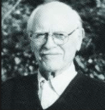
Joe Luft

Joe Luft

Lack of self-awareness can be reduced by using a “Reality Check” including:

o Feedback from others to provide “early warning” of difficulty.
However, this requires that evaluators are willing to provide candid observations, despite widespread discomfort in providing corrective feedback.

o Self-reflection concerning effective and ineffective behaviors, documented in a personal journal for review.

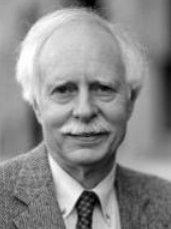
Harry Ingham

Harry Ingham

Executives learned most to enhance leadership skills and self-reflection from on-the-job experiences, distantly followed by learning from other people.
Structured trainings are least effective and most costly approaches to enhance leadership cognitive, emotional, motivational, self-awareness, and learning agility capabilities.

These leadership development processes reduce individual blind spots, portrayed by San Francisco State University’s Joe Luft and Harry Ingham of National Training Labs in The JoHari Windowjohari-window

Korn Ferry’s Michael M. Lombardo and Robert W. Eichinger provided additional executive development recommendations based on research in FYI: For your Improvement, A Development and Coaching Guide(3rd Edition).

-*How do you increase your self-awareness at work and reduce your “blind spots” about yourself and others?

Twitter: @kathrynwelds
Google+:
Facebook Notes

©Kathryn Welds

“Honest Confidence” Enables Performance, Perceived Power

Confidence mobilizes people’s performance and increases others’ perceptions of competence, likeability, and persuasiveness – but may lead to careless errors that undermine performance.

David Dunning

David Dunning

Women and men show significantly different levels of confidence, with cascading effects on performance and participation in specific occupations.

For example women tend to underestimate their performance in scientific reasoning, but actually perform about equally to men, found Cornell’s David Dunning and Washington State University psychologist Joyce Ehrlinger in their investigation of women’s low representation in Science, Technology, Engineering, and Mathematics (STEM) academic programs and work roles.
They concluded that women underestimate their performance, based on lower levels of confidence.

Joyce Ehrlinger

Joyce Ehrlinger

In a related tasks, Dunning and Ehrlinger invited these volunteers to participate in a science competition for prizes.
Women were less likely to accept the invitation than men, also attributed to lower confidence in their capabilities in scientific tasks.
The researchers pointed to low confidence as a source of women’s proportionally lower participation in Science, Technology, Engineering, and Mathematics (STEM) job roles.

Jessica Kennedy

Jessica Kennedy

Confidence – even unjustified confidence – seems to lead  observers to perceive assured individuals as competent, high status leaders, found Wharton’s  Jessica A. Kennedy, Cameron Anderson of University of California at Berkeley, and Don A. Moore.

Cameron Anderson

Cameron Anderson

They asked more than 240 students to estimate their confidence in identifying “historical” names and events, which included real and bogus entries.
Some participants said they could identify items that were actually fake, indicating that they believed – or wanted to convey – they knew more than they actually did.

Don A Moore

T Don A Moore

Then, Kennedy and team asked participants to rate each other based on status in the group.
Volunteers who said they could identify the most fraudulent items were rated as most prominent in the group, suggesting that confidence, even false confidence, contributes to perceived status.
The team suggested that overconfident volunteers genuinely believed their self-assessments, their confidence persuaded their peers of their task skill and commitment to the group’s success.

Ernesto Reuben

Ernesto Reuben

Honest overconfidence,” was also observed by Ernesto Reuben of Columbia, Paola Sapienza of Northwestern University, and University of Chicago’s Luigi Zingales, in their finding that men rated their performance on a set of math problems to be about 30 percent better than it was, whereas women underestimated their performance.

Carol Dweck

Carol Dweck

The power of honest and unjustified confidence may be rooted in childhood socialization patterns, observed Stanford’s Carol Dweck:  Boys’ mistakes are attributed to a lack of effort (whereas)…girls … see mistakes as a reflection of their deeper qualities.”
These different types of feedback lead men to attribute negative outcomes to external factors like unfairly difficult task, but women attribute undesirable results to their personal qualities like low ability.

Confidence is reflected in employees’ willingness to speak in work settings, and those who speak more than others are considered dominant.
However, women who exert authority by speaking more than others, even when they are in senior organizational levels, may alienate others and be seen as less capable.

Victoria Brescoll

Victoria Brescoll

Yale’s Victoria Brescoll found that even senior-level women hesitate to speak as much senior-level men due to anticipated negative reaction from others.

These concerns were validated by Brescolls investigation of men’s and women’s rating of a fictitious female CEO who talked more than other people.
Both women and men evaluated the female CEO as significantly less competent and less suited to leadership than a male CEO who talked for the same amount of time.
However, when the female CEO was described as talking less than others, participants rated her as significantly more competent.

Roger Shepard

Roger Shepard

Similarly, a high-power male who talked much less was evaluated as incompetent and undeserving of leadership, just like the high-power female who spoke more than average.
Brescoll suggested that these reactions are associated with stereotypic gender expectations.
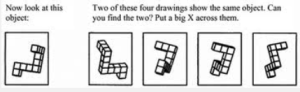
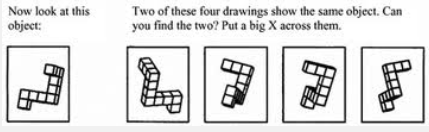
Roger Shepard-Jacqueline MetzlerAs a result, women are unlikely to increase confidence, perceived status and power by speaking and behaving like men because this approach would violate gender stereotype expectations, leading to a “backlash” effect.

Zachary Estes

Zachary Estes

However, when women are “primed” to experience confidence, they performed better on 3D rotation spatial tasks in Roger Shepard and Jacqueline Metzler’s Mental Rotations Test, reported University of Warwick’s Zachary Estes and Sydney Felker, then of University of Georgia Health Center.

In one set of tests, women and men performed similarly when women and men again completed each item and reported their:
Confidence level in their answers,
-Whether they would change their responses if given the opportunity.

Women’s performance dropped below previous scores whereas men’s increased significantly when they elected to change answers.
Second-guessing” and “over-thinking” eroded women’s confidence which affected their scores.

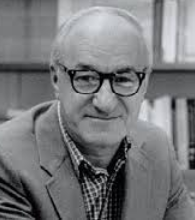
Albert Bandura

Albert Bandura

People who have a strong sense of efficacy focus their attention on analyzing and figuring out solutions to problems, whereas those beset with self-doubts of their efficacy tend to turn their attention inwardly and become self-preoccupied with evaluative concerns when their efforts prove unsuccessful,” explained Stanford’s Albert Bandura and Forest Jourdan.

Robert K Merton

Robert K Merton

However, both men and women significantly improved their scores after they were told that they achieved high scores on the previous test irrespective of actual score.
This finding demonstrates the performance-enhancing effect of positive expectancy, and replicated “The Rosenthal Effect,” or “self-fulfilling prophecy,” described by Robert K. Merton of Columbia.

Jeffrey Vancouver

Jeffrey Vancouver

Confidence may have performance-eroding effects despite much previous research documenting performance-enhancing effects, according to Ohio University’s Jeffrey Vancouver and Charles Thompson, with University of Cincinnati’s E. Casey Tischner, and Dan Putka of Human Resources Research Organization.

Dan Putka

Dan Putka

They primed confidence or “self-efficacy” among half the participants in an analytic game, and found that those who received positive feedback about their performance didn’t perform as well in the next game, and were more likely to make logical errors.

Vancouver and team suggested that participants whose confidence was artificially-inflated tended to apply less mental effort to challenging tasks before attempting the next item.

Fortunately, actual skill trumps inflated confidence.
Women considering technical training and careers may be reassured by Kennedy and team’s observation that, “…Acting capable was beneficial, but actually being capable was better.”

However, these findings suggest that women aspiring to STEM careers are likely to be more effective when they create a “hybrid” style of communication and professional presence, drawing on behaviors that demonstrate confidence, competence, and proactivity without violating gender-linked expectations.

-*How do you capitalize on the performance-enhancing effects of confidence without alienating others or reducing future performance efforts?


RELATED POSTS:

©Kathryn Welds

Perceived Physical Attractiveness Shapes Views of Social Hierarchies

Nielsen Product SpendingCosmetic surgery is the fastest-growing medical expenditure in the U.S, and Americans spend more on personal grooming than on reading material.

Even during the recession of 2008, Americans spent at least $200 billion on products and services to enhance their appearances, according to Stanford’s Margaret Neale and Peter Belmi, now of University of Virginia.

Margaret Neale

Margaret Neale

Personal appearance and attractiveness have been linked with likeability, perceived competence, income and more, and Neale and Belmi found further connections between people’s self-perceived attractiveness and their attitudes toward social inequality and hierarchies.

Attractiveness Bias2The team asked participants to write about a time when they felt more attractive or less attractive, and then indicate whether they agreed with statements such as, “Some groups of people are simply inferior to other groups,” and “Lower wages for women and ethnic minorities simply reflect lower skill and education level.”

The researchers found that people who think they are attractive also think they have greater social standing, and believe that people are entitled to their social position based on their personal (“dispositional”) qualities.

Occupy 99As a result, people who rate themselves as attractive generally feel that people in lower social strata are there due to their characteristics or behaviors.
These beliefs are associated with less willingness to donate money to a social equality non-profit organization (the Occupy movement).

Peter Belmi

Peter Belmi

By contrast, people who thought they were less attractive also thought they belonged to a lower-status social group, and rejected existing social hierarchies.
They attributed unequal social status to external factors often beyond the full control of those in less prestigious social groups. One example is lack of access to quality education.

Unlike self-perceptions of attractiveness, empathy and integrity were not related to people’s views of their social class and others’ place in society.

-*How have you seen appearance affect acceptance or organizational hierarchy and philanthropic giving?

RELATED POSTS:

©Kathryn Welds

“Social Accounts” as Pay Substitutes for Women

Managers’ “social accounts” of beyond their social media log-ins.
Experts in procedural justice broaden definition of “social accounts” to include explanations for decisions and outcomes.

Maura Belliveau

Maura Belliveau

Experienced managers who were permitted to give a rationale for salary decisions – a “social account” – awarded smaller salary increases to women employees but not men, in a study by Long Island University’s Maura A. Belliveau.

Less experienced managers did not use social accounts as substitutes for pay, suggesting that managers’ adherence to procedural justice was affected by age and years of experience.
More experienced managers in this study did not enhance women’ earning power.

Julie Cloutier

Julie Cloutier

In addition to “social accounts,” Julie Cloutier of École des Sciences de la Gestion in Montréal  and Cornell’s Lars Vilhuber found the perceptions of fairness and justice in salary decisions are affected by:

Diverse Teams Analyze Problems More Effectively

When people anticipate working with people similar to themselves, they process information less effectively than when they anticipate collaborating with diverse co-workers.

Denise Lewin Loyd

Denise Lewin Loyd

Volunteers completed a survey about their political attitudes, read a murder mystery, determined the perpetrator, and rated their confidence in their conclusion in a study designed by MIT’s Denise Lewin Loyd, Cynthia S. Wang of Oklahoma State University, Columbia’s Katherine Phillips  and Robert Lount Jr. of Ohio State University.

Participants then wrote a statement about their conclusions before meeting another volunteer who had a different conclusion about the perpetrator to solve the case.

Cynthia Wang

Cynthia Wang

They learned the other person’s political affiliation and opinion about the murder and wrote their statements but were told the experiment was over, without meeting the other person.

Loyd’s team analyzed these preparation statements to determine “elaboration,” a measure of analysis complexity and depth, when people anticipated working with others who have different attitudes.

Katherine Phillips

Katherine Phillips

People who said they were members of any political party wrote less-detailed statements when they anticipated meeting with someone affiliated with the same political party.
In contrast, participants wrote more detailed statements when they anticipated meeting someone of a different political orientation.

Volunteers prepared less carefully when they anticipated working with someone who shared their views.
In contrast, when they expected to work with someone holding different views, they applied greater critical thinking to their problem analyses.

Robert B Lount Jr

Robert B Lount Jr

Some volunteers were instructed before preparing their written case analysis that developing a positive interpersonal relationship with the other person would increase solution accuracy.

Other participants learned that “concentrating on the task rather than the interpersonal relationship was most important way to have a productive meeting.”

People primed to focus on their interpersonal relations wrote less detailed preparation statements, suggesting that analytic rigor was sacrificed for interpersonal harmony.
In addition, when people were primed to focus on the task, they produced more thoroughly considered solutions.

When volunteers actually met to solve the case after writing their statements,
partners with the most accurate solutions came to the meeting with most detailed case analyses.

People in homogeneous groups may prepare less completely if they focus on cultivating interpersonal harmony and avoiding conflict.
In contrast, diverse groups may not attempt to form close social relationships, so are more able to focus on task analysis and solutions.
Diverse teams, then, provide multiple perspectives and greater focus on shared work tasks.

Ron Elsdon

Ron Elsdon

However, other researchers advocate workplace affiliation as a way to engage and retain employees.
Ron Elsdon, formerly of Cambridge University and Air Liquide America, suggested that workplace affiliation leads to organizational value creation, and Gallup’s Marcus Buckingham and Curt Coffman argued that “having a best friend at work” is both important for employee engagement and “one of the most controversial of the 12 traits of highly productive workgroups.”

Marcus Buckingham

Marcus Buckingham

Social relationships among similar people at work may feel good, but may not lead to the most effective or innovative problem analysis.

-*To what extent have you observed homogeneous work groups focusing on maintaining harmony at the expense of rigorous task analysis?

Curt Coffman

Curt Coffman

RELATED POSTS:


Follow-share-like http://www.kathrynwelds.com and @kathrynwelds  

Twitter  @kathrynwelds
Blog – Kathryn Welds | Curated Research and Commentary  
Google+
LinkedIn Open Group Psychology in Human Resources (Organisational Psychology)
Facebook Notes:

©Kathryn Welds

Self-Stereotypes Still Limit Women’s Performance

A common cultural stereotype in the U.S. is that women perform more poorly than men on quantitative tasks and that Asians perform better than other groups.

Larry Hedges

Larry Hedges

Susan L Forman

Susan L Forman

Test performance data support these perceptions, according to separate findings by Northwestern’s Larry V. Hedges and Amy Nowell, then of University of Chicago, as well as by Susan L. Forman and Lynn Arthur Steen of St. Olaf College.

Lynn Arthur Steen

Lynn Arthur Steen

Asian-American women are susceptible to two conflicting stereotypes regarding quantitative performance.
-*Which stereotype most influences performance?

Margaret Shih

Margaret Shih

UCLA’s Margaret Shih, Todd L. Pittinsky of SUNY, 
and Stanford’s Nalini Ambady activated ethnic identity or gender identity before Asian-American women competed a mathematics test.

Todd Pittinsky

Todd Pittinsky

Volunteers performed better when their Asian ethnic identity was activated, but worse when their gender identity as females was activated, compared with participants who had neither identity activated.

Nalini Ambady

Nalini Ambady

The stereotype threat of gender identity contributed to poorer performance among individuals who could perform better.

Claude Steele

Claude Steele

This effect was demonstrated among African-American students, who were stereotyped to be poor students.
These volunteers underperformed compared with white students in a study by Stanford’s Claude Steele and Joshua Aronson of NYU.

Joshua Aronson

Joshua Aronson

Yale’s Becca Levy demonstrated the same effect by priming elderly participants with a negative stereotype of older people.

Becca Levy

Becca Levy

These volunteers performed more poorly on a memory task in contrast to their superior performance when they were primed with a positive stereotype of aging.

Individuals vulnerable to stereotype threat can mitigate effects by symbolically disconnecting from the self-reputational threat, according to Shen Zhang, then of University of Wisconsin with University of British Columbia’s Toni Schmader and William M. Hall.

Toni Schmader

Toni Schmader

They asked male and female volunteers to complete a math test using their real name or a fictitious name.
Women who used a fictitious name performed significantly better than those who used their actual names, and they reported less self-threat and distraction.

Zhang and team posited that women performed better when they were not part of a group attributed with poorer math performance.

In contrast, male participants performed equivalently when completing the math problems using real and fictitious names, suggesting that stereotype threat is not activated for men during quantitative tasks.

Stereotyping by others and even oneself can undermine task performance, yet consciously refuting the preconception may mitigate these effects.

-* What other approaches do you use to reduce and manage stereotype threat?

Follow-share-like http://www.kathrynwelds.com and @kathrynwelds

RELATED POSTS
:

Twitter  @kathrynwelds
Blog – Kathryn Welds | Curated Research and Commentary  
Google+
LinkedIn Open Group Psychology in Human Resources (Organisational Psychology)
Facebook Notes

©Kathryn Welds

Expansive Body Language Decreases Power for Some

Lora E Park Bunting

Lora E Park Bunting

Expansive body postures and feelings of power are related for some cultures, but not all, according to SUNY’s Lora E. Park Bunting and Lindsey Streamer with Li Huang of INSEAD and Columbia’s Adam D. Galinsky.

Lindsey Streamer

Lindsey Streamer

They built on much-cited work by Columbia’s Dana R. Carney and Andy J. Yap, demonstrating the posture-power connection, by evaluating three expansive postures among Americans and East Asians:

  • Hands spread on a desk
  • Upright sitting
  • Feet on a desk
Li Huang

Li Huang

Park and team demonstrated that “embodied emotion” depends on the posture and its symbolic meaning within the prevailing cultural context.

Adam Galinsky

Adam Galinsky

Both Americans and East Asians rated the feet-on-desk pose as least consistent with East Asian cultural norms of modesty, humility, and restraint.
In contrast, when Americans assumed this posture, they experienced greater power activation and action orientation.

This effect was reversed for East Asians when they demonstrated the feet-on-desk pose:  They showed less power activation and action orientation than Americans in this position.

However, when Americans and East Asians assumed hands-spread-on-desk and upright-sitting postures, they reported a greater sense of power than when they held a constricted posture (sitting with hands tucked underneath their thighs).

Albert Mehrabian

Albert Mehrabian

Changes in a person’s mood, emotion, and feelings expressed by changes in body posture was first demonstrated by Albert Mehrabian and John T. Friar of UCLA.

They asked nearly 50 volunteers to sit as they would in addressing another person in a variety of imagined scenarios.

Mehrabian and Friar considered relationships between Communicator attitude and gender as well as Addressee status and gender in relation to eye contact, interpersonal distance, head orientation, shoulder orientation, leg orientation, arm openness, leg openness, and hand, foot, and trunk relaxation.

Positive attitude was demonstrated by a slight backward lean of the torso, close distance, and greater eye contact.
When communicating with “high status” individuals, Communicators provided more eye contact and less sideways leaning.
Female Communicators used a more constrained posture with less arm openness when communicating with “higher status” individuals.

Dana Carney

Dana Carney

Carney and team demonstrated that these postural changes elicit measurable neuroendocrine changes.
When people in the U.S. assumed in high-power nonverbal displays, their  testosterone increased, their cortisol decreased and they reported increased feelings of power and tolerance for risk.

Andy Yap

Andy Yap

University of Florida’s Andrea Kleinsmith, P. Ravindra De Silva at Toyohashi University of Technology and University College London’s Nadia Bianchi-Berthouze demonstrated these cross-cultural differences in perceiving emotion and subjective experience from body posture.

Andrea Kleinsmith

Andrea Kleinsmith

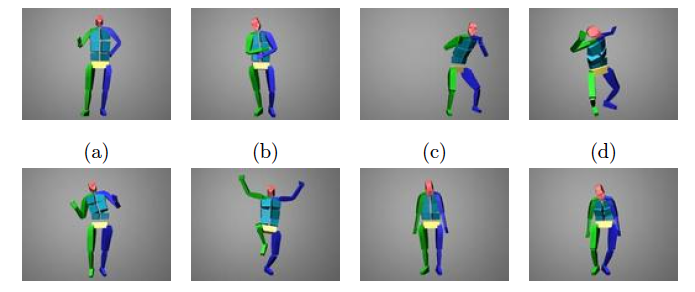
Kleinsmith and team used static posture images of affectively expressive avatars or “embodied agents” to test emotion recognition by volunteers from three cultures. From these findings, they developed cultural models for affective posture recognition.

Andrea Kleinsmith-avatarsThese results suggest both the impact of changing body postures to elicit different feeling states, and caveats when adopting expansive postures to activate power while interacting across cultural groups.

Ravindra De Silva

Ravindra De Silva

Encouragement to “Think Big, Play Big” may require specific recommendations for culturally appropriate action.

-*How do you demonstrate power when interacting with colleagues from different cultural backgrounds?

Nadia Bianchi-Berthouze

Nadia Bianchi-Berthouze

 RELATED POSTS:

Twitter  @kathrynwelds
Blog – Kathryn Welds | Curated Research and Commentary
Google+
LinkedIn Open Group Psychology in Human Resources (Organisational Psychology)
Facebook Notes

©Kathryn Welds

Least Skillful Performers May Have Greatest Illusions of Competence

William Shakespeare

William Shakespeare

The Foole doth thinke he is wise, but the wiseman knowes himselfe to be a Foole,” wrote  William Shakespeare in As You Like It.
Charles Darwin decoded this observation with his update: “Ignorance more frequently begets confidence than does knowledge.”

Charles Darwin

Charles Darwin

Both view are applicable to the workplace and notoriously “clueless” players like Dilbert’s Pointy Haired Boss.

Pointy Haired Boss

Pointy Haired Boss

Incompetent performance often results from ignorance of performance standards in both cognitive skills and physical skills, found Columbia’s David Dunning and Justin Kruger of NYU in a series of experiments.

David Dunning

David Dunning

Volunteers performed humor, grammar, and logic tasks, then viewed their performance scores and again estimated their performance rank.
Competent individuals accurately estimated their rank, whereas incompetent individuals overestimated their ranks despite actual feedback.

Dunning and Kruger posited that incompetent people:

  •          Overestimate their skill levels,
  •          Overlook other people’s skills,
  •          Underestimate their lack of skill in relation to performance standards.
Justin Kruger

Justin Kruger

However, training may reverse this “insight blindness.”
Low-skill individuals in some cases can benefit from corrective feedback and recognize their original lack of skill after they participate in skill training.

The Dunning–Kruger effect describes unskilled individuals’ sense of “illusory superiority,” when they rate their ability as much higher than average although it is actually much lower than average.
In contrast, highly competent individuals miscalibrate other’s performance.

Joyce Ehrlinger

Joyce Ehrlinger

Kerri Johnson

Kerri Johnson

These observations were validated by Washington State University’s Joyce Ehrlinger, Kerri Johnson of UCLA, and Cornell’s Matthew Banner.

People also demonstrate “illusory superiority” when they estimate their ability to identify deception and to infer intentions and emotions (interpersonal sensitivity),  found Columbia’s Daniel R. Ames and Lara K. Kammrath of Wilfrid Laurier University.

Daniel Ames

Daniel Ames

Their results replicated previous findings that most people overestimate their social judgment and mind-reading skills, and showed that people who demonstrate least accurate social judgment and “mind-reading” significantly overestimate their relative competence.

Lara Kamrath

Lara Kamrath

Ames and Kammrath suggested that these inaccurate self-assessments are based “in general narcissistic tendencies toward self-aggrandizement.”

Different tasks elicit differing degrees of the illusory superiority bias, according to University of Michigan’s Katherine A. Burson, Richard P. Larrick of Duke University, University of Chicago’s Joshua Klayman.

Katherine Burson

Katherine Burson

When performing moderately difficult tasks, best and worst performers provided similarly accurate estimates of their skills.
However, when they performed more difficult tasks, best performers provided less accurate skill estimates than worst performers.

Richard Larrick

Richard Larrick

Burson and team proposed that “noise-plus-bias” explains erroneous judgments of personal skill across competence levels.

Dunning and Ehrlinger showed that people’s views of themselves and their skill change when influenced by external cues.
They note that this effect can limit women’s participation in STEM careers (Science, Technology, Engineering, Mathematics).

Joshua Klayman

Joshua Klayman

The team found that women performed equally to men on a science quiz, yet participants underestimated their performance because they assigned low judgments to their general scientific reasoning ability.
This inaccurate underestimate of abilities can dissuade many women from entering STEM careers.

The Dunning–Kruger effect may be culturally limited because one study found that East Asians tend to underestimate their abilities due to norms of humility, and see underachievement as a chance to improve themselves and cooperate with others.

-*How do you mitigate overestimate and underestimates of your skill performance?
-*Where have you seen inaccurate performance estimate affect long-range career achievement?

RELATED POSTS:

©Kathryn Welds

Unrealistic Optimism Drives Profitability

Overconfident decision-making in financial markets led to myriad negative consequences in the past decade, when companies underestimated business risks. 

Gilles Hilary

Gilles Hilary

In contrast to overconfidence, unrealistically optimistic judgments can result in increased profitability and market value, according to INSEAD’s Gilles Hilary and Benjamin Segal with Charles Hsu of Hong Kong University of Science & Technology.

Benjamin Segal

Benjamin Segal

Hilary, Hsu, and Segal demonstrated that over-optimism differs from overconfidence, and may result in larger growth projections.

Charles Hsu

Charles Hsu

The team drew on earlier work by University of Illinois’s Dirk Hackbarth that showed both overconfident, and overoptimistic managers chose higher debt levels and issued more new debt.
Hackbarth did not differentiate over-confident and over-optimistic investment behaviors, and reported that both tendencies reduce manager-shareholder conflict, which can increase firm value.

Dirk Hackbarth

Dirk Hackbarth

Static over-optimism” refers to an unrealistically positive view of the impact of one’s own actions on future outcomes.
In contrast, “dynamic overconfidence” refers to overvaluation of one’s skills and the accuracy of private information.
In addition, “dynamic overconfidence”  is associated with  underestimates of random events after several positive outcomes, according to Hackbarth.

Together, static over-optimism and dynamic overconfidence lead to “dynamic over-optimism” after successes.

Neil Weinstein

Neil Weinstein

The pervasiveness of this “rose-tinted glasses” view leading to over-optimistic assessments was demonstrated by Neil Weinstein of University of Arizona.
He investigated people’s beliefs about future positive and negative health events, discussed in a previous blog post.
Weinstein reported that people tend to believe negative events are less likely to happen to them than to others, whereas they expect they are more likely than other people to experience positive events.

Hilary’s team built on Hackbarth’s concepts by comparing North American companies’ quarterly earnings forecasts with analysts’ predictions and actual performance.
Then, they calculated the number of company-issued press releases containing optimistic language.

Optimistic performance forecasts were correlated with better-than-expected performance, suggesting that successes led to additional effort and positive expectations.

Hilary noted the potentiating effect of past successful performance, though it may lead to “burnout” after about four quarters due to the challenge of continually exceeding performance expectations.

The team noted that this cycle of over-optimism and burnout might be mitigated by instituting policies to moderate overestimates or underestimates future performance by rewarding executives who provide accurate forecasts.

Sheryl Winston Smith

Sheryl Winston Smith

Similarly, Temple’s Sheryl Winston Smith noted that optimistic entrepreneurs chose higher levels of debt financing relative to equity, facilitating patent-based and product-based innovation among nearly 5,000 US firms tracked by the Kauffman Firm Survey (KFS).

Young-Hoon Kim

Young-Hoon Kim

In contrast to these financial studies, Yonsei University’s Young-Hoon Kim, Nanyang Technical University’s Chi-yue Chiu and Zhimin Zou of University of Illinois reported mixed results for self-enhancing (overconfident) and self-effacing (pessimistic) biases on performance

Chiu Chi-Yue

Chiu Chi-Yue

Kim’s team posited that either over-optimistic or pessimistic biases lead to “self-handicapping” behavior, in which people perform under disadvantageous conditions that provide an explanation for any poor performance outcomes.

Although over-optimism may drive innovation and financial results, longer-term consequences may include performance “burnout,” reduced motivation, and lower performance.

-*How to you manage the impact of optimism bias and pessimism bias on judgments and performance?

Please follow-share-like www.kathrynwelds.com and @kathrynwelds

RELATED POSTS:

Twitter:  @kathrynwelds
Blog: – Kathryn Welds | Curated Research and Commentary
Google+ google.com/+KathrynWelds
LinkedIn Open Group Psychology in Human Resources (Organisational Psychology)
Facebook Notes:

©Kathryn Welds
Clothing Influences Thinking and Behavior, not Just Others’ Perceptions

A previous post highlighted the influence of the body on thinking, through “embodied cognition.”

Hajo Adam

Hajo Adam

An extension of this idea is “unclothed cognition,” the impact of clothing on thinking and behavior, according to Rice University’s Hajo Adam and Adam Galinsky of Northwestern University.

Adam and Galinsky considered the symbolic meaning of clothing and wearer’s physical experience by evaluating the impact of wearing a lab coat on participants’ task performance.

Adam Galinsky

Adam Galinsky

Before the experiments, volunteers said in a survey that they associated “attentiveness” and “carefulness” with “a lab coat.”
Next, participants completed a Stroop Test, a task that requires selective attention to differentiate words in incongruent colors (“red” presented in green letters), while wear a lab coat or their street clothes.

Volunteers performed better when they wore a lab coat than when they completed the same tasks while wearing street clothes.

In other experiments, Adam and Galinsky described the lab coat to some participants as a “doctor’s coat” and to others as a  “painter’s coat.”
Volunteers who wore a “doctor’s coatperformed better on sustained attention tasks and were better able to discriminate features in nearly-similar images, than those who wore a  “painter’s coat.” 

Joshua Davis

Joshua Davis

Clothing’s symbolic meaning as visual communication can influence the viewer’s attributions and the wearer’s behavioral alignment with the role suggested by clothing, argued Joshua I. Davis of Barnard College, who studied the effect of BOTOX injections on emotional experience.

Sandra Forsythe

Sandra Forsythe

Clothing’s impact on others’ evaluation of the wearer was further detailed by Sandra Forsythe, now of Auburn University collaborated with University of Tennessee’s Mary F. Drake, and Charles E. Cox.
They videotaped simulated job interviews of women wearing various styles of dress, and found that more than 75 human resources professionals recommended hiring female job applicants who wore more “masculine” attire than those wearing other styles of dress.

Norah Dunbar

Norah Dunbar

Clothing’s influence on the viewers’ impression of others’ credibility was investigated by University of Oklahoma’s Norah E. Dunbar and Chris Segrin of University of Arizona guided by their colleague Judee Burgoon‘s expectancy violation theory.

Chris Segrin

Chris Segrin

Two instructors gave lectures in undergraduate college classes, wearing either expected “appropriate” attire for this role, or wearing unconventionally casual clothing.
The instructors also provided either high interpersonal support or less rewarding interactions.

Judee Burgoon

Judee Burgoon

Dunbar and Segrin found that students were less influenced by unexpected attire when the instructor provided more social rewards.
They suggested that interpersonal demeanor can be even more influential than clothing in determining impressions of credibility and likability.

Similarly, the impact of clothing on judgments of competence and achievement for both students and teachers in Ohio high schools was demonstrated in research by Bowling Green State’s Dorothy Behling with Elizabeth Williams.

Anat Rafaeli

Anat Rafaeli

Clothing’s influence on impression formation and related organizational dynamics is based on attributes, homogeneity and conspicuousness, posited Anat Rafaeli of Technion, and Boston College’s Michael Pratt.

Michael Pratt

Michael Pratt

Clothing has been considered an important influence on others’ perception of the wearer, and Adam and Galinsky’s studies offer evidence that clothing can affect the wearer’s actual task performance.

-*How has clothing changed your workplace behavior and performance?
-*How do others treat you different depending on your attire?

Follow-share-like http://www.kathrynwelds.com and @kathrynwelds

RELATED POSTS:

Twitter  @kathrynwelds
Blog – Kathryn Welds | Curated Research and Commentary  
Google+
LinkedIn Open Group Psychology in Human Resources (Organisational Psychology)

Facebook Notes:

©Kathryn Welds