Category Archives: Thinking

Thinking

Workplace Incivility is Contagious, Damaging

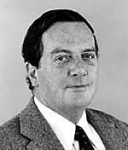
James Bartlett

James Bartlett

Workplace incivility has measurable negative consequences including reduced employee engagement and productivity, according to North Carolina State University’s James E. Bartlett and Michelle E. Bartlett with Florida Atlantic University’s Thomas G. Reio.

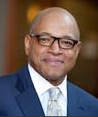
Trevor Foulk

Trevor Foulk

Rudeness in the workplace is contagious and leads people to be vigilant for subsequent slights, reported University of Florida’s Trevor Foulk, Andrew Woolum, and Amir Erez.
They suggested that low-level workplace hostility enables similar behavior throughout the organization, leading to eroded culture and productivity.

Andrew Woolum

Andrew Woolum

Ninety volunteers practiced negotiation with partners, and those who rated their initial negotiation partner as rude were more likely to be rated as rude by a subsequent partner.

Participants seemed to assimilate and convey the first partner’s rudeness.
The effect persisted during the week between the first and second negotiations.

Amir Erez

Amir Erez

Foulk’s team staged interactions between an apologetic late-arriving participant and the study leader, who responded neutrally or rudely.
Then, volunteers completed a timed task to distinguish real words from nonsense words.

Participants who observed the leader’s rude response more quickly identified rude words in a task than participants who had observed the neutral interaction.
Observing rude interactions can “prime” people’s awareness and sensitivity to future uncivil interactions.

Walter Mischel

Walter Mischel

People who witnessed rudeness were more likely to be rude to others, confirming the impact of observing aggression on future behavior, earlier demonstrated in often-cited “Bobo” experiments by Stanford’s Walter Mischel, Dorothea Ross and Sheila Ross.

Mischel's experiment with Bobo doll

Mischel’s experiment with Bobo doll

Foulk’s group also observed this priming effect when volunteers watched a video of a rude workplace interaction, then answered a fictitious customer neutral-toned email.
Participants’ responses were more likely to be hostile than those who viewed a polite interaction before responding.

Rudeness will flavor the way you interpret ambiguous cues,” noted Foulk, who contended that harsh interactions can reduce collaboration and trust in the workplace.

-*How do you stop the spread of workplace incivility?

Related Posts:

©Kathryn Welds

Intrinsic Motives Linked to Achieving Goals

Amy Wrzesniewski

Amy Wrzesniewski

Effort toward a goal may be sustained when the person is intrinsically motivated by personal commitment to a larger purpose than the goal itself.
Goal-seeking activity can also be decreased by tangible external rewards

Xiangyu Cong

Xiangyu Cong

This interaction between internal and external motives was investigated among more than 10,000 people admitted to the United States Military Academy (“West Point”) by Yale’s Amy Wrzesniewski, Xiangyu Cong, Michael Kane, Audrey Omar, and Thomas Kolditz, with Barry Schwartz of Swarthmore.

Michael John Kane

Michael John Kane

Wrzesniewski’s team considered the long-term impact of holding both intrinsic motives (desire to serve and protect citizens) and extrinsic motives (have a respected career) on West Point cadets’:

-Promotion to commissioned officer rank,

-Extending officer service beyond the minimum required period of 5 years,

-Selection for early career promotions.

Audrey Omar

Audrey Omar

Cadets who were intrinsically motivated were more likely to accomplish these goals.
However, those who also reported extrinsic motivation were less likely to achieve these career distinctions.

Richard Koestner

Richard Koestner

A meta-analytic review of nearly 130 experiments by University of Rochester’s Edward Deci and Richard Ryan with Richard Koestner of McGill confirmed the undermining effects of extrinsic rewards from childhood through adulthood.

Mark Lepper

Mark Lepper

People may report less intrinsic motivation when extrinsic rewards are available, a trend called the “over-justification hypothesis”  by Stanford’s Mark Lepper, David Greene, and Richard Nisbett of University of Michigan.

Clark McCauley

Clark McCauley

People typically view their work as being intrinsically or extrinsically motivated depending on whether they see work as a:

Job, mostly extrinsically motivated, 

-Career, some intrinsic and extrinsic motivation, 

-Calling, intrinsically motivated by fulfillment from the work itself.

Volunteers reported greater satisfaction and better performance when they saw their work as a “calling,” according to Wrzesniewski’s work with Schwartz, collaborating with Bryn Mawr’s Clark McCauley and Paul Rozin of Penn.

Paul Rozin

Paul Rozin

These results suggest the value of finding meaning in work rather than focusing on positive consequences of goal achievement.

Thomas Kolditz

Thomas Kolditz

The U.S. Military has employed extrinsic motive appeals in marketing messages to recruit cadets, suggesting that military services provides “money for college,” “career training,” and enables members to “see the world.”

However, extrinsic motives tend to be associated with less career recognition and tenure than those who find meaning in the organization’s mission.

-*How do you increase intrinsic motivation when extrinsic motivation may seem more appealing?

-*What elements make your work “a calling”?

Related Posts:

©Kathryn Welds

Walking Linked to More Creative Solutions than Sitting

Marily Oppezzo

Marily Oppezzo

People who walked instead of sat generated more novel and feasible ideas, reported Santa Clara University’s Marily Oppezzo and Daniel L. Schwartz of Stanford University.

Dan Schwartz

Dan Schwartz

More than 175 volunteers completed well-validated assessments of creative thinking:

Guilford’s Alternate Uses (GAU) for common objects, created by University of Southern California’s J. P. Guilford, to measure of cognitive flexibility and divergent thinking,

JP Guilford

Edward Bowden

Edward Bowden

Compound Remote-Association test (CRA), developed by University of Wisconsin’s Edward Bowden and Mark Beeman of Northwestern to evaluate convergent thinking,

Barron’s Symbolic Equivalence Test (BSE), introduced by Frank Barron of University of California, Santa Cruz to calibrate the number of original insightful analogies generated for complex ideas.

Frank Barron

Oppezzo and Schwartz coded analogies according to a protocol developed by Northwestern’s Dedre Gentner to measure:

  • Appropriateness,
  • Novelty,
  • Quality, determined by:

o   Level of detail,
o   Semantic proximity to the base statement,
o   Relational mapping to the base statement.

Dedre Gentner

Dedre Gentner

Walking was associated with increased divergent creativity on Guilford’s Alternate Uses (GAU) and improved convergent thinking measured by Compound Remote-Association test (CRA).
This trend significantly increased when volunteers walked outside and these participants produced the most novel and highest quality analogies.

Walkers generated an average of 60% more creative ideas than when seated.
People who walked were more talkative, and their greater verbal output was associated with more valid creative ideas.

Marc Berman

Marc Berman

Participants generated more valid creative solutions when they walked first then sat for the next problem-solving session.

John Jonides

John Jonides

These effects may be explained by Attention Restoration Theory (ART), described by University of Michigan’s Marc G. Berman, John Jonides, and Stephen Kaplan as two types of attention:

Involuntary attention, captured by inherently intriguing stimuli,

-Voluntary or directed attention, directed by cognitive-control processes.

Stephen Kaplan

Stephen Kaplan

They suggested that walking in natural environments renews directed attention and improves performances on difficult tasks even when no longer walking.
Even viewing photographs of nature was associated with improved performance on a complex backwards digit-span task.

In contrast, walking in an urban walk requires directed attention to avoid obstacles and dangerous situations, and provides less opportunity to restore directed attention.

Jin Fan

Jin Fan

After volunteers walked, they performed better on attentional function tasks on the Attention Network Test, developed by Jin Fan of Mount Sinai Medical School to evaluate:

-Alerting,

-Orienting,

-Executive attention.

Benefits of walking were not related to mood or weather conditions during four different seasons.

Friedrich Nietzsche

Friedrich Nietzsche

These studies validate Friedrich Nietzsche’s observation that “all truly great thoughts are conceived by walking and walking in a natural setting before generating creative ideas.
Access to walking places in natural settings can enhance cognitive functioning and performance.

-*How effective have you found taking a brief walk outdoors before high-stakes discussions?

RELATED POSTS:

©Kathryn Welds

Organizational Trust vs “Only the Paranoid Survive”

Organizational life can be punctuated by uncertainty, leading to mistrust.

Andy Grove

Andy Grove

Intel’s former Chairman, Andy Grove, explained his success in guiding the company through a critical product flaw, which threatened Intel’s brand value, noting “Only the Paranoid Survive.

Christel Lane

Christel Lane

However, organizational paranoia’s counterpoint, trust, is associated with productivity, creative problem-solving, employee commitment and retention, found University of Cambridge’s Christel Lane and Reinhardt Bachman of University of Surrey.

Reinhard Bachmann

Reinhard Bachmann

Likewise, Alan Fox catalogued negative consequences of suspicion in work settings.
Roderick Kramer of Stanford also confirmed that people in organizations often misconstrue and overvalue suspicions, leading to low collaboration and isolation at work.

Roderick Kramer

Roderick Kramer

He observed that people with fewer resources or less power engage in self-protective behaviors, accompanied by increased hypervigilance, consistent with findings by Princeton’s Susan Fiske.

Susan Fiske

Susan Fiske

These strategies increase the possibility of “paranoid social cognition,” and may lead people to engage in:

-Idiosyncratic interpretations of interactions,

-Sinister attribution error,

-Perception of conspiracy, highlighted by Rutgers’ Ted Goertzel.

Ted Goertzel

Ted Goertzel

To balance “prudent paranoia” with organizational trust, Kramer recommended considering alternate interpretations from people likely to hold different views.

-*How do you balance organizational trust and “prudent paranoia”?

RELATED POSTS
:

©Kathryn Welds

Leader Self-Efficacy Beliefs Determine Impact of Challenging Work Assignments

Stephen Courtright

Stephen Courtright

“High potential” employees often receive “stretch assignments” to expand their organizational knowledge, skills, and contacts.

Amy Colbert

Amy Colbert

Personal leadership self-efficacy (LSE) expectations about ability to deliver successful outcomes determine the actual results, reported Texas A&M’s Stephen H. Courtright, Amy E. Colbert of University of Iowa, and Daejeong Choi of University of Melbourne in their study of more than 150 managers and 600 directors at a Fortune 500 financial services company.

Daejeong Choi

Daejeong Choi

Individuals develop self efficacy, according to Stanford’s Albert Bandura, in response to:

  • Personal accomplishments and mastery,
  • Observing others’ behaviors, experiences, and outcomes,
  • Corrective feedback from others via coaching and mentoring,
  • Mood and physiological factors.

Albert Bandura

Albert Bandura

Bandura proposed that people’s expectations about their personal efficacy determines whether they:

  • Use coping behavior when encountering difficulties,
  • Apply exceptional effort in meeting challenges,
  • Persist for long periods when encountering obstacles.

These behaviors lead to the “virtuous cycle” of increased self-efficacy beliefs.

Laura Paglis Dwyer

Laura Paglis Dwyer

A measure of leadership self-efficacy (LSE), developed by University of Evansville’s Laura L. Paglis Dwyer and Stephen G. Green of Purdue University, evaluates a leader’s skill in:

  • Direction-setting,
  • Gaining followers’ commitment,
  • Overcoming obstacles to change.

Sean Hanna

Sean Hanna

Two additional Leader Self Efficacy characteristics were proposed by United States Military Academy’s Sean T. Hannah with Bruce Avolio, Fred Luthans, and Peter D. Harms of University of Nebraska:

  • Agency,” characterized by intentionally initiating action and exerting positive influence,
  • Confidence.

Jesus Tanguma

Jesus Tanguma

Women demonstrated significantly lower leadership self-efficacy beliefs than men in research by University of Houston’s Michael J. McCormick, Jesús Tanguma
, and Anita Sohn López-Forment.

However, these lower leadership self-efficacy beliefs can be modified with training, coaching, mentoring, and cognitive restructuring practice.

Courtright’s team reinforced that beliefs result from previous experiences can determine future outcomes, suggesting the importance of monitoring and managing these self-efficacy beliefs.

-*How do you maintain robust Leadership Self-Efficacy expectations even after disappointments and setbacks?

RELATED POSTS:

©Kathryn Welds

Laptop Note-Taking leads to “Shallower Cognitive Processing” than Manual Notes

Pam Mueller

Pam Mueller

Taking notes by hand was associated with better factual and conceptual understanding and recall than capturing content on a laptop computer, reported Princeton’s Pam Mueller and Daniel Oppenheimer of UCLA.

Mueller and Oppenheimer differentiated two types of note-taking:

  • G Michael Pressley

    G Michael Pressley

    Nongenerative Note-taking, identified by verbatim copying from dictated content.
    This strategy is associated with “shallow cognitive processing, explained Penn State University’s Peggy Van Meter, Linda Yokoi of University of Maryland, and G Michael Pressley, then of Michigan State University.

Virpi Slotte

Virpi Slotte

More “superficial” information processing is linked to less accurate text comprehension, found University of Helsinki’s Virpi Slotte and Kirsti Lonka.
Shallow processing also is associated with less integrative and conceptual understanding, reported Clemson University’s Brent Igo, Roger Bruning of University of Nebraska, and Victoria University’s Matthew McCrudden.

Kirsti Lonka

Kirsti Lonka

Participants viewed 15-minute TED Talks or recorded lectures.
Meanwhile, volunteers recorded notes on a laptop computer or in handwriting.
Volunteers then completed two 5-minute distracter tasks and a reading span task to assess working memory.

Roger Bruning

Roger Bruning

Thirty minutes after the lecture, participants answered questions about the content:

  • Factual-recall, such as “Approximately how many years ago did the Indus civilization exist?”
  • Conceptual-application, like “How do Japan and Sweden differ in their approaches to equality within their societies?”

Mueller-Oppenheim Question TypesVolunteers who took notes on a laptop were more likely to record verbatim notes and showed poorer performance on factual-recall questions and conceptual-application questions.

Even when participants were told to “take notes in your own words and don’t just write down word-for-word what the speaker is saying,” laptop users recorded more verbatim notes than manual note-takers, and their comprehension performance did not improve.

Matthew McCrudden

Matthew McCrudden


Daniel Oppenheimer

Daniel Oppenheimer

Findings in a similar study confirmed that people who paraphrase content demonstrate greater content comprehension, enabled by  slower processing with manual note-taking.

Taking notes on a laptop computer enables users to transcribe information at higher speeds, and drawbacks include:

  • Shallower information processing,
  • Decreased conceptual understanding,
  • Reduced factual recall,
  • Distraction in multi-tasking on email or social media.

-*How do you maintain increase comprehension and retention when taking notes using a laptop computer?

RELATED POSTS:

©Kathryn Welds

Ethnic Diversity Reduces “Groupthink,” Economic “Bubbles”

Most people are unlikely to trust recommendations and evaluations from people of different ethnic groups.

Sheen Levine

Sheen Levine

However, this bias may reduce the “herd mentality” that characterized price “bubbles” in U.S. housing and global financial markets, reported Columbia’s Sheen S. Levine, Evan P. Apfelbaum of MIT, Goethe University’s Mark Bernard, Texas A&M’s Valerie L. Bartelt, Edward J. Zajac of Northwestern, and University of Warwick’s David Stark.
They concluded that, “Diversity facilitates friction that enhances deliberation and upends conformity.”

Economic “bubbles” occur when the majority of traders set inaccurate prices, probably influenced by a type of  “groupthink.
This cognitive error results in a mismatch between market prices and true asset values.

Irving Janis

Irving Janis

Groupthink can occur when three conditions interact, according to Yale’s Irving Janis:

  • Group Cohesiveness
    • Deindividuation” occurs when group belonging becomes more important than individual dissenting views,
  • Group Structure
    • Homogeneity of group’s social backgrounds and ideology,
    • Group insulation from feedback,
    • Lack of impartial leadership,
    • Lack of norms to conduct systematic analysis and clearly structured decision procedures,
  • Context
    • Stressful external threats,
    • Recent failures,
    • Decision-making difficulties,
    • Moral dilemmas.

      Scott E. Page

A wider range of viewpoints leads to less groupthink and more balanced decisions in a mathematical model developed by University of Michigan’s Scott E. Page and Lu Hong of Loyola University.

Diverse groups ran into fewer “dead ends” when they developed solutions than did groups comprised of individuals who tended to think similarly.

David A. Thomas

David A. Thomas

Likewise, Georgetown’s David A Thomas and Robin J. Ely of Harvard confirmed that identity-diverse groups can outperform homogeneous groups
summarized in a formula:

Collective Accuracy = Average Accuracy + Diversity.

To test the impact of group diversity on market “bubbles,” Levine’s group constructed experimental markets in Singapore and Texas, USA, in which participants traded stocks to earn money.

Evan Apfelbaum

Evan Apfelbaum

More than 175 volunteers with backgrounds in business or finance were randomly-assigned to groups of six ethnically-homogeneous or ethnically- diverse participants.

Traders knew the ethnic composition of their groups, but they couldn’t communicate with each other.
In addition, their “trades” of dividend-paying stock were anonymous.

Homogeneous groups set inflated selling prices, yet traders in those groups bought the stock, resulting in increasing stock prices.

Mark Bernard

Mark Bernard

In contrast, traders in diverse groups refused inflated selling prices, so the stock price fell to approximately the price in an “ideal” market with “rational” traders.

When traders and other decision-makers come from similar ethnic, social, and attitudinal backgrounds, they tend to place undue confidence in others’ opinions, and tend not to subject them to rigorous analysis.

Valerie Bartelt

Valerie Bartelt

As a result, people in homogeneous may be more likely to accept prices and deals that deviate from actual underlying values.
Levine’s group concluded that “homogeneity…imbues people with false confidence in the judgment of coethnics, discouraging them from scrutinizing behavior.”

  • How do you mitigate “groupthink” in organizational decision-making?

RELATED POSTS:

©Kathryn Welds

Comparative Rankings May Reduce Gender Bias in Career Advancement

Iris Bohnet

Iris Bohnet

An “evaluation nudge” is a decision framing aid that may reduce biased judgments in hiring, promotion, and job assignments, according to Harvard’s Iris Bohnet, Alexandra van Geen, and Max H. Bazerman.

Alexandra van Geen

Alexandra van Geen

They recommended that organizations evaluate multiple employees simultaneously rather than each person independently.
This approach differs from “Stack Ranking” (“Rank and Yank”), advocated by GE’s Jack Welch and critiqued by many.

Multiple simultaneous evaluations are frequently used for hiring decisions, but less frequently when considering employee candidates for developmental job assignments and promotions.

Max Bazerman

Max Bazerman

Bazerman and Sally B. White, then of Northwestern with George F. Loewenstein of Carnegie Mellon demonstrated preference reversals between joint and separate evaluation.

George F. Loewenstein

George F. Loewenstein

Lack of comparison information in separate evaluation typically leads people to rely on internal referents as decision norms. These internal criteria may be biased preferences, according to Princeton’s Nobel laureate Daniel Kahneman and Dale T. Miller of Stanford.

Dale T. Miller

Dale T. Miller

Lack of comparative referents also can lead evaluators to rely on easily calibrated attributes, found University of Chicago’s Christopher K. Hsee.
Both of these mental shortcuts can systematically exclude members of under-represented groups.

Christopher K. Hsee

Christopher K. Hsee

Another problem is the “want/should” battle of emotions and preferences, outlined by Bazerman and Ann E. Tenbrunsel of Notre Dame, with Duke’s Kimberly A. Wade-Benzoni in their provocatively titled article, “Negotiating with Yourself and Losing.”

Ann E. Tenbrunsel

Ann E. Tenbrunsel

They argue that the want self” tends to dominate when deciding on a single option because there’s less information and less need to justify the decision.
In contrast, the more analytic “should self” is activated by the need to explain decision rationales.

Kimberly Wade-Benzoni

Kimberly Wade-Benzoni

Bohnet’s team asked more than 175 volunteer “employees” to perform a math task or a verbal task, then 554 “employer” evaluators (44% male, 56% female) received information on “employees’” past performance, gender, and the average past performance for all “employees.”

“Employers” were paid based on their “employees’’” performance in future tasks, similar to managerial incentives in many organizations.
Consequently, “employers” were rewarded for selecting people they considered effective performers.
Based on information about “employee” performance, evaluators decided to:

  • “Hire” the “employees,” or
  • Recommend the “employees” to perform the task in future, or
  • Return “employees” to the pool for random assignment to an employer.

Keith E. Stanovich

Keith E. Stanovich

The Harvard team found that “employers” who evaluated “employees” in relation to each other’s performance were more likely to select employees based on past performance, rather than relying on irrelevant criteria like gender.

Richard F. West

Richard F. West

In contrast, more than 50% of “employers” evaluated each candidate separately without reference to other “employees,” selected under-performing people for advancement.
Only 8% of employers selected under-performers when comparing “employees” to each other, and multiple raters for multiple candidates also tended to select the higher performing “employees.”

Team Bohnet suggested that people have two distinct and situation-specific modes of thinking, “System 1” and “System 2,” illustrated by University of Toronto’s Keith E. Stanovich and Richard F. West of James Mason University.

Keith Stanovich-Richard West System 1- System 2 ThinkingThese cognitive patterns can lead evaluators to select incorrect decision norms, leading to biased outcomes.

Decision tools like the “evaluative nudge” decision-framing can reduce bias in hiring and promotion decisions, leading to a more equitable workplace opportunity across demographic groups.

-*What other evaluation procedures can reduce unconscious bias in performance appraisal and career advancement selection processes?

Related Posts:

©Kathryn Welds

Reframing Non-Comparable Choices to Make Them Simpler, More Satisfying

Life’s most baffling decisions are among non-comparable choices: “apples-to-oranges” comparisons.

Eunice Kim

Eunice Kim

University of Toronto’s Eunice Kim Cho collaborated with Uzma Khan of Stanford and Yale’s Ravi Dhar to investigate whether non-comparable choices may be made easier and more satisfying by changing their “level of representation,” or decision context.

Uzma Khan

Uzma Khan

Cho and team drew on Construal Level Theory (CLT) discussed by NYU’s Yaacov Trope, Nira Liberman of Tel Aviv University and Cheryl Wakslak, now of USC, to differentiate decisions construed as concrete, specific, contextualized, and personal from more abstract, distant options based on future time, remote space, social distance, and hypothetical probability.

Ravi Dhar

Ravi Dhar

Trope and team reported that these differing construals can determine people’s predictions, decisions, and behavior.

Yaacov Trope

Yaacov Trope

Kim’s team offered volunteers a gift card and asked half of the participants to choose between comparable choices (different types of chess sets or different types of consumer electronics).

Nira Liberman

Nira Liberman

The remaining subjects chose between non-comparable options (chess set vs. cheese sampler or consumer electronic device vs. event tickets), and all  participants chose between these options for themselves (specific context) or for an acquaintance (abstract context).

Cheryl Wakslak

Cheryl Wakslak

When people chose for themselves, at the more personal, specific construal level, they found it easier to select between more similar choices, the two chess sets, but not the dissimilar choice of chess set vs. cheese platter.

In contrast, when participants chose a gift for a more socially-distant person, an acquaintance, they found it easier to select between dissimilar items.
Kim and team concluded that it’s easier to make dissimilar choices when the options are represented at a higher level of abstraction to enable “big picture thinking.”

Marketers use this principle to position dissimilar choices more abstractly, like “level of enjoyment” rather than focusing on specific specific product features, to help consumers make decisions more quickly.

Decision-making ease is crucial because it is associated with greater satisfaction with the decision.
When taking a decision is complex and stressful, many people doubt the decision and feel less content.

Jens Forster

Jens Forster

Liberman and Jens Forster, now of University of Amsterdam, demonstrated that complex, non-comparable, or confusing choices are associated with lower decision satisfaction and greater likelihood of choosing the previously rejected option in a subsequent decision.

Individuals can consider more abstract, “big-picture” criteria when deciding between differing options, such as equal expenditures on a a material possession or an experience, to increase ease and speed of decision-making.

The next post considers which type of purchase – material or experiential – most people find more satisfying.

-*How do you make decisions when the choices are not directly comparable?

Please follow-share-like www.kathrynwelds.com and @kathrynwelds

RELATED POSTS:

Twitter:  @kathrynwelds
Blog: – Kathryn Welds | Curated Research and Commentary
Google+
LinkedIn Open Group Psychology in Human Resources (Organisational Psychology)
Facebook Notes:

©Kathryn Welds

Perceived Diversity = “Like Me”

Christopher Bauman

Christopher Bauman

Judgments of “diversity” are rarely completely objective:
People tend to rate a group as “diverse” when it includes members of the evaluator’s race, found University of California, Irvine’s Christopher W. Bauman, Sophie Trawalter of University of Virginia and UCLA’s Miguel M. Unzueta.

Sophie Trawalter

Sophie Trawalter

Almost 1900 volunteers from diverse racial groups rated headshots of a fictional company’s six-person management team for its “ethnically diversity”:

  • Caucasian team” included six white headshots (100% white),
  • Asian team” showed four white and two Asian people (mirroring the 66% majority of white people in the U.S.),
  • Black team” featured four white and two black people (66% white),
  • Asian + Black” team had four white, one black, and one Asian person (66% white).

Miguel Unzueta

Miguel Unzueta

Members of racial minority groups rated leadership groups as “more diverse” when they included members of their own racial group rather than members of other racial minority groups.

Participants rated groups as it “less racially diverse” when they did not include at least one member of their own racial group.
This “in-group representation effect” was stronger for African Americans than for Asian Americans.

In another study, more than 1,000 volunteers read news articles about the prevalence of prejudice, then provided ratings.
They showed no “in-group representation effect,” suggesting that reading about how another minority group suffers from prejudice reduced raters’ self-referential evaluation bias.

These results indicate that people’s expectations affect perceptions of diversity.
Priming awareness and empathy for similar experiences encountered by other groups reduced in-group biases.

Jim Sidanius

Jim Sidanius

African Americans are often judged as experiencing:

Lower social status,

More negative stereotypes,

More discrimination, reported Harvard’s Jim Sidanius and Felicia Pratto of University of Connecticut.

Felicia Pratto

Felicia Pratto

In contrast, Asian Americans tend to be attributed higher status so report less discrimination than other racial minority groups.

Andrea Romero

Andrea Romero

Despite this advantage, Asian Americans have a lower return on their investment in education than Whites, even though they achieve higher levels of education and income than other racial minority groups, reported University of Arizona’s Andrea Romero with Robert Roberts of University of Texas and another group led by UT colleague Myrtle P. Bell with David A. Harrison and Mary E. McLaughlin.

Myrtle P Bell

Myrtle P Bell

Higher levels of “diversity” have been linked to greater:

Valerie Purdie-Vaughns

Valerie Purdie-Vaughns

These findings were confirmed in studies by Columbia’s Valerie Purdie-Vaughns and Ruth Ditlmann, Claude M. Steele of Stanford, University of British Columbia’s Paul G. Davies and Jennifer Randall Crosby of Williams College and separate work by UCLA’s Jaana Juvonen and Sandra Graham with University of California Davis’s Adrienne Nishina 

Jaana Juvonen

Jaana Juvonen

Diversity is “in the eye of the beholder” because a team may appear more diverse to raters when the group’s composition aligns with the observers’ own characteristics.

-*How do you reduce personal in-group biases based on individual expectations and experiences?


RELATED POSTS:

Twitter  @kathrynwelds
Facebook Notes

©Kathryn Welds