Tag Archives: Career Development

Career Development

It’s Mostly Random, So Just Do Something

Several recent books showcase Big Ideas in innovation:

  • Success often has random elements
  • Active experiments and reflective “incubation” are required for effective innovation.

Frans Johansson

Frans Johansson

Frans Johansson argues that most success “comes from things we cannot predict and plan: serendipitous moments, unexpected and spontaneous approaches, unusual combinations, and lucky breaks,” in the form of “click moments”, which can move people and ideas to a new, unexpected direction” in in Click: Seizing Opportunity in an Unpredictable World.

Leonard Mlodinow

Leonard Mlodinow

Johansson, Leonard Mlodinow and Nate Silver (“American statistician, sabermetrician, psephologist”) all demonstrate that events are more random than people typically acknowledge, and Johansson recommends specific actions that individuals and organizations can take to favorably focus this randomness

Nate Silver

Nate Silver

Follow your curiosity:  Capitalize on interests and “passions” to drive creative explorations

  • Use cross-disciplinary, “inter-sectional” thinking to break “associative barriers”
  • Examine surprises and unintended consequences for possible inspiration and re-usable ideas
  • Be aware of opportunities everywhere, requiring a mindful engagement rather than living “automatically”, and explore “all” opportunities
  • Scan for momentum and align to it
  • Choose a less predictable, or more “contrarian” solution
  • Act: Place many “purposeful bets” to try many options, with no expectation or guarantee of “success”
  • Minimize bet size to reduce the impact of loss
  • Take the smallest executable step (measured by time, money, partners)
  • Calculate acceptable loss rather than focusing on return on investment
  • Create “large hooks” to scaffold and leverage creative “borrowing” from existing sources
  • Shift focus from the problem to enable cognitive “incubation” of ideas
  • “Double down” when opportunities are not obvious

Many of these recommendations are more similar to behaviors intended to increase creativity and innovation than to quantitative finesse maneuvers.

For example Johansson’s recommendation to engage in “purposeful bets” draws from Peter Sims’ recommendations to place Little Bets: How Breakthrough Ideas Emerge from Small Discoveries, which are low-risk experiments to discover, develop, and test an idea.

  • Experiment to “fail quickly to learn fast”  – see post on Eddie Obeng
  • “Play”  by establishing a fun environment to cultivate innovation
  • Immerse  by interacting with customers
  • Reorient by make celebrating small wins and undertaking improvement “pivots”
  • Iterate by frequently testing, refining and improving-*How do you detect and optimize opportunities?
    -*How do you manage uncertainty in your career?

See more recommendations to boost innovation and creativity at: How and Who of Innovation  LinkedIn Open Group The Executive Coach

Related posts
Cognitive Biases in Unconscious Automatic Mental Processing, and “Work-Arounds”

Twitter @kathrynwelds
Google+
LinkedIn Open Group-Mindful Leadership:
LinkedIn Open Group – Women in Technology (sponsored by EMC)
Facebook Notes:

Blog: – Kathryn Welds | Curated Research and Commentary

©Kathryn Welds

Trusted Leader Assessment without a 360 Degree Evaluation

Ever wonder how you are perceived by the team? … and don’t have the time or budget for a complete 360 degree assessment?

Mike Figliuolo

Mike Figliuolo

Mike Figliuolo proposes Trusted Leader Assessment without a full 360 degree evaluation in his book, One Piece of Paper: The Simple Approach to Powerful, Personal Leadership

His Trusted Leader Self-Assessment is based on his Leadership Maxims training course, and expands his advocacy for the value of creating, articulating, and fulfilling a personal leadership philosophy.

He asks individuals to consider four areas of personal leadership:

Leading yourself:
What motivates you?
What are your personal rules of conduct?
What do you want the “future you” to stand for? Does your team know what you are passionate about at work?
Does your team know your ultimate professional goal?
Have you ever shared your personal ethical code with your team?
Does your team know your sources of inner strength and motivation?
Do your team members understand your perspective on personal accountability?

Leading thinking:
Where are you taking your team?
How will you innovate to drive change?
Is your team clear on what your most critical performance standards are?
Does your team know your view of the team’s vision and mission?
Does your team know how you like to generate new ideas?
Does your team know your views on how you make decisions?

Leading people:
Is your preferred leadership style clearly understood by your team?
Do your team members feel like you genuinely treat them like individuals?
Does your team feel that you understand the day-to-day reality of each of their jobs?
Do your team members feel like you’re fully committed to their growth and development?

Leading a balanced life:
How do you achieve equilibrium between work and personal obligations?
Does your team know your boundaries between work and life?
Would your team say you do a good job of keeping things in perspective?
Does your team know what you’re passionate about outside of work?

-*Which of Figliuolo’s “Four Questions” enable you to lead yourself and others?

Robert Galford

Robert Galford

The Trusted Leader, Robert M. Galford, Anne Seibold Drapeau

LinkedIn Open Group – Psychology in HR (Organisational Psychology):
Twitter: @kathrynwelds
Google+
Facebook Notes:

Blog: – Kathryn Welds | Curated Research and Commentary   

©Kathryn Welds

Powerful Non-Verbal Behavior May Have More Impact Than a Good Argument

Deborah Gruenfeld

Deborah Gruenfeld

Deborah Gruenfeld is a social psychologist and professor at Stanford Graduate School of Business, who co-directs its Executive Program for Women Leaders.

Her research focuses on power and group behavior, and she notes that power can corrupt without conscious awareness.
She notes that power can disinhibit behavior by reducing concern for the social consequences of one’s actions, and by strengthening the link between personal wishes and acts that fulfill these desires.

Her recent work demonstrates that power leads to an action-orientation, limits the ability to take another’s perspective, and increases the tendency to view others as a “means to an end.”

This talk reviews her research and its practical implications, such as non-verbal behaviors that anyone can adopt to increase the impression of being a powerful individual.

-*How have you seen powerful non-verbal behavior trump the content of an argument?

©Kathryn Welds

Organizational Hierarchies are Easier to Understand, Remember, Manage – Especially those Lead by Men…

Larissa Tiedens

Larissa Tiedens of Stanford’s Graduate School of Business and Emily Zitek of Cornell, assert that “we produce hierarchies to make our lives easier cognitively… (so we) like them more.”

They conducted a series of studies, published in the Journal of Personality and Social Psychology, to investigate organizational structure preferences and their impact on organizational performance. They suggest that organizational design should be determined by organizational objectives rather than allegiance to the ideal of “equality” in all situations.

Emily Zitek

Tiedens and Zitek demonstrated that there was a negative correlation between remembering and liking hierarchies; that is, people didn’t like what they couldn’t easily remember, and they liked what they could remember.

They observed that participants had difficulty understanding and learning symmetric organizational relationships, in which people could give orders to peers and receive orders from these same peers.

Their final experiment determined that participants more quickly memorized hierarchies in which men were at the top, and surmised that male hierarchies are more familiar and expected than other types of social structures.
As with the other experiments, the subjects were more likely to express a preference for the structure they learned the quickest.

Tiedens and Zitek conclude that people generally understand, learn, and like hierarchies more than egalitarian relationships because they are predictable and familiar.
If firms eliminate hierarchies, Tiedens suggests making explicit specific role because “people need a way of organizing information, including information about relationships among people. You need a way to enhance people’s ability to understand what the organization is and how individuals operate within it.”

-*Which organizational hierarchies do you find most memorable? Which are most attractive to you?

LinkedIn Open Group – Psychology in HR (Organisational Psychology)
Twitter: @kathrynwelds
Facebook Notes:
Google+:

Blog: – Kathryn Welds | Curated Research and Commentary

©Kathryn Welds
Google+

Conducting “Due Diligence” by Interviewing the Hiring Manager

Have you ever had the fleeting thought “Did I make a mistake in accepting this role?” after finding that the work, manager, team, culture, expectations were not “as advertised”?

Julie Jansen

Julie Jansen

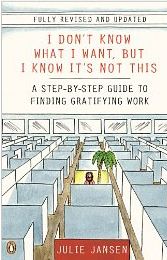
If so, next time you interview for a new role, consider Julie Jansen’s suggested questions to evaluate “fit” with the prospective manager, outlined in her book, I Don’t Know What I Want, But I Know It’s Not This: A Step-by-Step Guide to Finding Gratifying Work

Questions to ask any (and every) Prospective Manager 

  •  What deliverables, accomplishments, behaviors do you expect of the person hired for this role during the first three months?
  • First six months?
  • First year?
  • How will you measure success in this role after a year?
  • What challenges the previous incumbent encounter in the role?
  • What do you see as the role’s current challenges?
  • What are the three top priorities for this role in the next year?
  • How do these priorities align with the organization’s strategy?
  • How can the person selected for this role help you manage your highest-concern challenges?
  • How do you mentor, coach, and develop your direct reports?
  • What was the next career move for the role’s previous incumbent?
  • What did the previous incumbent accomplish in the role?
  • How do you prefer to communicate with your direct reports?
  • How do you prefer to receive information from your direct reports?
  • In person, email, telephone, text message, other?
  • How frequently do team members work remotely?
  • How frequently do you want updates from your direct reports?
  • How do you and your team integrate work and life priorities toward “work-life balance”?
  • How would you describe your work style?
  • Your management style?
  • Your leadership style?
  • Your decision style?
  • How do you manage conflict within the team?
  • With other organizations?
  • What are your three most important values?
  • How do your direct reports describe your management style?
  • What are the characteristics of the best manager you’ve worked with?
  • How are you and your team perceived in the organization?

Questions to ask the prospective manager’s direct reports (peers to target role)

  • What are the manager’s job priorities?
  • How does the manager develop, coach, and mentor direct reports?
  • How frequently does the manager provide feedback?
  • What work and person characteristics does the manager value?
  • How would you describe the manager’s work style?
  • What is the manager’s decision process?
  • How does the manager deal with conflict?
  • To what extent does the manager involve you and your peers in decisions?
  • To what extent does the manager support work-life balance?
  • What are the manager’s strengths?
  • What are the manager’s development areas?
  • What are the manager’s “hot buttons” or “pet peeves”?
  • How does the manager prefer to communicate with you and your team?
  • How does the manager prefer to receive information?
  • How is the manager viewed in the organization?
  • With what roles and organizations are manager allied?
  • Who are the manager’s mentors in the organization?
  • What advice would you give to the person selected for this role to ensure a positive working relationship with the manager?

These queries can’t guard against managers who leave the role a few days after you start, or re-organizations and restructurings that leave you reporting to a new manager in a new role in a new group, but they may provide additional guidance to potential “warning signs” of job mismatch or “misemployment.”

-*What questions have you found most effective in assessing work style “fit” and compatibility with a potential manager?

LinkedIn Open Group Brazen Careerist
Twitter: @kathrynwelds
Google+:
Facebook Notes:
Blog: – Kathryn Welds | Curated Research and Commentary

©Kathryn Welds

Technorati claim token: A44X23VUV3Q6

Women Get More Promotions With “Behavioral Flexibility”

More business promotions were awarded to women who display assertive, confident, and “aggressive” behaviors and who reduce these characteristics depending on the social circumstance through “self-monitoring”, according to Olivia Mandy O’Neill of George Mason University and Charles O’Reilly of Stanford Graduate School of Business.

Olivia Mandy O’Neill

Charles O’Reil

Related research findings discuss “impression management” and “self-monitoring” skills for women to mitigate the impact of subtle factors that impede career advancement.


Twitter: @kathrynwelds
Google+
Facebook Notes: 
 

©Kathryn Welds