Category Archives: Thinking

Cognition

Reduce “Affective Forecasting” Errors

People often make “affective predictions” about choice of life partner, occupation, residence, yet most everyone makes small, but systematic errors in forecasting personal emotional responses.

These misjudgments can negatively affect personal health, happiness, financial well-being, and interpersonal relationships.

Kostadin Kushlev

Kostadin Kushlev

University of British Columbia’s Kostadin Kushlev and Elizabeth Dunn identified these decision biases, and noted that one of the most well-known and widely-occurring affective forecasting errors is impact bias, the tendency to overestimate the intensity of emotional responses to future positive and negative events.

Elizabeth Dunn

Elizabeth Dunn

In addition, Kushlev and Dunn reported that people tend to overestimate the duration of future emotional reactions, labeled durability bias.

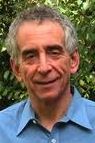
Seymour Epstein

Seymour Epstein

Durability bias (focalism) can occur when people rely on the “rational system” for information processing, according to Seymour Epstein of University of Massachusetts.

His Cognitive-Experiential Self Theory proposes that the “rational system” is used to make affective forecasts using slow, analytic and abstract processing.

Seymour Epstein-CESTIn contrast, the “experiential system” of information processing is rapid, associative, holistic, and concrete.

Shifts between rational (“cold”) and experiential (“hot”) decision systems can cause another bias, “Empathy gap.”

Epstein posits that rational system processing can lead to imagining the event isolated from its broader context, which can underestimate its emotional impact.
This can lead to focus on and overvalue distinctive, observable characteristics. 

Immune neglect is a related error, when people underestimate their likelihood of later reinterpreting future events to reduce regret.

Underestimating the power of future physical states is another predictive error recognised in Alcoholics Anonymous guidance to analyse whether cravings occur when people experience “HALT” (“Hungry, Angry, Lonely, Tired”.)
Personality neglect,” is another error that occurs when people underestimate the influence of personal dispositions and characteristics. 

Roger Buehler

Roger Buehler

Expectations affect future emotions, according to Wilfrid Laurier University’s Roger Buehler, Vassili Spyropoulos and Kent C. H. Lam with Cathy McFarland of Simon Fraser University.  They found that those with positive expectations experience more positive present and future emotions. This optimism bias may provide protection and benefit to each individual’s “psychological immune system.”

Kristin Weger

People can reduce errors in predicting future emotions by evaluating expectations in comparison to actual experience during a “post-mortem” session to review “lessons learned,” found University of Alabama at Huntsville’s Kristin Weger and Sandra Carpenter.

-*How accurate are you in predicting your feelings about a specific choice or situation in the future?

-*How do you detect and mitigate bias in predicting your future emotional reactions?

-*What positive and negative impacts have you observed in affective forecasting errors?


RELATED POSTS:

©Kathryn Welds

Cognitive Value of Handwriting in the Digital Era

-*Is handwriting passé in the Digital Era?
-*Has keyboarding eclipsed pen and paper?

Virginia Berninger

Virginia Berninger

University of Washington’s Virginia Berninger with Robert Abbott, Amy Augsburger, and Noelia Garcia argue that handwriting provides valuable cognitive training, and advantages in expressive speed, fluency, and productivity.

Robert Abbott

Robert Abbott

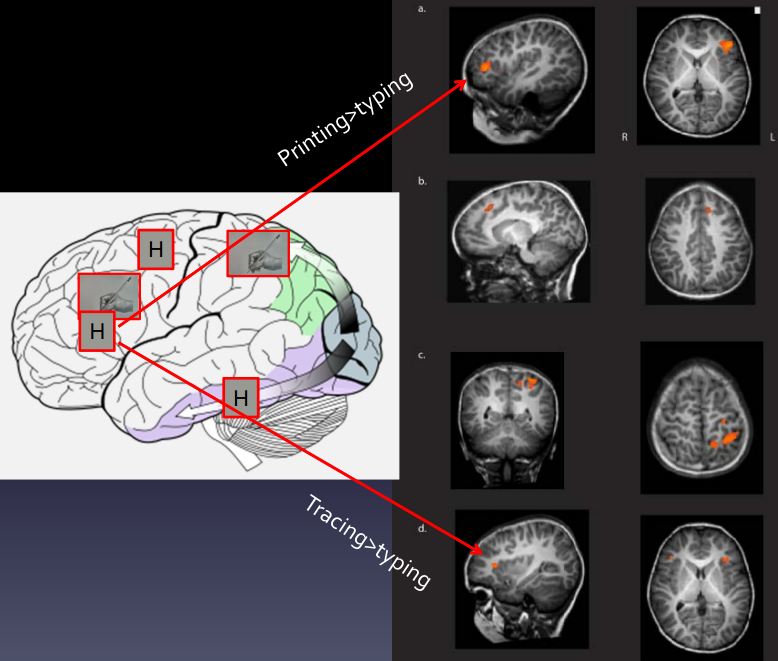
Berninger’s team conducted brain scans and found that the brain’s thinking, language, and “working memory” regions are more activated when handwriting letters than when typing.

This change in brain activation occurs because handwriting letters generally requires more than one sequential stroke, rather than selecting a letter key during typing, according to Berninger.

Berninger’s studies demonstrated students in grades two, four and six wrote more words more quickly and expressed more ideas when writing essays by hand versus with a keyboard.

Karin James

Karin James

Karin Harman James’s research using an fMRI at Indiana University confirms the benefits of handwriting.

Isabel Gauthier

Isabel Gauthier

With Isabel Gauthier of Vanderbilt University, she showed alphabet letters to children before and after they received letter-learning instruction.

Participants who practiced printing by hand showed more enhanced and “adult-like” the neural activity than those who had simply looked at letters.
James suggested that adults may show similar neural activity benefits when learning a new graphically-different language, such as Mandarin, or symbol systems for mathematics, music and chemistry.

Marieke Longcamp

Marieke Longcamp

Université de la Méditerranée’s Marieke Longcamp,  Céline Boucard, Jean-Claude Gilhodes and Jean-Luc Velay  with Jean-Luc Anton, Muriel Roth, and Bruno Nazarian of Hôpital de La Timone, Marseille, France demonstrated other neural benefits of handwriting: Movements memorized when learning how to handwrite enabled adults to more effectively recognize graphic shapes and letters.

Steve Graham

Steve Graham

Steve Graham, now of Arizona State University, with Michael Hebert, now of University of Nebraska, demonstrated that handwriting is still associated with improved classroom performance, even when most classrooms and students type on computers.

Sian Beilock

Sian Beilock

Besides enhancing academic achievement, writing can be a coping tool, according to University of Chicago’s Sian Beilock.
She reported that bright students managed test anxiety by writing about their anxieties to “off-load” them.

Jill Mateo

Jill Mateo

Beilock collaborated with Andrew Mattarella-Micke, Jill Mateo, Neil Albert and Katherine Foster of University of Chicago, and Vanderbilt University’s Marci DeCaro, Robin Thomas of Miami University, and Megan Kozak of Pace University to study students as they derived solutions to challenging math problems.

Robin Thomas

Robin Thomas

The team confirmed that those who performed well on the math problems said that they did not have math anxiety, whereas low performers said they were anxious about math performance.
A less expected finding was that both high performers and low performers had the stress hormone, cortisol, in their saliva.

Although both groups experienced measurable stress, the performance outcome was mediated by the calm or anxious “mindset,” suggesting that performance can be enhanced through managing anxiety and expectations.
Writing by hand helped participants boost performance by reducing anxiety and freeing  working memory to focus on the math problems.

P. Murali Doraiswamy

P. Murali Doraiswamy

Handwriting practice may be valuable for adults as well as children, according to P. Murali Doraiswamy of Duke University, who suggested that handwriting practice may be a useful treatment to stabilize cognitive losses in aging.

 -*How often do you use handwriting and printing instead of typing on a keyboard?

RELATED POSTS:

©Kathryn Welds

Neuronal Recordings Suggest “Free Will” Might be “Free Won’t”

Itzhak Fried

Itzhak Fried

People may think they consciously control their actions and performance, but findings from UCLA’s Itzhak Fried and Roy Mukamel with Gabriel Kreiman of Harvard challenged conventional assumptions about “conscious intention” and “free will. ”

Roy Mukamel

Roy Mukamel

Fried, Mukamel, and Kreiman adopted Benjamin Libet’s procedure to assess “free will” at University of California, San Francisco, using intracranial recordings to identify neuron activity that precedes and predicts volunteers’ decision to move a finger.

Gabriel Kreiman

Gabriel Kreiman

Volunteers, who had electrodes implanted in their brains to record early indicators of seizures, pressed a button when they chose and indicated the clock’s hand position when they decided to press the button.

Libet’s process marks the time a voluntary action occurred, and the volunteer’s report of when the decision to act was completed.
These data points enabled researchers to identify specific neurons that were active during the time around the conscious decision to act and the completed action.

Benjamin Libet

Benjamin Libet

About a quarter of neurons in the frontal lobe’s supplementary motor area (responsible for motor activity coordination) and the anterior cingulate cortex (which directs attention and motivation) changed activity before volunteers said they wanted to press the button.

Spontaneous, voluntary acts were initiated in the cerebrum about 200 milliseconds before the person was consciously aware of the ‘decision’ to act, and researchers predicted with greater than 80 percent accuracy whether a movement had occurred and when the decision to make it happened.

Libet’s team suggested that unconscious brain processes, which are more rapid than conscious decision-making (“free will”), are the instigators of volitional acts.
However, these researchers also proposed that “free will” is more accurately described as “free won’t” because conscious volition can exercise “veto power” over intentions to act.

Kreiman extended this research to better understand loss of voluntary movement in Parkinson’s disease when he pre-empted volunteers’ movements after observing brain activation in the supplementary motor area and the anterior cingulate cortex.
StopHe activated a “stop” sign on a screen in front of each volunteer before the person actually moved, and reported that his volunteers frequently said, ”That was weird. It was like you read my mind.”

Nalini Ambady

Nalini Ambady

These brain studies complement Stanford professor Nalini Ambady’s work at Harvard University on “thin slicing”, or the experience of “knowing before you know.”
Also described as “intuition” or “unconscious cognitive processing,” these findings suggest that the conscious mind is the last to know when we make a decision.

-*How do you manage the discrepancy between unconscious mental processes and conscious awareness of them?

RELATED POSTS:

Twitter:  @kathrynwelds
Blog: |Kathryn Welds |Curated Research and Commentary
Google+:
LinkedIn Open Group Psychology in Human Resources (Organisational Psychology)
Facebook Notes:

©Kathryn Welds

Perseverance Increases Skill Increases Luck: “The Harder I Work, The Luckier I Get”

Samuel Goldwyn

Samuel Goldwyn

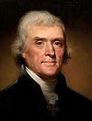
Thomas Jefferson

Thomas Jefferson

Samuel Goldwyn recast Thomas Jefferson’s earlier observation: “I am a great believer in luck, and I find the harder I work, the more I have of it.”

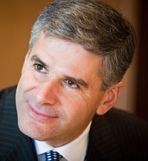
Michael Mauboussin, of Columbia University, and previously Chief Investment Strategist at Legg Mason Capital Management Inc. investigated this relationship between effort and luck in his book, The Success Equation.The Success Equation

Michael Mauboussin

Michael Mauboussin

Mauboussin, an innovator in behavioral finance, adopted Harvard biologist Stephen Jay Gould’s “paradox of skill” to analyze the interaction of effort, skills, and luck, and best strategies to optimize outcomes in investing, sports, and career performance.

Stephen Jay Gould

Stephen Jay Gould

He posits that as skill improves in activities where outcomes are affected by skill and luck, the standard deviation of skills narrows.
In this case, luck becomes more important in determining outcomes:

Whenever you see an outlier in sports, it is always a combination of really good skill and really good luck… (Often) they are about one and a half or two standard deviations away from the average…not all skilled players have (winning) streaks, but all (winning) streaks are held by skillful players.”

For example, as investors become more sophisticated and have access to advanced computational tools, as athletes benefit from targeted training and development regimens, and as students are groomed for admission to top universities, differences among these skilled performers decreases.
Chance influences can determine outcomes.

Mauboussin says that luck has several elements:

  • Affects an individual or organization,
  • May be evaluated as “good” or “bad”
  • Another outcome could have occurred
  • The outcome is uncontrollable, but is comprised of several elements

To increase luck, he advises assessing each contender’s strength in the situation and finding “…something completely different to get you on the right side of the tail of the skill distribution,” such as employing an unusual or unexpected tactic.

The stronger player has positive asymmetric resources, so the effective strategy is to simplify the game.
In contrast the underdog should seek to complicate the game, such as through disruptive innovation, a flank strategy or a guerilla tactic.

Because most people have a bias toward optimism and overestimate personal capabilities, it may be difficult to assess oneself as an “underdog” in a performance situation.

Daniel Kahneman

Daniel Kahneman

Nobel Prize winner Daniel Kahneman and Amos Tversky explained that individuals who adopt an inside view gather substantial information, combine it with their own inputs, then project into the future without considering “distributional information” about a wide variety of previous instances.
This approach risks developing an idiosyncratic, overconfident perspective by underestimating costs, completion times, and risks of planned actions, while overestimating benefits.

Amos Tversky

Amos Tversky

In contrast, people who adopt the outside view consider the problem as an instance of a larger reference class and consider the entire distribution of outcomes when this type of situation occurred previously.
This approach can reduce overconfidence.
However, this approach could discourage entrepreneurs, who will realize that a small percentage actually succeeds.

In addition, besides the bias toward overconfidence, people tend to “under-sample” instances of failure when a previously successful approach is applied in a new situation and doesn’t succeed.

Nate Silver

Nate Silver

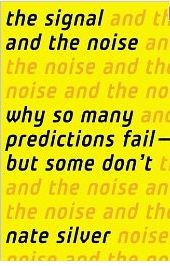
Sabermetricians like Nate Silver, posit that worthwhile statistics provide:

  • Persistence or correlation from one period to the next, a strong indicator of high skill
  • Predictive value or high correlation with the target objective

Nate Silver-The Signal and The NoiseThe Oakland As baseball team uncovered these principles in determining that  a superior measure of athletic performance in this sport is on-base percentage rather than the traditional measure, batting average.

In this case, on-base percentage has a higher correlation from one season to the next and a higher correlation with run production than batting average, fulfilling both criteria.

Daniel Kahneman also suggested that skill, expertise, and intuition render more uniform results in a predictable environment.

Thinking Fast and SlowHowever, many organizational environments are unstable and non-linear, rendering experts less accurate because they cannot employ an effective predictive model.

Collective judgments through “the wisdom of crowds” may mitigate the challenges of unstable contexts because they provide more data points.

Mauboussin advocated considering the continuum of stability vs instability in which the issue is situated to determine strategy and to beware of applying simple heuristics that are vulnerable to bias, and social or situational influences.

He suggested the guideline “think twice” to prepare, detect and correct for common mental traps, including:

  • The Inside-only View
  • Tunnel Vision
  • Oversimplification
  • Situational Power
  • Overvaluing Expert Knowledge

-*How do you optimize your performance when chance elements can affect your outcomes?

Related Posts

©Kathryn Welds

How Sure are You of Your “Memories”? Suggestibility, Insertion, and Construction of Recall

Elizabeth Loftus
Elizabeth Loftus

Experimental psychologist, Elizabeth Loftus investigated memory and its quirks, such as mistaken eyewitness testimony and “repressed memory” of pedophilia in laboratory and naturalistic settings for nearly 40 years.

William Saletan
William Saletan

William Saletan of Slate replicated one of Loftus’s experiments in memory insertion by using digitally-altered photos by developing five images of events that did not actually occur:

  • Sen. Joe Lieberman voting to convict President Clinton at his impeachment trial
  • Vice President Cheney rebuking Sen. John Edwards in their debate for mentioning Cheney’s lesbian daughter
  • President Bush relaxing at his ranch with Roger Clemens during Hurricane Katrina
  • Hillary Clinton using Jeremiah Wright in a 2008 TV ad
  • President Obama shaking hands with Iranian President Mahmoud Ahmadinejad

These images were mixed with photos of actual events:

  • 2000 Presidential election recount in Florida
  • Colin Powell’s prewar assessment of Iraq’s weapons of mass destruction
  • 2005 congressional vote to intervene in the Terri Schiavo’s “right-to-die” case.

Each participant viewed three true incidents and one randomly selected fake incident, and was asked whether the subject remembered each one.
Next, each volunteer was informed that one of the incidents was false and was asked select the fake.

Slate’s results replicated the trend observed by Loftus:  Fewer than half of the volunteers correctly detected fake photos and many “misremembered” fake photos by giving detailed explanations of their recollections of events that did not actually occur and photos that did not exist before the experiment.

Frederic Bartlett
Frederic Bartlett

The findings validate psychologist Frederic Bartlett’s claim wrote almost a century ago at Cambridge University:

Remembering is not the re-excitation of innumerable fixed, lifeless and fragmentary traces.
It is an imaginative reconstruction, or construction, built out of the relation of our attitude towards a whole active mass of organized past reactions or experience.

Rosalind Cartwright
Rosalind Cartwright

More recently, sleep researcher Rosalind Cartwright summarized Bartlett’s point by concluding that “Memory is never a precise duplicate of the original… it is a continuing act of creation,” and artist Austin Kleon translated these concepts into current vernacular:  “you are a mash-up of what you let into your life.”

Austin Kleon
Austin Kleon
Philippa Perry
Philippa Perry

British psychotherapist Philippa Perry points to the logical conclusion from these observations in advising, “Be careful which stories you expose yourself to. … The meanings you find, and the stories you hear, will have an impact on how optimistic you are…

-*How do you monitor the accuracy of your memories?
-*How do you detect “memory mash-ups”?
-*How do you select the experiences from which you form memories?

Related Posts:

©Kathryn Welds

How Well Do Today’s Career Choices Endure Over Time?

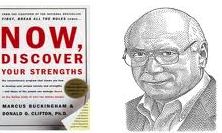
Donald Clifton

Donald Clifton

Career development and job search are founded on uncovering individual skills, competencies, strengths, capabilities, interests and likes.

This discovery can involve introspective “personal archaeology,” often enabled by standardized career and personality assessment tools.

However, social science research suggests that it is difficult to “know” preference – career and otherwise – in order to map this “supply” to the “demand” in available career roles.

Gilbert Ryle

Gilbert Ryle

More than 60 years ago, acclaimed Oxford University philosopher Gilbert Ryle foreshadowed the philosophical and cognitive problems entailed in “knowing one’s own mind.”

Rene Descartes

Rene Descartes

Ryle considered how people acquire attitudes, traits, and their dispositions to act in The Concept of Mind  , an erudite attack on Cartesian dualism of mind and body

Daryl Bem

Daryl Bem

Two decades later, Daryl Bem of Cornell University substituted laboratory research for Ryle’s philosophical reasoning, and demonstrated that people may not know what they like or their skills until they observe their behavior in studies of “self-perception theory.”

Bem found that people draw inferences about who they are and they “become what they do,” particularly when people are not certain of what they think or feel, and when they believe that they freely chose to behave as they did.

Bruce Hood

Bruce Hood

Bruce Hood of University of Bristol expanded the self-perception argument to posit that “the self” is an illusion, so it is difficult to “know” what the “self” likes, values, and prefers.

However, behaviors can be shaped and constrained by external social standards:  People learn to become themselves by interacting with others, according to Charles Horton Cooley, who coined the term “the looking glass self” more than a century ago.

Charles Horton Cooley

Charles Horton Cooley

Therefore, people may choose a career acceptable to parents or social observers who attribute “respect” and “prestige.”

Hood showed that the fluid process of constructing the self is a created narrative which is experienced as “a cohesive, integrated character.”
Since the “self” is constructed, it changes over time, and people significantly and consistently underestimate how much they will change in the future.

This finding has important implications for anyone seeking to distill values, strengths, and preference a job search “elevator speech,” “value proposition,” and “pitch.”

Introspection, therefore, offers limited career insight and guidance: People need to see how they respond, then infer attitudes and preferences for career and other life choices.
This argues for taking exploratory action to “try on” choices, such as in “realistic job previews” found in internships and other on-the-job experiences.

The challenge to career development and decision-making doesn’t end there.
Even if it’s possible to infer preferences from one’s behavior, those inferences are likely to change – a lot – over time.
This means that today’s career may not change in synchrony with one’s personal changes.

Daniel Gilbert

Daniel Gilbert

Daniel T. Gilbert and Jordi Quoidbach of Harvard collaborated with Timothy D. Wilson of the University of Virginia demonstrated this shift in in personalities, values, and preferences over decades of life – and people’s underestimate of these changes – and called it the “end of history illusion.”

Jordi Quoidbach

Jordi Quoidbach

They surveyed more than 19,000 people ages 18 to 68 and found that  young people, middle-aged people, and older people all believed they had changed a lot in the past decade but would change relatively little in the future decade.

Timothy Wilson

Timothy Wilson

The researchers reported that the typical 20-year-old woman participant’s predictions for her next decade were not nearly as radical as the typical 30-year-old woman’s recollection of how much she had changed in her 20s, with this trend holding for volunteers into their 60s.

They found that participants were able to accurately recall personality changes that correlated well expected results, based on independent research charting of personality trait shifts with age.

Gilbert, Quoidbach and Wilson conducted lab studies that found people tend to overpay for future opportunities to indulge their current preferences due to this “end of history” illusion.
This trend may have significant consequences when choices involve potential life partners, long-term financial commitments, and career choices.

These researchers suggest that people underestimate future changes because people may be threatened by the idea that current values and preferences are transitory.
They speculate that such a realization may lead people to doubt many decisions, and experience decision-slowing due to anxiety.

An alternate explanation is that the mental energy required to imagine future changes exceed the effort of recalling the past, so “people may confuse the difficulty of imagining personal change with the unlikelihood of change itself.”

Dan McAdams

Dan McAdams

Dan McAdams of Northwestern University seconded this view and added, “The end-of-history effect may represent a failure in personal imagination,” based on his observations of how people construct stories about their past and future lives in Identity and Story: Creating Self in Narrative (The Narrative Study of Lives).
He noticed that many people tell complex, dynamic stories about the past but then make vague, prosaic projections of a future similar to the present.

These findings suggest that introspection and standardized assessment instruments may have more value when coupled with observing one’s actual behavior and reflected impressions from others.

Additionally, it is wise to:

  • Anticipate the value of changing, expanding, or modifying one’s job role over time
  • Develop a wide array of transferrable skills, applicable across a variety of domains to increase the breadth of options for later preferences.
  • How do you uncover or infer your career strengths and preferences?
  • How do you monitor a possible “end of history” illusion when making career plans?

Related Posts

©Kathryn Welds

Beware of Seeking, Acting on Advice When Anxious, Sad

Just as wise grandmothers advise, it’s best to avoid decisions when upset, anxious, or sad.

Maurice Schweitzer

Maurice Schweitzer

Maurice Schweitzer and Alison Wood Brooks of Wharton validated Grandmother Wisdom in eight experiments that demonstrated anxiety’s impact on lowering self-confidence, impairing information processing, and impeding ability to distinguish advice from neutral advisors and those with a conflict of interest.

Alison Wood Brooks

Alison Wood Brooks

They found that people experiencing anxiety tend to seek advice and act on it, but they are less able to differentiate poor advice from valid recommendations, and these results are applicable to making decisions about crucial medical treatment, financial investments, or even guidance counseling.

The team evoked anxious feeling among volunteers by presenting potentially frightening film clips and music, and asked them to judge a person’s weight based on a photograph or number of coins in a jar or solve a complex math problem.

Participants were offered money for correct judgments, and the opportunity to receive advice from others when they were uncertain.
Those who heard the scary music or saw the alarming film clip rated themselves as less confident of their decision, and were more likely to ask others for advice.
These effects were not observed when volunteers were shown a film clip that could provoke anger.

Schweitzer and Brooks concluded that people vary in their receptivity to advice based on:

  • Advisor’s characteristics, such as expertise, consistent with Cialdini’s observation

    Robert Cialdini

    Robert Cialdini

  • Perceived difficulty of the decision
  • Decision maker’s emotional state when receiving advice

The researchers advised decision-makers to:

  • Monitor their internal states for anxiety
  • Use feedback from multiple sources when making important decisions
  • Work toward developing increased self-confidence
  • Evoke calm state, often possible with systematic breathing or mindful attention and equanimity

Catherine Hartley

Catherine Hartley

Catherine Hartley, then of New York University and Elizabeth Phelps of New York University contributed to the neuroeconomic analysis of anxiety’s impact on decision- making when they reported that brain structures responsible for regulating fear and anxiety are also involved in economic decision-making under uncertain conditions.

Elizabeth Phelps

Elizabeth Phelps

Specifically, the amygdala is crucial in learning, experiencing, and regulating both fear and anxiety and it is also implicated in decision-making in situations of potential loss.
The prefrontal cortex is specialized in controlling fear and is also involved in decisions containing risk elements.

Hartley and Phelps suggest that techniques for altering fear and anxiety may also improve economic decisions-making.

Rajagopal Raganathan

Rajagopal Raganathan

Rajagopal Raghunathan, then of New York University and Michel Tuan Pham of Columbia University demonstrated the same connection between anxiety and making decisions about gambling and job selection.

Michel Tuan Pham

Michel Tuan Pham

They conducted three experiments and found that sad individuals select high risk / high-reward gambling and job options, whereas anxious individuals are biased in favor of low-risk / low-reward options.

Raghunathan and Pham posit that anxiety tends to motivate people to reduce uncertainty whereas sadness moves people to replace rewards.
They suggest suggesting two different decision biases related to mood states.

Raghunathan and Pham add to Schweitzer and Brooks’s recommendations for mitigating decision bias:

  • “Monitor feelings”
  • Consider alternate options
  • Speculate on future moods and preferences if each option were selected: “What would I feel better about . . .?

-*How do you mitigate the potential decision bias when anxious or sad?

Related posts:
Memorable Business Stories: Ideas and Numbers
Business Influence as “Enchantment”

  • ©Kathryn Welds

Reduce Evaluator Bias: Showcase Best Features in Any Offer

Less can be more when designing offers, whether when offering services in job applications, crafting sales offers, or positioning for advantage in any negotiation.

Kimberlee Weaver

Kimberlee Weaver

Kimberlee Weaver of Virginia Tech and University of Michigan’s Stephen Garcia and Norbert Schwarz showed that more is not better in augmenting offers when additional elements are of lower quality.

Stephen Garcia

Stephen Garcia

Using the Presenter’s Paradox in a series of studies, they showed that positive impressions can be reduced when they are presented in the company of lower value items.

Norbert Schwartz

Norbert Schwartz

Weaver, Garcia and Schwarz offered volunteer “buyers” different iPod Touch packages: iPod and cover OR this package with a free music download.

“Buyers”, on average, offered to pay more for the lesser package, and sellers inaccurately expected that buyers would prefer the fully-featured package.
This suggests that expectations about consumer preferences may be poor predictors of people’s actual selection and purchasing behaviors.

The average price offered for the basic package, iPod and cover was $242, but the package with one free song download averaged just $177.
The additional feature reduced package’s perceived value by more than 25%.

Those designing and evaluating offers can mitigate the impact of this judgment bias by considering the value of the overall offering, then eliminating lower-value components that might reduce the comprehensive value.

This is relevant to job seekers who might be tempted to “pad” a resume with low-value activities, accomplishments and skills.
Weaver, Schwartz, and Garcia’s findings suggest that showcasing most compelling capabilities provides a more power presentations of personal and product attributes.

Santa Clara University’s Jerry Burger might argue that “more might be more” when he found that Steve Jobs’s “that’s-not-all” (TNA) technique was more effective than the much-researched “door-in-the-face” (DITF) approach in gaining agreement to sales propositions.

Jerry Burger

Jerry Burger

That’s-not-all” offers a product at a high price, then doesn’t allowing the volunteer to respond immediately.
The procedure follows up by augmenting the offer with another product or lowering the price.

Burger found “that’s-not-all” produced superior simulated sales outcomes to the much-researched “door-in-the face” (DITF) approach, which presents an unreasonably high offer, then follows with a more acceptable proposal.

Numerous replications of “door-in-the-face” have shown than people are more likely to agree to a second more modest request after an unreasonable high first proposal.
Even when the same offer is presented as a single offer, people are significantly more likely to accept it when it’s presented after an unreasonable proposal.

Burger suggested that “that’s-not-all” may have produced greater compliance because people felt obliged to respond to a new offer through an implicit norm of reciprocity,  and because the augmented offer changed the perceived anchor point that volunteers used to evaluate the offer.

-*How do you mitigate bias in evaluating offers?
-*How do you design the most attractive offer when offering something for sale?
-*Which technique for designing offers has been most persuasive to you as a purchaser?

Related Posts
:

Twitter:    @kathrynwelds
Google+:
Blog: – Kathryn Welds | Curated Research and Commentary  
LinkedIn Open Group
Facebook Notes:

©Kathryn Welds

Useful Fiction: Optimism Bias of Positive Illusions

Tali Sharot

Tali Sharot

Tali Sharot of University College London investigated people’s tendency toward unsubstantiated optimism after she observed this bias in her neuropsychological experiments on memory processes of envisioning future events and consequences.

Shelley Taylor

Shelley Taylor

She, like Shelley Taylor of UCLA decades before, argued that this bias was an evolutionary adaptation that enabled people to survive under difficult conditions.  Sharot added to Taylor’s work by suggesting that a majority of people demonstrate the optimism bias by a margin of 5:3.3.

The Optimism BiasSharot’s The Optimism Bias: A Tour of the Irrationally Positive Brain
compares optimism bias to other perceptual illusions, such as sometimes-fatal spatial disorientation among airplane pilots and other frequently-cited optical illusions like “Young Lady or Old Woman”, “Vase or Two Profiles”, and Thatcher illusion.

An example of optimism bias is the well-documented “superiority illusion”, that most people rate their skills, knowledge, and tendencies as above average in a variety of dimensions.

Ellen Langer

Ellen Langer

Another example was identified in 1975 by Ellen Langer of Harvard, who suggested that a pervasive “illusion of control” causes most people to overestimate their ability to control events, even those over which they have no influence.
This cognitive bias has been suggested as prevalent among “problem gamblers” and those who believe in paranormal phenomena.

Elizabeth Phelps

Elizabeth Phelps

Sharot and Elizabeth Phelps of New York University extended Taylor’s early work with neuropsychological research, and reported that the brain’s frontal cortex communication with the posterior hippocampus enables people to envision future possibilities and events.

They observed amygdala and the rostral anterior cingulate cortex activity when people demonstrate the optimism bias and noted that malfunctions in these brain areas are associated with a bias toward pessimism and related depression.

Lauren Alloy

Lauren Alloy

These findings were foreshadowed by Lauren Alloy of Temple University and Lyn Abramson of University of Wisconsin in their 1979 study, which found that people with depression are better able to predict future events accurately, whereas people not burdened with depression have inaccurately optimistic predictions.

Lyn Abramson

Lyn Abramson

“Depressive realism,” just as optimism bias can actually influence or alter future outcomes, as demonstrated in Robert Rosenthal’s classic Pygmalion in the Classroom study and “self-fulfilling prophecy,” leading to the idea that “perception is reality.”

Robert Rosenthal

Robert Rosenthal

Though inaccurate, optimism bias has positive effects. It has been observed to:

  • Reduce perceived stress
  • Improve physical health
  • Increase life span
  • Increase likelihood of people following recommended health practices like exercising, following low-fat diets, taking vitamins.

Sharot suggested that increasing awareness of optimism bias can help people enjoy the benefits of this positive illusion while watching for pitfalls of unrealistic optimism.

-*How do you capitalize on the optimism bias and mitigate its drawbacks?

Related Post:
Oxytocin Receptor Gene’s Link to Optimism, Self-Esteem, Coping with Stress

Sharot’s TED Talk

©Kathryn Welds