Category Archives: Resilience

Resilience

Results-Only Work Environments, Productivity, and Employee Engagement

Cali Ressler-Jody Thompson
Cali Ressler-Jody Thompson

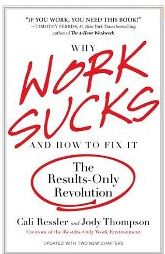
Why Work SucksJody Thompson and Cali Ressler proposed compensating employees based on outputs, rather than elapsed time, in a “Results-Only Work Environments (ROWE)” policy.

This management strategy evaluated “performance, not presence” practices at Best Buy and has been implemented at another large retailer, Gap.
Is this is a return to a “piece-work” approach of decades ago?
Or is it a performance management practice that emphasizes achieving targeted results?
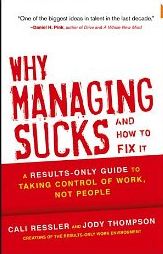
Why Managing SucksROWE  is being considered at such tech giants as Cisco Systems, in direct contrast to Yahoo’s recent call for employees to be present in offices.
The underlying goal of Yahoo’s “presentism” policy may be to increase innovative performance outputs, although the explanation provided to employees emphasized presence as a prerequisite for effective collaboration.

Widespread negative reaction to Yahoo’s on-site work policy, based on complaints that the policy:

  • Conveys lack of trust in employees
  • Undermines opportunities to manage complex work-life responsibilities
  • Places emphasis on “face time” rather than results
  • Leads to employee resentment and disengagement.
Erin Kelly

Erin Kelly

In contrast, University of Minnesota sociologists Erin Kelly and Phyllis Moen with University of Delaware’s Eric Tranby documented the positive impact of ROWE practices in their survey of more than 600 Best Buy employees before and after the program was implemented.

Phyllis Moen

Phyllis Moen

The researchers found turnover was reduced by 45 percent after they controlled for gender, job level, organizational tenure, job satisfaction, income adequacy, job security and turnover intentions.

Participants reported reduced stress and improved work-home interfaces by increasing employees’ schedule control, and reduced the “opting out” of the workforce due to personal commitments for both men and women.

Eric Tranby

Eric Tranby

Kelly, Moen, and Tranby opine that ROWE “moves us away from the “time cages” developed around the work day…ROWE challenges these taken-for-granted clockworks…our mantra is ‘change the workplace, not the worker’.

Rachelle Hill, also of University of Minnesota collaborated with Moen and Kelly in a related study that documented ROWE moderated turnover effects of negative home-to-work spillover, personal troubles, and physical symptoms.

-*What impacts – positive and negative – have you seen in “Performance, not Presence” workplace policies like ROWE?

RELATED POST

©Kathryn Welds

Genes Influence Investment Risk-Taking: Implications for Taking Career Risks?

Camelia Kuhnen

Camelia Kuhnen

Brian Knutson

Brian Knutson

Camelia Kuhnen, then of Stanford with her Stanford colleague Brian Knutson and Vanderbilt’s Gregory Samanez-Larkin posit a small but meaningful genetic basis to risk-averse financial investing, providing a biological basis for findings that women hedge fund managers outperformed male counterparts.

Volunteers with two short serotonin transporter genes (5-HTTLPR) reported that they tend to worry, and this pattern was associated with chosing less risky investment choices.

Gregory Samanez-Larkin

Gregory Samanez-Larkin

“Short allele carriers” also showed higher levels of the personality trait “neuroticism,” but no significant difference in cognitive skills, education, or financial status.
Kuhnen estimates that less than 30 percent of variance in risk-taking is attributable to short 5-HTTLPR, and the remaining difference is derived from experience, culture, education, and social environment.

Kuhnen and Knutson reported the neural basis of financial risk taking using event-related fMRI.
They observed that the nucleus accumbens was activated before volunteers made risky choices and made risk-seeking mistakes.
In contrast, they found that the anterior insula was activated before risk-free choices and risk-aversion mistakes.

They proposed that different neural circuits are associated with differing emotions as volunteers anticipate gain or loss associated with financial choices.
This emotional activation “signature” can lead to specific investment choices, favoring or avoiding risk, and may lead to investing mistakes.

In unpublished research, Kuhnen found that short-allele carriers showed increased anxiety before making a decision in a trial-and-error risk discovery task, but reacted no differently than long-allele carriers when they observed a negative outcome.

She noted that volunteers differ in how they anticipate and react to a potential decision before they make it rather that in their reactions to actual outcomes of investment decisions.

Joan Chiao

Joan Chiao

Kuhnen, now at Northwestern collaborated with Northwestern colleague Joan Chiao to investigate the impact of both the 5-HTTLPR gene and the DRD4, gene, which regulates dopamine transmission.
These genes and their related neurotransmitters have been linked to emotional behavior, anxiety and addiction.

Their research replicated Kuhnen’s earlier finding that individuals with two short 5-HTTLPR alleles take 28% less risk than people with other combinations, and they demonstrated that the double DRD4 7 allele carriers took 25% more risk than people with other combinations.
They conclude that serotonin is associated with risk-averse investment choices, whereas dopamine is associated with riskier choices.

Kuhnen and Chiao argue that risky investment behavior shares commonalities with other risky behaviors like drug use, gambling, unsafe sex, dangerous physical and social pursuits, and more.

-*How do you determine the right amount of risk to undertake in career development and financial investing?

Related Posts

©Kathryn Welds

Resilient Performance Enhanced by Warmth, Touch

John Bargh

John Bargh

Idit Shalev

Idit Shalev

John Bargh of Yale and Idit Shalev now of Ben Gurion University found a bi-directional causal relationship between physical warmth and social warmth.

They used social affiliation as a proxy for social warmth; Loneliness and interpersonal rejection were examples of social coldness.

Results from their four studies concluded that feelings of social warmth or coldness can be induced by experiences of physical warmth or coldness, and vice versa.

In addition, Bargh and Shalev demonstrated that volunteers unconsciously self-regulated feelings of social warmth by applying physical warmth.

This type of self-regulation is a form of exerting control over the environment and managing feelings.
Self-management strategies reinforce people’s perception that they have some control over choices and environment.

Paul Zak

Paul Zak

Kerstin Uvnas-Moberg

Kerstin Uvnas-Moberg

Paul Zak and Kerstin Uvnas Moberg argue that touch can be another self-regulation strategy because it activates the vagus nerve and the release of oxytocin, resulting in increased feelings of interpersonal warmth, compassion, and collaboration.

Both of these self-management strategies – inducing warmth and engaging in touch – can increase task performance and reduce the likelihood that people will experience depression.

Carl Honore

Carl Honore

Martin Seligman

Martin Seligman

Canadian Journalist Carl Honore provided evidence in Martin Seligman’s important finding in studies of “learned helplessness,” that when people have a sense of control – whether real or a “positive illusion” – it can have a salutary effect on performance and mood.

-*How do you self-regulate performance and mood?

The Slow FixMartin Seligman-HelplessnessRelated Posts

Twitter:   @kathrynwelds
Google+:
Blog: – Kathryn Welds | Curated Research and Commentary 
LinkedIn Open Group Psychology in Human Resources (Organisational Psychology)
Facebook Notes:

©Kathryn Welds

Why Organizations Care about Employee “Happiness”

“Command-and-control” managers of the past might have scoffed at current business research on happiness.
Under their spans-of-control, employees ought to have been happy to have a job from which they derived an income.
This view has been supplanted by widespread recognition that desirable outcomes like innovative problem solving, flexible decision making, and workplace productivity are associated with employees’ positive mood.

GallupResearch by the Gallup Organization offers further justification in its finding that disgruntled employees disengage and cost the American economy up to $350 billion a year in lost productivity.

Therefore, organizations can increase financial performance by improving operational efficiency in the many processes involving people.

Sigal Barsade

Sigal Barsade

Sigal Barsade of the Wharton School of Business contributed to the investigation of happiness’s impact on organizational productivity.
She found that positive moods prompt “more flexible decision-making, wider search behavior and greater analytic precision,” which enable the organization to take considered risks.

Jennifer Aaker

Jennifer Aaker

On the other coast, Jennifer Aaker, award-winning professor at Stanford Graduate School of Business, links workplace happiness and a sense of meaning.

She asserts that having a meaningful impact on the world is a strong predictor of happiness and that it’s possible to cultivate mindfulness and awareness of meaning in work and personal activities.
This cultivated awareness, she said, influences people’s subjective well-being and may positively affect that of others in a contagion effect.

Jonathan Haidt

Jonathan Haidt

New York University’s Jonathan Haidt, a psychologist in the Stern School of Business, takes a more philosophical view of happiness.
He redefines “wisdom” – other might say “leadership” or “self-management” – as the ability to adapt, shape the environment, and know when to move to new environments.

His moral and ethical framework includes high-level philosophical “virtues” associated with a sense of well-being and shared across cultures:

  • Courage
  • Humanity
  • Justice
  • Temperance
  • Transcendence

The Happiness HypothesisHaidt’s book, The Happiness Hypothesis: Finding Modern Truth in Ancient Wisdom , specified contributors to well-being:

  • Strong marriages
  • Physical touch
  • Meaningful relationships
  • Religious affiliation
  • Autonomy
  • Meaningful engagement in work
  • Contributing to a community through voluntary effort

Engineering organizations analyze issues according to “Is-Is Not.
Using this approach, Jonathan Haidt’s research offered some surprising happiness detractors or “is-nots”:

  • Persistent noise
  • Long commutes
  • Lack of situational and person control
  • Shame
  • Dysfunctional relationships

Matthias Mehl

Matthias Mehl

Matthias Mehl of the University of Arizona offered an additional contributor to happiness: Interpersonal dialog.
He found that volunteers who engaged in a meaningful conversation create shared meaning, strengthened their connections, and reported feeling happy.

Jennifer Michael Hecht

Jennifer Michael Hecht

Jennifer Michael Hecht’s The Happiness Myth, offers a framework for types and levels of happiness:

  • Good day, awareness, savoring, and gratitude for the fortunate conditions of one’s life
  • Good life, engaging in meaningful and challenging tasks that help provide a material quality of life and doing one’s best in any endeavor
  • Peak, choosing experiences that inspire awe and a sense of the eternal, connect to families and communities.

The Happiness MythShe cites familiar recommendations to:

  • Cultivate self-knowledge
  • Develop a clear view of one’s worth
  • Moderate desires
  • Appreciate mortality and time limits
  • Try new things
  • Increase involvement with others and the community.

Organizational policies can contribute to employees’ sense of well-being through establishing:

  • Opportunities for career movement and development
  • Regular acknowledgement and praise for a job well done
  • Focus on well-being as individuals through health and work/life integration programs

The payoffs to organizations include increased productivity, innovation and engagement.

-*How have you seen efforts to increase organizational “happiness” result in improved employee engagement, productivity, or decision-making?

Related Posts:

©Kathryn Welds

Beware of Seeking, Acting on Advice When Anxious, Sad

Just as wise grandmothers advise, it’s best to avoid decisions when upset, anxious, or sad.

Maurice Schweitzer

Maurice Schweitzer

Maurice Schweitzer and Alison Wood Brooks of Wharton validated Grandmother Wisdom in eight experiments that demonstrated anxiety’s impact on lowering self-confidence, impairing information processing, and impeding ability to distinguish advice from neutral advisors and those with a conflict of interest.

Alison Wood Brooks

Alison Wood Brooks

They found that people experiencing anxiety tend to seek advice and act on it, but they are less able to differentiate poor advice from valid recommendations, and these results are applicable to making decisions about crucial medical treatment, financial investments, or even guidance counseling.

The team evoked anxious feeling among volunteers by presenting potentially frightening film clips and music, and asked them to judge a person’s weight based on a photograph or number of coins in a jar or solve a complex math problem.

Participants were offered money for correct judgments, and the opportunity to receive advice from others when they were uncertain.
Those who heard the scary music or saw the alarming film clip rated themselves as less confident of their decision, and were more likely to ask others for advice.
These effects were not observed when volunteers were shown a film clip that could provoke anger.

Schweitzer and Brooks concluded that people vary in their receptivity to advice based on:

  • Advisor’s characteristics, such as expertise, consistent with Cialdini’s observation

    Robert Cialdini

    Robert Cialdini

  • Perceived difficulty of the decision
  • Decision maker’s emotional state when receiving advice

The researchers advised decision-makers to:

  • Monitor their internal states for anxiety
  • Use feedback from multiple sources when making important decisions
  • Work toward developing increased self-confidence
  • Evoke calm state, often possible with systematic breathing or mindful attention and equanimity

Catherine Hartley

Catherine Hartley

Catherine Hartley, then of New York University and Elizabeth Phelps of New York University contributed to the neuroeconomic analysis of anxiety’s impact on decision- making when they reported that brain structures responsible for regulating fear and anxiety are also involved in economic decision-making under uncertain conditions.

Elizabeth Phelps

Elizabeth Phelps

Specifically, the amygdala is crucial in learning, experiencing, and regulating both fear and anxiety and it is also implicated in decision-making in situations of potential loss.
The prefrontal cortex is specialized in controlling fear and is also involved in decisions containing risk elements.

Hartley and Phelps suggest that techniques for altering fear and anxiety may also improve economic decisions-making.

Rajagopal Raganathan

Rajagopal Raganathan

Rajagopal Raghunathan, then of New York University and Michel Tuan Pham of Columbia University demonstrated the same connection between anxiety and making decisions about gambling and job selection.

Michel Tuan Pham

Michel Tuan Pham

They conducted three experiments and found that sad individuals select high risk / high-reward gambling and job options, whereas anxious individuals are biased in favor of low-risk / low-reward options.

Raghunathan and Pham posit that anxiety tends to motivate people to reduce uncertainty whereas sadness moves people to replace rewards.
They suggest suggesting two different decision biases related to mood states.

Raghunathan and Pham add to Schweitzer and Brooks’s recommendations for mitigating decision bias:

  • “Monitor feelings”
  • Consider alternate options
  • Speculate on future moods and preferences if each option were selected: “What would I feel better about . . .?

-*How do you mitigate the potential decision bias when anxious or sad?

Related posts:
Memorable Business Stories: Ideas and Numbers
Business Influence as “Enchantment”

  • ©Kathryn Welds

Health Benefits of Positive Emotions, Outlook

Barbara Fredrickson

Barbara Fredrickson

Barbara Frederickson of University of North Carolina posits that negative emotions aid human survival by narrowing and limiting people’s perceived range of possible actions, whereas positive emotions enhance survival by “broadening and building” options for action.

She detailed her lab-based research in Positivity: Top-Notch Research Reveals the 3 to 1 Ratio That Will Change Your Life and her talk at UC Berkeley Greater Good Science CenterPositivity

Her lab’s findings suggest that positive thinking expands awareness and perception of the surrounding world, so can lead to innovative solutions to problems.

She suggests intentionally implementing a “broaden-and-build” approach to emulate this expanded view: Choose a degree of focus and perspective depending on requirements.

For example, to garner more clout in a discussion, she suggests involving more people who will provide support.
Similarly, to mitigate negative thinking or “tunnel vision,” think more broadly by viewing “the big picture.”

Rosabeth Moss Kanter of Harvard Business School referred this perceptual shift as “zooming in” and “zooming out”, depending on the perspective requires.

Rosabeth Moss Kanter

Rosabeth Moss Kanter

Frederickson found that people who experience positive thinking are:

* Healthier
* More generous
* More productive
* Bounce back from adversity more quickly
* Are better managers of people
* Live longer
than those with a bleaker outlook.

Fredrickson’s research implies that positive emotions can mitigate the cardiovascular effects of negative emotions and stress.

In these activated conditions, people generally have increased heart rate, higher blood sugar, greater immunosuppression.
These conditions tax physical systems and can lead to life-threatening illnesses like coronary disease.

To mitigate these negative health consequences, Fredrickson recommends observing positive emotional experiences of joy, gratitude, serenity, interest, hope, pride, amusement, inspiration, awe, and love.
Besides noticing these experiences, she advocates writing and meditating about these to increase grateful awareness.

In addition, Frederickson echoes common wisdom:

  • Spend time in nature to appreciate the natural world
  • Develop interests
  • Invest time in relationships
  • Reduce exposure to negative news
  • Practice kindness
  • Dispute negative thoughts and replace them with more positive, realistic thoughts.

Frederickson extends her research agenda on positive emotions in her latest book, Love 2.0: How Our Supreme Emotion Affects Everything We Feel, Think, Do, and Become. Love 2-0

She broadens the concept of love to suggest that love – or an intense connection – occurs when people share positive emotion.
This lead to alignment between people’s biochemistries,  particularly the release of oxytocin and vagal nerve functioning.
Related emotions and behaviors synchronize and mirror each other, resulting in shared interest in mutual well-being  in a three-phase  “positivity resonance.”

She argues that love “literally changes your mind.
It expands your awareness of your surroundings, even your sense of self.
The boundaries between you and not-you – what lies beyond your skin – relax and become more permeable.
While infused with love, you see fewer distinctions between you and others.”

Fredrickson argues that this intense connection requires physical presence, and cannot be replaced by existing digital media — reinforcing her recommendation to invest in relationships with others.

-*What practices enable you to cultivate and sustain positive emotions?

Related posts:

Twitter:  @kathrynwelds
Google+:
Blog: – Kathryn Welds | Curated Research and Commentary
LinkedIn Open Group Psychology in Human Resources (Organisational Psychology)
Facebook Notes:

©Kathryn Welds

Practice Outweighs Talent in Developing Expert Performance

Daniel Coyle

Daniel Coyle

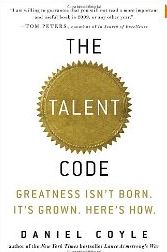
Journalist Daniel Coyle consolidated neuroscience research with stories of expert performers in The Talent Code: Greatness Isn’t Born. It’s Grown. Here’s How .
He distilled three principles that enable performance development across a variety of skills and fields: The Talent Code

“Deep” Practice, which includes daily repetition for up to several hours, observation, and corrective feedback by an expert to develop the myelin of “muscle memory” and increase neural signal strength, speed and accuracy.
This practice must be characterized by focused attention to mimic expert performance, reduce errors, and willingness to practice at increasingly more challenging levels.

Ignition, or commitment based on “unconscious desires” and “triggered by primal cues”

Master Coaching, in which to expert teacher encourages “ignition” and “deep” practice with:

1. Task-specific knowledge explained with vivid examples and meaningful metaphors
2. Perceptive tailoring to each student’s skills and needs
3. “The GPS Reflex”, or providing timely, specific guidance
4. “Theatrical Honesty,” or ability to empathically connect with students

K Anders Ericcson

K Anders Ericsson

Related Posts review foundational research by K. Anders Ericsson, who suggested that expert performance requires “10000 hours of practice.”

Geoff Colvin

Geoff Colvin

Talent is Overrated

Talent is Overrated

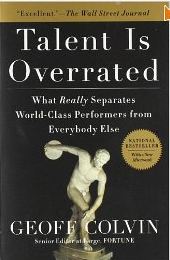
Like Coyle, Geoff Colvin argues that Talent is Overrated and can be eclipsed by systematic practice with corrective coaching.

Paul Herr’s Primal Management: Unraveling the Secrets of Human Nature to Drive High Performance also argues that motivation in the workplace, as in Coyle’s broader discussion of performance and motivation, is based on the “evolutionary psychology” of “tribal survival” and includes:

Paul Herr

Paul Herr

  • Self-Protection, the foundation of Maslow’s hierarch of higher-order needs

    Abraham Maslow

    Abraham Maslow

  • Cooperation, collaborative work in groups fulfills people’s social desires to belong to a group working toward a shared goal
  • Skill deployment, opportunity to develop skills and experience satisfaction with progressive improvement
  • Competency, opportunity to demonstrate skills and receive social recognition for these improvements
  • Innovation, based on people’s curiosity and desire to make in processes, systems, ideas, Primal Managementevents

-*How do you develop your talents?

-*Where do you find expert coaching?

-*How do you persist in “Deep Practice” even when it’s “no fun”?

Related Posts

Twitter  @kathrynwelds
Google+
Blog
: – Kathryn Welds | Curated Research and Commentary
LinkedIn Open Group Psychology in Human Resources (Organisational Psychology)
Facebook Notes

©Kathryn Welds

Chronotypes: Sleep “Fingerprints,” “Social Jet Lag,” and Health

-*Are you out of sync with socially-defined time at work and home?

Most people require about one hour of sleep for every two hours awake, and each hour of missed sleep results in deeper sleep until the “sleep debt” is resolved.
Health and safety problems of varying severity ensue when the sleep debt is unresolved.

Till Roenneberg

Till Roenneberg

Till Roenneberg of Ludwig-Maximilians-University Munich investigated these health consequences by studying variances individual sleep “chronotypes,” or the amount of elapsed time until a person reaches midsleep,”  the midpoint between average bedtime when not determined by schedule requirements and waking time.

His Internal Time: Chronotypes, Social Jet Lag, and Why You’re So Tired reported one less-known health consequence of discrepant chronotypes – greater likelihood of smoking. Internal Time
Roenneberg found that greater than 60 percent of those with more than five hours social jet lag are smokers and they have greater difficulty changing this habit than those with less social jet lag.

David Randall

David Randall

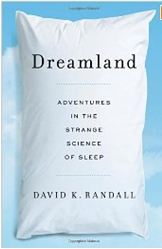
Journalist David K. Randall experienced an episode of sleepwalking and documented his quest to learn more about sleep in his Dreamland: Adventures in the Strange Science of Sleep.
In it, he points out that sleep is crucial for muscle regeneration and long-term memory formation, and conversely, sleep loss interferes with these critical functions.

Other negative consequences of sleep disruption are even more dire.Dreamland
He reported that depression rates are forty times higher for people with insomnia than those without sleep problems, and that sleep apnea causes 38,000 fatal heart attacks and strokes in the United States each year.

The difference between the personal chronotype and socially-defined time can be considered “social jet lag” that can lead to chronic exhaustion.
Roenneberg calculates that more than 40 percent of the Central European population experiences more than two hours of social jet lag, which can lead to increased errors at work and in operating equipment like automobiles. These consequences can be critical when the work involves public safety in transportation and health care settings.

Adolescents generally experience considerable social jet lag because their average midsleep point is later than that of many adults, and is incompatible with typical school start times.
This is because typical adolescent brains release the hormone melatonin around eleven o’clock at night until after the seasonal sunrise.
In contrast, adults, who set school schedules, have minimal levels of melatonin in their bodies when they wake in the morning, so they are more likely to feel and act alert in the early morning.

Sleep, then, has both physiological and cultural determinants, as Roenneberg showed in his analysis of agrarian areas which may not have such technologies as electric lighting, Day Light Saving Time, or work-related reasons for early rising.
These people typically go to sleep earlier and awake earlier than urban dwellers, and have significantly different midsleep points than people in cities.

A. Roger Ekirch

A. Roger Ekirch

Historian A. Roger Ekirch of Virginia Polytechnic Institute and State University argues in At Day’s Close: Night in Times Past, that before the Industrial Revolution, the typical sleep pattern was “segmented sleep” (also known as divided sleep, bimodal sleep pattern, or interrupted sleep).

People slept for two or more periods (called “first sleep” or “dead sleep” and “second sleep” or “morning sleep”) in medieval England, punctuated by a period of wakefulness.
Similar terms are found in terms French and Italian languages and among the Tiv of Nigeria.

At Days CloseHe argues that this is the natural pattern of human sleep, and is important in regulating stress.
If this is accurate, it would change western medical diagnosis of sleep disorders and might change expectations of “normal” sleep patterns for optimal health and productivity.

Ekirch’s review of historical records suggests that agrarian people were exhausted after field labor, so they would eat and go to sleep quickly after stopping work.
They would later awaken later to pray, reflect, have sex, perform manual labor, interpret dreams, visit neighbors, or engage in petty crime.
Scholars, in contrast, used this time for loftier pursuits –  to write without interruption.

-*How do you manage segmented sleep and social jet lag?

Related post:
Kept Up at Night by Intrusive Thoughts of Work: Elusive Sleep

Twitter:  @kathrynwelds
Google+
Blog: – Kathryn Welds | Curated Research and Commentary

LinkedIn Open Group The Executive Coach
Facebook Notes:

©Kathryn Welds

Useful Fiction: Optimism Bias of Positive Illusions

Tali Sharot

Tali Sharot

Tali Sharot of University College London investigated people’s tendency toward unsubstantiated optimism after she observed this bias in her neuropsychological experiments on memory processes of envisioning future events and consequences.

Shelley Taylor

Shelley Taylor

She, like Shelley Taylor of UCLA decades before, argued that this bias was an evolutionary adaptation that enabled people to survive under difficult conditions.  Sharot added to Taylor’s work by suggesting that a majority of people demonstrate the optimism bias by a margin of 5:3.3.

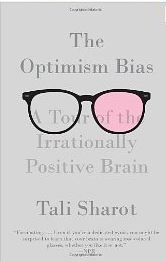
The Optimism BiasSharot’s The Optimism Bias: A Tour of the Irrationally Positive Brain
compares optimism bias to other perceptual illusions, such as sometimes-fatal spatial disorientation among airplane pilots and other frequently-cited optical illusions like “Young Lady or Old Woman”, “Vase or Two Profiles”, and Thatcher illusion.

An example of optimism bias is the well-documented “superiority illusion”, that most people rate their skills, knowledge, and tendencies as above average in a variety of dimensions.

Ellen Langer

Ellen Langer

Another example was identified in 1975 by Ellen Langer of Harvard, who suggested that a pervasive “illusion of control” causes most people to overestimate their ability to control events, even those over which they have no influence.
This cognitive bias has been suggested as prevalent among “problem gamblers” and those who believe in paranormal phenomena.

Elizabeth Phelps

Elizabeth Phelps

Sharot and Elizabeth Phelps of New York University extended Taylor’s early work with neuropsychological research, and reported that the brain’s frontal cortex communication with the posterior hippocampus enables people to envision future possibilities and events.

They observed amygdala and the rostral anterior cingulate cortex activity when people demonstrate the optimism bias and noted that malfunctions in these brain areas are associated with a bias toward pessimism and related depression.

Lauren Alloy

Lauren Alloy

These findings were foreshadowed by Lauren Alloy of Temple University and Lyn Abramson of University of Wisconsin in their 1979 study, which found that people with depression are better able to predict future events accurately, whereas people not burdened with depression have inaccurately optimistic predictions.

Lyn Abramson

Lyn Abramson

“Depressive realism,” just as optimism bias can actually influence or alter future outcomes, as demonstrated in Robert Rosenthal’s classic Pygmalion in the Classroom study and “self-fulfilling prophecy,” leading to the idea that “perception is reality.”

Robert Rosenthal

Robert Rosenthal

Though inaccurate, optimism bias has positive effects. It has been observed to:

  • Reduce perceived stress
  • Improve physical health
  • Increase life span
  • Increase likelihood of people following recommended health practices like exercising, following low-fat diets, taking vitamins.

Sharot suggested that increasing awareness of optimism bias can help people enjoy the benefits of this positive illusion while watching for pitfalls of unrealistic optimism.

-*How do you capitalize on the optimism bias and mitigate its drawbacks?

Related Post:
Oxytocin Receptor Gene’s Link to Optimism, Self-Esteem, Coping with Stress

Sharot’s TED Talk

©Kathryn Welds