Category Archives: Change Management

Change Management

Productivity and Work Motivation Affected by Meaning, Challenge, Mastery, Ownership

Small gestures and verbalizations by managers and organizations can have a large impact on employee productivity, motivation, engagement, and retention – for better or worse.

Dan Ariely

Dan Ariely

Dan Ariely’s research at Duke University showed the small changes in task design dramatically increase or diminish persistence, satisfaction, and commitment to tasks.

The good news is that by simply looking at something that somebody has done, scanning it and saying ‘uh huh,’ [you] dramatically improve people’s motivations…. The bad news is that ignoring the performance of people is almost as bad as shredding their effort in front of their eyes. …,” according to Ariely.

Ariely’s lab experiments found that volunteers valued and liked their work product more when they worked hard and managed obstacles to produce it.
In addition, most people believed, often inaccurately, that other observers shared their positive view of their work product,

His research concluded that people seek meaning, challenge, and ownership in their work, and that these elements can increase work motivation and persistence.

Viktor Frankl

Viktor Frankl

Holocaust survivor and psychiatrist Viktor Frankel articulated this existential perspective in his examination of the critical role that meaning played in the enabling survivors of concentration camp prisoners in Man’s Search for Meaning.

In the less extreme circumstances of the workplace, finding and assigning meaning to work efforts enables people to persist in complex tasks to achieve satisfaction in mastering challenges.

Rosabeth Moss Kanter

Rosabeth Moss Kanter

Harvard’s Rosabeth Moss Kanter concurred that both meaning and mastery are productivity drivers, and to these she added a social dimension, membership, and a distant runner-up, money.

Frederick Herzberg

Frederick Herzberg

In contrast, one of the early though leaders in business management, psychologist Frederick Herzberg, developed a classic formulation of motivational factors contrasted with “hygiene factors.”

Frederick Herzberg - Motivation-Hygiene factorsHis two-factor theory of motivation did not include meaning or money as driving job satisfaction or productivity.

Shawn Achor, formerly of Harvard, argues that happiness is the most important work productivity lever.

Shawn Achor

Shawn Achor

To support his contention, he cited research findings that happy workforces increase an organization’s sales by 37 percent, productivity by 31 percent and accuracy on tasks by 19 percent.

Whether you work for mainly for meaning, money, or other motivations, you may agree that an ideal workplace and manager would foster all of these contributors to employee engagement and productivity.

-*What is the most important work motivator for you?
-*How have you seen managers increase employee engagement and performance through words and actions?

Related Posts

Twitter:  @kathrynwelds
Blog |Kathryn Welds| Curated Research and Commentary
Google+:
LinkedIn Open Group Psychology in Human Resources (Organisational Psychology)
Facebook Notes:

©Kathryn Welds

Results-Only Work Environments, Productivity, and Employee Engagement

Cali Ressler-Jody Thompson

Cali Ressler-Jody Thompson

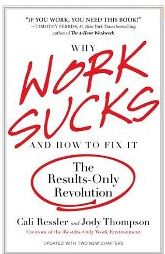
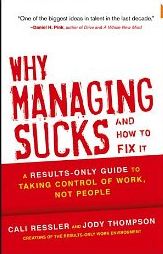
Why Work SucksJody Thompson and Cali Ressler proposed compensating employees based on outputs, rather than elapsed time, in a “Results-Only Work Environments (ROWE)” policy.

This management strategy evaluated “performance, not presence” practices at Best Buy and has been implemented at another large retailer, Gap.
Is this is a return to a “piece-work” approach of decades ago?
Or is it a performance management practice that emphasizes achieving targeted results?

Why Managing SucksROWE  is being considered at such tech giants as Cisco Systems, in direct contrast to Yahoo’s recent call for employees to be present in offices.
The underlying goal of Yahoo’s “presentism” policy may be to increase innovative performance outputs, although the explanation provided to employees emphasized presence as a prerequisite for effective collaboration.

Widespread negative reaction to Yahoo’s on-site work policy, based on complaints that the policy:

  • Conveys lack of trust in employees
  • Undermines opportunities to manage complex work-life responsibilities
  • Places emphasis on “face time” rather than results
  • Leads to employee resentment and disengagement.
Erin Kelly

Erin Kelly

In contrast, University of Minnesota sociologists Erin Kelly and Phyllis Moen with University of Delaware’s Eric Tranby documented the positive impact of ROWE practices in their survey of more than 600 Best Buy employees before and after the program was implemented.

Phyllis Moen

Phyllis Moen

The researchers found turnover was reduced by 45 percent after they controlled for gender, job level, organizational tenure, job satisfaction, income adequacy, job security and turnover intentions.

Participants reported reduced stress and improved work-home interfaces by increasing employees’ schedule control, and reduced the “opting out” of the workforce due to personal commitments for both men and women.

Eric Tranby

Eric Tranby

Kelly, Moen, and Tranby opine that ROWE “moves us away from the “time cages” developed around the work day…ROWE challenges these taken-for-granted clockworks…our mantra is ‘change the workplace, not the worker’.

Rachelle Hill, also of University of Minnesota collaborated with Moen and Kelly in a related study that documented ROWE moderated turnover effects of negative home-to-work spillover, personal troubles, and physical symptoms.

-*What impacts – positive and negative – have you seen in “Performance, not Presence” workplace policies like ROWE?

RELATED POST

©Kathryn Welds
Lessons Learned, Do-Over Wishes: Regrets in Life, Career

Daniel Gulati

Daniel Gulati

Daniel Gulati, founder of FashionStake and Harvard Business School graduate, asked 30 professionals between ages 28 and 58 what they regretted most about their careers.
Most frequently mentioned “do-over” wishes were:

Frederick Herzberg

Frederick Herzberg

1.    Avoiding the temptation to accept a job for the money, confirming Frederick Herzberg assertion that “hygiene” factors, like salary, do not result in motivation or “engagement” in work.
In contrast, most people search for meaningful work in addition to an equitable wage.

Related Post:
Finding Work You Love, Measuring Your Life

Deloitte Shift Index 20122.    Leaving a bad job situation sooner. Gulati asserted that large corporations provide a “variable reinforcement schedule” in which the timing, frequency, and size of rewards is unpredictable, leading people to stay in roles they may not like on the hope of maximizing gains.
As a result, many people feel bound to large organizations by “golden handcuffs,” despite findings by Deloitte’s Shift Index survey the 80% of those surveyed are dissatisfied with their jobs.

Lara Buchak

Lara Buchak

In addition, people may tend toward risk-averseness in the workplace because most are more bothered by threat of losses than they are pleased by gains, according to findings by MIT’s Lara Buchak.

This risk-averseness may lead to “premature optimization,” rather than innovative and exploratory risks to uncover strengths, career options, and technical solutions to work challenges.

3.  Not starting a business, compounded by the same risk-averseness, variable schedules of reinforcement, premature optimization, and perceived golden handcuffs dynamics.

John Coleman

John Coleman

4. Not using time in school settings more productively, meaningfully, insightfully, mentioned by survey participants in Gulati’s collaboration with fellow Harvard Business School grads, John Coleman

W. Oliver Segovia

W. Oliver Segovia

and  W. Oliver Segovia featured in Passion & Purpose, and HBR Guide to Getting the Right Job.

Passion and Purpose5. Not following unanticipated career opportunities, again due to risk-averseness and premature optimization.

Gulati expanded his investigations to 100 younger HBR Guide to Getting the Right Jobpeople, between 25 and 35, and found both existential and specific regrets and do-over wishes:

1.    Not doing something “useful”, also mentioned by Daniel Pink and Martin Seligman, who found that Purpose, Mastery, and Control are top motivators.

Martin Seligman

Martin Seligman

Related Post: Career Navigation by Embracing Uncertainty

2.    Not living in the moment, due to over-scheduling and lack of training or discipline to focus mindfully on the present moment

3.    “Wasting time” earlier in life, such as not taking full advantage of school years

4.    Not travelling more, again limited by risk-averseness, premature optimization leading to financial commitments and family responsibilities

5.    Not developing physically fitness, partly attributed to “after-work drinks” instead of exercise.

Neal Roese

Neal Roese

Northwestern’s Neal Roese, Mike Morrison of University of Illinois at Urbana-Champaign, and Kai Epstude of University of Groningen asked 370 adults in the United States to describe one memorable regret.

Kai Epstude

Kai Epstude

Influenced by gender, age and education level, most-frequently cited regrets were:

  • Missed romantic connection (~20%), with women more than twice as likely (44%) to men (19%). Those not in a relationship were the most likely to cite a romantic regret.
  • Family issues (arguments, unkindness-16%)
  • Education (13 percent)
  •  Career (12 percent)
    • Money (10 percent)
    • Parenting mistakes (9 percent)
    • Health regrets (6 percent)

Participants expressed equal regret for things they had done as those who felt regret for something they had not done, but these missed-opportunity regrets were more likely to persist over time.

Jane McGonigal

Jane McGonigal

Jane McGonigal considered the other end of the age spectrum when she reported on “do-over” wishes of hospice patients:

• Work less hard
• Stay in touch with friends
• Let myself be happier
• Have the courage to express my true self
• Live a life true to my dreams

Related Post: How Gaming Can Help You Live Better and Longer

Isabelle Bauer

Isabelle Bauer

Isabelle Bauer, then at Concordia University, explored the impact of regrets on emotional and physical well-being, and found that people cope with regret by:

  • Undoing regrets, often through rationalization
  • Changing internal appraisals of regret

These findings of Lessons Learned in the School of Experience suggest the importance of:

  • Finding meaningful and worthwhile work
  • Taking considered risks to connect with others, explore interests and the world
  • Balancing work and interpersonal priorities
  • Investing time in high priority endeavors
  • Finding ways to reprioritize activities based on Lessons Learned from perceived regrets.

-*What are your Lessons Learned as you plan your New Year?

-*How do you manage your “Do-Over” thoughts?

Twitter:  @kathrynwelds
Google+
Blog
: – Kathryn Welds | Curated Research and Commentary
LinkedIn Open Group Brazen Careerist
Facebook Notes 

©Kathryn Welds

Guy Kawasaki Disrupts Again: Innovative “Artisinal Publishing,” Entrepreneurship to build Brand, Visibility

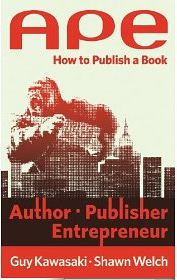
APEGuy Kawasaki’s new book and most recent book have departed from his focus on business strategy, marketing, and storytelling to focus on tactical “how-to” guides.
APE: Author, Publisher, Entrepreneur-How to Publish a Book echoes his earlier imperatives to “add value, make meaning”, whether writing or developing an entrepreneurial idea.

This reference manual enumerates the benefits of self-publishing (aka “artisinal publishing”) compared with traditional publishing models:

  • Content and design control
  • Longevity
  • Revisions   
  • Money
  • Direct connection
  • Price control
  • Time to market
  • Global distribution
  • Control of foreign rights
  • Analytics
  • Deal flexibility.
Guy Kawasaki

Guy Kawasaki

He acknowledges drawbacks, but argues that “artisinal publishing” trumps traditional publishing models despite:

  • No advance
  • No editing team
  • No corporate marketing team
  • Possibly lower prestige
  • Self-service distribution
  • Self-service foreign rights and translations
Guy Kawasaki

Guy Kawasaki

Kawasaki crowd-sourced the origami butterfly concept for his last book cover, Enchantment: The Art of Changing Hearts, Minds, and Actions, and applied the same social approach to “beta-testing,” proof reading, critiquing, and editing this volume.

He candidly acknowledged the value of a professional copy editor to ensure that “artisinally-published” books look professional: even with massive iterations of crowd-sourced review, the copy editor found 1500 issues for correction.Enchantment

He provides clear cost delineations in 2012 US dollars and suggestions to fund the development process, such as engaging in affiliate fee arrangements for products and services mentioned in a book and taking advantage of discounts through the Independent Booksellers Association.

Kawasaki candidly reveals that publishing a book may not be a revenue generator, citing his experience of making more from speaking engagements than royalties on his more than a dozen traditionally-published books

Despite his track record of evangelizing Apple products, he advocated using Microsoft Word for manuscript layout because many who collaborate on an “artisinally-published” book may require this format.

A seasoned marketer, he demystified distribution channels and suggested:

  • Amazon (Kindle Direct Publishing),
  • Apple (iBookstore),
  • Barnes & Noble (Nook),
  • Google (Google Play),
  • Kobo

He clarified the implications of producing digital media in contrast to physical media in discussing distribution through Gumroad for direct sales or printed books.
The latter requires the self-published author to collect, record, and report sales tax for sales within the same state or locale.

As a founder of Alltop and a Twitter evangelist, Kawasaki provided recommendations for promoting awareness of “artisinally-published” books via social media, Net Galley reviewers and bloggers, as well as virtual book tours.

He offers recommendations for independent author and publisher resources including:The Chicago Manual of Style

The Chicago Manual of Style: The Essential Guide for Writers, Editors, and Publishers (14th Edition)

If You Want to WriteIf You Want to Write by Brenda Ueland, which he said “changed my life by empowering me to write even though I didn’t consider myself a writer.”

Kawasaki provided an unexpected “pearl of wisdom,” applicable to many life situations beyond building personal brand reach through “artisinal publishing,” from book enthusiast Marilyn Monroe who said,

Marilyn Monroe

Marilyn Monroe

“Sometimes good things fall apart so better things can fall together.”

-*What has been your experience in traditional or “artisinal” publishing?

Related post:
Business Influence as “Enchantment”

Design Thinking to Address Social and Business Problems

Design Thinking integrates structured creative problem-solving and “systems thinking” methods in design, engineering, business, educational, and non-profit settings by drawing on:

  • Empathy” for the problem context, often using ethnographic field research
  • Creativity in developing solutions
  • Rationality in aligning solutions with the context

David M. Kelley

David M. Kelley, IDEO founder, applied “design thinking” to business, based on Rolf Faste’s discussions Stanford of Robert McKim’s foundational book, Experiences in Visual Thinking

Design Thinking has been categorized in seven stages:  

  •     Define the problem, audience, criteria for “success,” priority
  •     Research the issue’s history, obstacles, previous efforts, stakeholders, end-users, thought leaders
  •     Ideate via brainstorming to identify end-users’ needs, wants
  •     Prototype with combined, expanded refined ideas, solicit feedback from end users, others
  •     Choose solutions after reviewing the objective
  •     Implement after determining, planning tasks, resources, assignments, execution timeline
  •     Learn by gathering end-user feedback, evaluating whether the solution met its goals, document successes and areas for improvement
    Tim Brown, CEO of IDEO, discussed the cycle of Inspiration-Ideation–Implementation by applying such complementary processes as analysis and synthesis, and convergent and divergent thinking in Change by Design: How Design Thinking Transforms Organizations and Inspires Innovation.His TED Talk characterizes Design Thinking as a collaborative, participatory, human-centered process to solve problems innovatively by integrating opposing ideas and constraints and balancing among:
  • user desirability
  • technical feasibility
  • economic viabilityThomas Lockwood’s Design Thinking: Integrating Innovation, Customer Experience, and Brand Value, echoed Design Thinking’s use of careful observation, field research, graphic representation of solutions, and prototyping.He augmented the familiar framework by contributing an additional recommendation:  Concurrent business analysis, to accelerate innovative business strategy development and implementation.

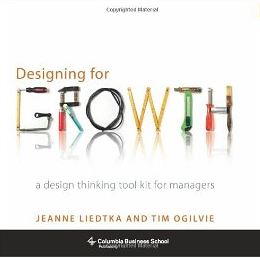
    University of Virginia Darden School of Business professor Jeanne Liedtka added to Design Thinking process structures with her four-phase, 10-step framework in Designing for Growth: A Design Thinking Tool Kit for Managers, organized around key questions:

  • What Is?
  • What If?
  • What Wows?
  • What Works?
    Frog Design’s David Sherwin and Robert Fabricant developed Collective Action Toolkit, well-suited for young people in developing countries to become involved in developing solutions to pressing community problems.The process helps them develop important life skills:
  • Critical thinking
  • Listening to others
  • Asking effective questions
  • Generating innovative ideas
  • Active collaboration
  • Creating high-impact, motivating stories
  • Sustaining collective action
    CAT activities draw on design Thinking Principles in six areas:
  • Imagine New Ideas
  • Make Something Real
  • Plan for Action
  • Build Your Team
  • Seek New Understanding
  • Clarify Your GoalOutputs are documented according to:
  • What We Did
  • What We Learned
  • What We’ll DoNext
    Frog’s Collective Action Toolkit was field-tested with girls Bangladesh and Kenya, who reported increased self-confidence to engage in community development activities, and increased involvement and leadership in community building initiatives.-*What are some ways that Design Thinking can solve problems you see in work and life?

Doonesbury Celebrates Women’s Contributions to Work Groups via Thought Diversity and Emotional Intelligence

Doonesbury Celebrates Women’s Contributions to Work Groups via Thought Diversity and Emotional Intelligence

-* How have you seen women’s Emotional Intelligence applied in the workplace?

Ways to Reduce Unemployment among African-American, Latino, Female Workforces

Lucy Sanders

Lucy Sanders

Lucy Sanders of National Center for Women in Information Technology (NCWIT) reports the organization’s research, underscoring the value of encouraging today’s students in pursuing STEM (Science, Technology, Engineering, Mathematics) careers:

• The current unemployment rate in the U.S. is 7.9%, but for computing-related occupations it’s less than half of that (3.5%)

• The number of African Americans and Latinos employed in computing-related jobs should be double what it is today, given their proportional participation in the US workforce

• Across all STEM careers, tech jobs are growing fastest and have the second-highest starting salaries

The U.S. Bureau of Labor Statistics projects that by 2020, there will be nearly 1.4 million computing-related jobs added to the U.S. workforce.

With the existing pipeline of students, however, we’ll be able to fill only 30% of these jobs with computing graduates.

NCWIT offers the following tools:

Counselors for Computing (C4C) Pathway Cards help connect students’ interest with next steps toward IT and computing careers. C4C is a project of the NCWIT K-12 Alliance, made possible by the Merck Company Foundation and Google.

• A job-search tool at the NCWIT website, powered by Indeed.com, lets people search for computing-related jobs within NCWIT member organizations — including large companies, startups, universities, and non-profits all around the country.

Top 10 Ways Successful Technical Women Increase Their Visibility includes ten things that highly successful women say they do in order to increase their visibility throughout the company, industry, and technical community.

-* What “best practices” have you seen to increase professional employment among diverse employees?

LinkedIn Open Group – Psychology in HR (Organisational Psychology)
Twitter: @kathrynwelds
Google+
Facebook Notes:

Blog: – Kathryn Welds | Curated Research and Commentary

©Kathryn Welds

“Smart Failure” to Manage in a Fast-Changing World

Eddie Obeng

Eddie Obeng

Eddie Obeng’s dizzyingly rapid-fire TED talk asserts that we live in a “New World” in which “the local environment of individuals, organizations and governments changes faster than we can learn.”

As a result, he contends that most commonly-used concepts, best practices and assumptions to plan, manage and lead, organizations are obsolete.

He refers to this “New World” as the “World After Midnight” and shares discussion and observations.

To offer a forum to discuss and advance this approach with a “continuous link between learning and implementation”, he established Pentacle (The Virtual Business School), which offers tools and courses, with an emphasis on executing strategy through project management best practices.

Obeng draws on his experience as an engineer at Royal Dutch Shell, then Professor at the School of Entrepreneurship and Innovation, Henley Business School, and a Council Member at the UK Design Council in his books:

Like the Silicon Valley mantra “Fail Fast” to capture relevant learning experiences, Obeng urges “Smart Failure” through multiple experiments or trials, and rapid prototyping.

-*Where have you seen “Fast Failure” aid workplace innovation?

Twitter
: @kathrynwelds
Google+:
LinkedIn Open Group – Stanford Social Innovation Review:
Facebook Notes:

Blog: – Kathryn Welds | Curated Research and Commentary

©Kathryn Welds

“Nudging” Compassion, Resilience to Reduce Conflict, Stress

David DeSteno

David DeSteno, directs Northeastern University’s Social Emotions Lab, where he investigates cognitive and neurological mechanism related to social behavior.
In Out of Character: Surprising Truths About the Liar, Cheat, Sinner (and Saint) Lurking in All of Us , and at his PopTech talk, he shared how he investigated whether evoked compassion and empathy is associated with reduced aggression.

He described experiments in which volunteers solve math problems for money.
In some conditions, one of DeSteno’s associates posed as another volunteer and noticeably cheated to earn more money than the real volunteer.
In other conditions, the confederate abided by the rules.

For some experiments, the cheating confederate, a professional actor, evoked empathy and compassion by saying that she was  worried about her brother, who was just diagnosed with a terminal illness.

In these situations, the volunteers were less likely to intentionally inflict discomfort on her in the following study of “taste perception,” a measure of aggression.

In this experimental trial, the volunteer measured a discretionary amount of extra-hot sauce into a cup for the cheating or non-cheating confederates to taste.

Volunteers poured five times more hot sauce for cheating confederates than non-cheating confederates, but they treated cheaters who evoked empathy the same as non-cheaters.

DeSteno noted most people are willing to help others who have some similarity to them, such as a shared identity of sharing a religious faith or hometown, or even are moving together as in conga lines, military drills.

He suggested that movement “synchrony causes separate identities to merge into one,” and demonstrated this trend in a music perception study, where volunteers in the same room tapped their hands on sensors when they heard tones.

In some conditions, the tones were synchronized so the volunteers were tapping at the same time as other volunteers, and in other conditions, the tones were independent.
De Steno found that 50% of volunteers who tapped at the same time were willing to help other volunteers, whereas 20% of those who tapped at different times helped others.
He concluded that volunteers felt more similar by tapping together, so felt more compassion, and were more likely to help others.

DeSteno is investigating social media like Facebook as a platform for sharing similarities to reduce aggression in conflict, cyber-bullying, victims of distant natural disasters.

He  said uses Cass Sunstein’s and Richard Thaler’s idea that small behavioral and organizational changes can “nudge” people to healthier, safer, more productive, and prosperous habits outlined in Nudge: Improving Decisions About Health, Wealth, and Happiness 

Their practical recommendations for designing effective “choice architecture” are consistent with DeSteno’s research-based findings:

* Align incentives with desired outcomes
* Identify possible alternative outcomes in familiar terms
* Provide default options that favor desired outcome behaviors
* Offer prompt, relevant feedback about choices and outcomes.
* Expect deviation from the targeted outcome, and build in ways to prevent, detect, and minimize this variance.
* Structure complex choices to reduce the difficulty of decisions-making

-*How have you seen “similarity” affect workplace collaboration and support?

-*Where have you seen organizations implement “choice architecture” to encourage employee behaviors toward positive goals?

BJ Fogg

Related Post
“Tiny Habits” Start, Maintain Changes

Twitter @kathrynwelds
Google+
LinkedIn Open Group – Stanford Social Innovation Review
Facebook Notes:

Blog: – Kathryn Welds | Curated Research and Commentary

©Kathryn Welds

French Scott Adams, voiced by faux-Robin Williams Drives Organizational Change

Serge Grudzinski

Serge Grudzinski

Serge Grudzinski draws on his elite engineering education at Paris’ École Polytechnique and at Stanford University, combined with his managerial and consulting experience at  Saint-Gobain Glass, Mars & Co, Booz Allen Hamilton, and AT Kearney to incite organizational change through humor.

He created the character “Max de Bley”, aka “Manager Max” to deliver his cross-cultural zingers on strategy, Powerpoint, IT, proposals, email “and much more” for more than 200 global organizations.

For a quick mental diversion, check his micro-bits

-*How have you seen humor used to inspire organizational change?

LinkedIn Open Group Mindful Leadership
Twitter: @kathrynwelds
Google+
Facebook Notes:
Blog: – Kathryn Welds | Curated Research and Commentary

©Kathryn Welds