Category Archives: Behavior Change

Behavior Change

Action Beats Visualization to Improve Performance

Richard Wiseman

Richard Wiseman of University of Hertfordshire, and a magician before becoming a psychologist, debunked the notion that visualizing desired outcomes achieves results more effectively than direct action in Rip It Up: The radically new approach to changing your life: The Simple Idea That Changes Everything

Citing research by Lien Pham at the University of California, who asked student volunteers to visualize earning a high grade in an upcoming exam or to visualize adopting better study habits.
Pham reported that students who visualized the outcome of a high grade actually received poorer outcomes that those who visualized a better process to achieve a higher grade.

Similarly, Gabriele Oettingen of New York University asked students to record the duration of fantasies about leaving college and starting a “dream job”.
She found that students who spent more time imagining these positive outcomes, but had lower expectations of actually achieving these goals received fewer job offers and lower starting salaries.

Wiseman uses these findings to argue that action rather than imagined rehearsal, fantasy or visualization leads to successful performance outcomes.

Napoleon Bonaparte

This principle was implied by Napoleon Bonaparte more than two centuries ago as he anticipated battle: On s’engage et puis on voit, translated as “You commit yourself; and then, you see”

In the 1880s, William James, brother of novelist Henry James and considered “The Father of American Psychology,” asserted that action precedes emotional experience: “You do not run from a bear because you are afraid of it, but rather become afraid of the bear because you run from it.”

William James

This notion contrasts popular concepts, which led to numerous books encouraging people to change their thinking to change their behaviors and feelings.

Since the 1970s, research has focused on whether changing behavior can change feelings.
To test this relationship, James Laird of Clark University asked volunteers to create an angry expression by drawing down their eyebrows and clenching their teeth and to create a happy expression by drawing back the corners of the mouth.

James Laird

Participants reported feeling significantly happier when they forced their faces into smiles, and much angrier when they were clenching their teeth.
“Acting ‘as-if’ and “faking it until you make it” are examples of initiating behaviors to drive emotional and attitudinal change.

Wiseman offers ten behavioral modifications that can lead to feeling better and improved performance.

INCREASE:

  • Happiness: Smile as widely as possible, extend eyebrow muscles slightly upward, and hold for 20 seconds.
  • Willpower: Tense muscles –  Make a fist, contract biceps or press thumb and first finger together
  • Health Eating: Eat with non-dominant hand to increase “mindful” awareness of eating, based on research by Neal, Wood, Wu & Kurlander
  • Persistence: Sit up straight, cross your arms, from research by Ron Friedman of University of Rochester.
    He found that volunteers who sat up straight and crossed arms persisted in working to solve challenging problems nearly twice as long as volunteers who didn’t assume this posture
  • Confidence: Adopt expanded chest posture
    Sitting down, lean back, look up, and interlock your hands behind your head.
    Standing up, place your feet flat on the floor, push your shoulders back, and your chest forward.
  • Negotiation Effectiveness: Use soft chairs
    Joshua Ackerman of the MIT Sloan School of Management conducted simulated negotiations for a used car, and found that volunteers who sat on soft chairs were more flexible in their negotiations and likely to pay higher prices than those who sat on firm chairs.
  • Persuasion: Nod
    Gary Wells of Iowa State University reported that when volunteers nodded their heads, they were more easily able to learn and retain information with which they didn’t agree or that wasn’t true.
  • Love: Open up
    Robert Epstein of the Cambridge Centre for Behavioral Studies found that eye contact, self-disclosure, sharing vulnerability increase perceived liking, loving, and closeness.

DECREASE:

  • Procrastination: Start for Five Minutes – Do the task for five minutes, and ask yourself if you want to stop or continue at the end of the time.
    Often, it is easy to continue after 5 minutes.
    If not, stop and begin again for 5 minutes several hours later.
  • Guilt: Wash your hands
    Chen-Bo Zhong of the University of Toronto found that volunteers who carried out a perceived immoral act, then cleaned their hands with an antiseptic wipe felt significantly less guilty than others who didn’t wash

These varied streams of research support the call for intentional action over contemplation to improve mood and initiate positive behavior changes.

-*What counterarguments would you offer to Wiseman?

See related post on “bias for action”:

Oxytocin Receptor Gene’s Link to Optimism, Self-Esteem, Coping with Stress

Shelley Taylor

Shelley Taylor

Shelley E. Taylor, distinguished professor at UCLA identified the oxytocin receptor gene (OXTR) link to optimism, self-esteem and “mastery” — the belief that one has control over one’s own life.
These three elements are required to manage stress and depression.

Reported in the Proceedings of the National Academy of Sciences (PNAS), she notes that oxytocin, a hormone that increases in response to stress, is associated with good social skills such as empathy and social behavior, especially under stress.

In one location on the oxytocin receptor gene, two variants occur:

•    “A” (adenine) variant, associated with increased sensitivity to stress, poorer social skills, depressive symptoms and worse mental health outcomes

•    “G” (guanine) variant, associated with optimism, self-esteem and mastery.

This effect was demonstrated in 326 volunteers, who completed measured by self-assessments and saliva samples for DNA analysis.
Those with two “A” nucleotides or one “A” and one “G” at this oxytocin receptor gene location, showed lower levels of optimism, self-esteem and mastery and higher levels of depressive symptoms than people with two “G” nucleotides,

Taylor notes that genes may predict behavior, but do not determine it because many environmental factors and other genes interact with oxytocin receptor gene variants in stress, coping, and emotional behaviors.

These findings suggest people who train themselves to appraise situations more optimistically, to see themselves more worthy, capable and competent, are able to improve ability to cope with stressful events.

Taylor’s book, The Tending Instinct: Women, Men, and the Biology of Relationships, outlines the importance of cultivating socially nurturing environments to mitigate genetic vulnerabilities.

She notes that “a mother’s tending can completely eliminate the potential effects of a gene; a risk for a disease can fail to materialize with nurturing, and a genetic propensity may lead to one outcome for one person and the opposite for another, based on the tending they received.”
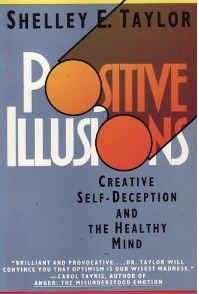
Her most influential work demonstrated a “self-enhancement bias” in her book, Positive Illusions: Creative Self-Deception and the Healthy Mind ,
she explained that “most people regard themselves, their circumstances, and the future as considerably more positive than is objectively likely…. These illusions are not merely characteristic of human thought; they appear actually to be adaptive, promoting rather than undermining good mental health.”

In contrast, Rick Hanson argues that a negative bias is more adaptive to survival than a positive bias.
He notes that negative stimuli produce more neural activity than do equally intense positive ones, and are perceived more easily and quickly: “The brain is like Velcro for negative experiences but Teflon for positive ones.”

His book, Just One Thing: Developing a Buddha Brain One Simple Practice at a Time, recommends meditation to tame automatic negative thoughts.

-*Where have you seen examples of “the tending instinct,” positive illusions and negative bias in the workplace?

See related posts on Hormones and Emotional Expression:
•    Oxytocin, Testoterone: Oxytocin Increases Empathic Work Relationships, Workplace Trust, Generosity
•    Cortisol, Testosterone: Thoughts Change Bodies, Bodies Change Minds, Roles Shape Hormones: “Faking Until It’s Real”

Twitter:  @kathrynwelds
Google+
LinkedIn Open Group Mindful Leadership
Facebook Notes 

Blog: – Kathryn Welds | Curated Research and Commentary

©Kathryn Welds

Minimize “Quest for the Best” Bias

Sheena Iyengar

Sheena Iyengar

Columbia Business School professor Sheena Iyengar, Cassie Mogilner of University of Pennsylvania’s Wharton School, and Baba Shiv of Stanford’s Graduate School of Business collaborated to assess the relative satisfaction and commitment to “sequential choices,” as in “love marriages,” compared with “simultaneous choices”, like arranged marriages.

Iyengar’s earlier research revealed that more choices available at one time are associated with reduced satisfaction.
The Art of ChoosingTo evaluate satisfaction with simultaneous vs sequential choosing, Iyengar, Shiv, and Mogilner studied volunteers’ satisfaction and commitment to choices of wine, chocolate, and nail polish colors.
Results, forthcoming in the Journal of Consumer Research, found thatsimultaneous” choosers were more satisfied and committed to their decisions than “sequential” choosers.

Cassie Moligner

In the chocolate experiment, participants considered detailed descriptions of fine chocolates (“dark chocolate ganache with black tea and hints of citrus and vanilla”), and chose which they wanted to taste.
The “simultaneous” group saw the entire list, whereas the “sequential” group saw one choice at a time.

After they selected and tasted the chocolate, participants rated their satisfaction with their choice.
Verdict? “Simultaneous” choosers were more satisfied with their choices than “sequential” choosers.

Baba Shiv

When participants had an opportunity to switch to a different but randomly-selected chocolate, more “sequential” choosers took this option, though they had little information about the choice.
However, when “sequential” choosers were permitted to choose an option they’d already considered, they were less committed to their choice.

The researchers suggest that “sequential” choosers may have regretted forgoing options they didn’t select, and hoped that a future option would be better.

Shiv summarized the dilemma of the “sequential” chooser (or serial dater, serial monogamist): Hope and regret prompt people to move to the next option even though the next option could be worse.
In contrast, “simultaneous” choosers are aware of available options at a point in time, so may spend less time in regret and hope.

Retailers, daters, venture capitalists, hiring managers, house purchasers, and job candidates benefit from presenting and evaluating all choices at one time.

However, simultaneous choice may not be possible, and to avoid the “bias of the eternal quest for the best,” Shiv suggests “mentally converting sequential choices into “quasi-simultaneous” choices by recalling situations when you were happy with you choice, and when you regretted your choices.”

Though an imperfect heuristic, quasi-simultaneous choice may may provide instructive clues to the elements of a satisfying decision.

-*How do you take decisions among many options?

Related Posts on Decision-Making and Bias:

Twitter:  @kathrynwelds
Google+
LinkedIn Open Group Stanford Social Innovation Review
Facebook Notes:

Blog: – Kathryn Welds | Curated Research and Commentary

©Kathryn Welds

Squeeze a Ball, Improve Performance under Pressure

Jürgen Beckmann

Improve performance under pressure by squeezing a ball or clenching the non-dominant hand before competition to activate specific motor regions of the brain, according to Jürgen Beckmann and his research team, who studied experienced soccer players, tae kwon do experts and badminton players.

The Journal of Experimental Psychology: General reported that right-handed athletes who squeezed a ball in their left hand before competing were less like to “choke under pressure” than right-handed players who squeeze a ball in their right hand.

Beckmann and collaborators Peter Gröpel and Felix Ehrlenspiel noted that when athletes don’t perform well “under pressure,” they may be focusing on their own movements rather than relying on automatic motor skills developed through repeated practice – or “muscle memory.”

They explained, “Rumination can interfere with concentration and performance on motor tasks … Many movements…can be impaired by attempts at consciously controlling them. This technique can be helpful for many situations and tasks.”

Iris Hung

Iris Hung

Other applications include business situations like presentations or negotiations, or helping elderly people improve balance by clenching a ball before walking or climbing stairs.
Iris Hung the National University of Singapore found additional applications: Avoiding the temptation of sugary snacks in a cafeteria, enduring physical pain, and disturbing information.

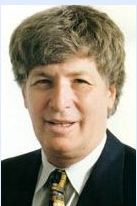
Hendrie Weisinger

Hendrie Weisinger, whose best-seller Nobody’s Perfect was the first of 8 books, integrates this finding with other research-based recommendations to manage performance pressure with “Nerves of Steel.” His new book is scheduled for release by Random House in 2013.

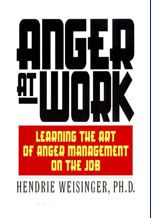
His other books, including Emotional Intelligence at Work and Anger at Work, along with video excerpts are available on his website.

-*How do you maintain performance when experiencing pressure?

Twitter:  @kathrynwelds
Google+
LinkedIn Open Group Executive Coach
Facebook Notes:

Blog: – Kathryn Welds | Curated Research and Commentary

©Kathryn Welds

Hypothetical Questions May Lead to Bias

Baba Shiv

Baba Shiv, Stanford Graduate School of Business profession, showed that hypothetical questions can sway opinion and affect behavior through innuendo and implied rumor.

One example is a political “push poll” during the 2000 South Carolina Republican Primary Elections, which asked voters whether they’d vote for John McCain if they learned that he had fathered an illegitimate child.

Shiv and Duke University Fuqua School of Business professor Gavan Fitzsimons  conducted experimental inquiries of voter attitudes and behavior in 2001, and found that hypothetical questions increase information “accessibility” because the implied criticism is memorable and may align with existing stereotypes, becomes “top-of-mind,” and can direct behavioral choices.

Gavan Fitzsimons

The researchers found that participants simply focus on the hypothetical content, and don’t evaluate its credibility, even when reminded that the situation is hypothetical.

This effect was seen in one experiment where researchers gave a pretrial jury selection questionnaire to a group of actual prospective jurors.

The potential jurors were told not to use the questions to draw conclusions about the case, then some of the prospective jurors were asked how their decision would be affected by learning that the defendant was a gang member.

Participants who received the hypothetical question gave more hypothetical guilty verdicts and harsher sentences than those who received no suggestive questions.

Shiv cautions against posing hypothetical questions in situations where they are frequently used: Jury selection, political polls, marketing focus groups, job interviews.

Despite research findings (by many including Wiesner & Cronshaw’s classic 1988 article in Journal of Applied Psychology) that hypothetical questions about future behavior in work situations do not predict job performance as effectively as actual past job performance, this interview tactic is still used by some employers.

Astute job candidates can respond to hypothetical questions by citing actual past behavior as a “proof-point” of expected job performance, and may explore the interviewer’s underlying concerns in posing hypothetical questions.

-*What impact have you observed for hypothetical questions posed in the workplace?

Related Posts on Decision-Making and Bias:

Twitter:  @kathrynwelds
Google+
LinkedIn Open Group Mindful Leadership
Facebook Notes:

Blog: – Kathryn Welds | Curated Research and Commentary

©Kathryn Welds

“Greenlight Group”: No-cost, Self-managed Support to Achieve Professional, Personal Goals

Gary Burlingame

Gary Burlingame recently published a meta-analysis of 40 studies that demonstrate the efficacy of groups for a number of conditions, and Dennis Kivlighan noted that group success is associated with participants’:

  • Shared purpose
  • Common identity
  • Social support through interaction
  • Reciprocal influence of the members on one another
  • Interpersonal feedback to reduce idiosyncratic individual perspectives and attitudes.

Dennis Kivlighan

In addition, groups can benefit more people at lower cost than individual coaching.

An example of these principles at work was reported recently at a large Silicon Valley technology company.

Jennifer Hartnett-Henderson

Jennifer Hartnett-Henderson [@JHartnettHender] organized a “Greenlight Group”, based on Keith Ferrazzi’s model outlined in his book, Who’s Got Your Back?

Using a “snowball” recruitment strategy, she brought together five individuals from different internal organizations, in varied roles and job levels.

The goal was to meet six times as a team over a 90 day period, to help each other achieve their most challenging professional and personal goals by giving each other feedback, supporting each other, and holding each other accountable to progress.

She outlined the benefits of “Greenlight Groups”, and executives at the company were impressed with the value proposition when they learned about it via “word-of-mouth”:

  • Self-manage career goals with no-cost peer support
  • Achieve personal goals
  • Access confidential peer support, feedback from trusted advisors

Over the six meetings:

  • Two participants transferred to new internal roles at higher grade levels
  • Two participants achieved greater work-life balance by reducing number of weekly work hours to less than 55 per week
  • Two participants dramatically increased social media presence
  • Two participants explored internal and external career opportunities
  • Two participants explored monetizing entrepreneurial opportunities
  • Two participants initiated weight-reduction program
  • One participant initiated exercise program
  • One participant increased exercise time and performance

This example suggests the value of self-organized, mutual-assistance groups to achieve professional and personal goals over a defined time period.

-*What self-managed career development programs have been effective in your workplaces?

Twitter  @kathrynwelds
Google+
LinkedIn Open Group Brazen Careerist
Psychology in Human Resources (Organisational Psychology)
Facebook Notes:

Blog: – Kathryn Welds | Curated Research and Commentary 

©Kathryn Welds

Biases in Unconscious Automatic Mental Processing, and “Work-Arounds”

Leonard Mlodinow
Leonard Mlodinow

Leonard Mlodinow’s Subliminal: How Your Unconscious Mind Rules Your Behavior reviews evidence of automatic, out-of-awareness brain processing that handles emotional experience and routine task execution, in the same vein as  best sellers by Nobel laureate Daniel Kahneman (Thinking, Fast and Slow) and writer Malcolm Gladwell (Blink: The Power of Thinking Without Thinking).

Daniel Kahneman
Daniel Kahneman

All three authors outline the potential costs of rapid mental processing: error and bias in perception and decision-making, which are less present during mindful analytic problem-solving.

Mlodinow, a Physics Professor at CalTech, has collaborated with Stephen Hawking on two books, and like Kahneman and Gladwell, is a talented storyteller who explains implications of laboratory-based research on cognition and brain functioning.

Carol Tavris
Carol Tavris

Psychologist Carol Tavris discusses the cost of similar biases in cognitive processing in Mistakes Were Made (But Not by Me): Why We Justify Foolish Beliefs, Bad Decisions, 

Numerous studies of erroneous eyewitness testimony demonstrate that memory is constructed of fragmentary elements “stitched” together to form a cohesive narrative.
This contrasts the notion that memory is a “snapshot” replica of an event.

Opportunities for cognitive error are apparent in this Constructivist view of perception and cognition.

Most authors suggest “mindful” practices to counteract inherent biases in cognitive short-cuts, consciously focusing in present perceptions and experiences.

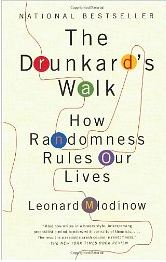
Mlodinow’s previous book, The Drunkard’s Walk: How Randomness Rules Our Lives, demystifies the use of statistics in everyday life, and prepares readers with considered questions to avoid mis-judgments based on seemingly convincing quantitative data.

He demonstrates the prevalence of chance influences in life outcomes, and the pervasive illusion that people have control over many more outcomes than they actually do.

Mlodinow reminds readers that “success” and “failure” contain random influences, and “success” is more dependent on persistence and maintaining an optimistic outlook than raw ability.

-*What practices have helped you mitigate potential cognitive bias associated with rapid mental processing and cognitive “short-cuts”?

*Related posts:

©Kathryn Welds

10 Ways to Build Resilience

A key factor in “psychological resilience”, or the process of adapting to unexpected adversity, trauma, tragedy, threats, or stress, is having caring and supportive relationships within and outside the family, according to research by the American Psychological Association (APA).

Other factors include:

• Making realistic plans and executing them
• Positive view of self
• Confidence in your strengths and abilities
• Skills in communication and problem solving
• Managing strong feelings and impulses

APA outlines actions that increase personal resilience

• Make connections with family members, friends, or others to request and accept support. Civic groups, faith-based organizations, or volunteering to help others can make meaningful connections

• Consider crises as solvable problems. You can change how you interpret and respond to these events.

• Recognize that change occurs with increasing frequency. You can balance thoughtful acceptance of a situation with acting to change it.

• Move toward your goals, with regular small accomplishments

• Take decisive actions

• Look for opportunities for self-discovery and learning “life lessons” that may benefit others

• Develop confidence that you can address the issues. Others in the social support network may assist.

• Keep things in perspective, in relation to the great challenges faced by others

• Visualize your goals and aspirations

  • Cultivate an optimistic outlook, and consider hope as essential as oxygen

• Take care of yourself with exercise, relaxation, balanced diet and lifestyle, medical attention

Additional strategies may assist: the process of adapting well in the face of adversity, trauma, tragedy, threats, or even significant sources of stress

-*What are your most effective strategies for building personal resilience in the face of challenges?

LinkedIn Open Group – Mindful Leadership
Twitter: @kathrynwelds
Google+
Facebook Notes:

©Kathryn Welds
Women Get More Promotions With “Behavioral Flexibility”

More business promotions were awarded to women who display assertive, confident, and “aggressive” behaviors and who reduce these characteristics depending on the social circumstance through “self-monitoring”, according to Olivia Mandy O’Neill of George Mason University and Charles O’Reilly of Stanford Graduate School of Business.

Olivia Mandy O’Neill

Charles O’Reil

Related research findings discuss “impression management” and “self-monitoring” skills for women to mitigate the impact of subtle factors that impede career advancement.


Twitter: @kathrynwelds

Google+
Facebook Notes: 
 

©Kathryn Welds