Monthly Archives: April 2013

Results-Only Work Environments, Productivity, and Employee Engagement

Cali Ressler-Jody Thompson

Cali Ressler-Jody Thompson

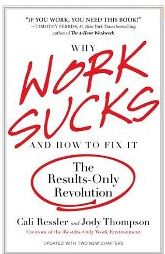
Why Work SucksJody Thompson and Cali Ressler proposed compensating employees based on outputs, rather than elapsed time, in a “Results-Only Work Environments (ROWE)” policy.

This management strategy evaluated “performance, not presence” practices at Best Buy and has been implemented at another large retailer, Gap.
Is this is a return to a “piece-work” approach of decades ago?
Or is it a performance management practice that emphasizes achieving targeted results?

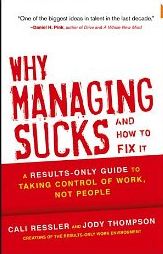
Why Managing SucksROWE  is being considered at such tech giants as Cisco Systems, in direct contrast to Yahoo’s recent call for employees to be present in offices.
The underlying goal of Yahoo’s “presentism” policy may be to increase innovative performance outputs, although the explanation provided to employees emphasized presence as a prerequisite for effective collaboration.

Widespread negative reaction to Yahoo’s on-site work policy, based on complaints that the policy:

  • Conveys lack of trust in employees
  • Undermines opportunities to manage complex work-life responsibilities
  • Places emphasis on “face time” rather than results
  • Leads to employee resentment and disengagement.
Erin Kelly

Erin Kelly

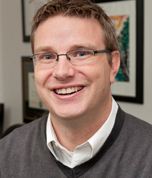
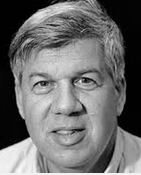
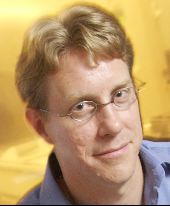
In contrast, University of Minnesota sociologists Erin Kelly and Phyllis Moen with University of Delaware’s Eric Tranby documented the positive impact of ROWE practices in their survey of more than 600 Best Buy employees before and after the program was implemented.

Phyllis Moen

Phyllis Moen

The researchers found turnover was reduced by 45 percent after they controlled for gender, job level, organizational tenure, job satisfaction, income adequacy, job security and turnover intentions.

Participants reported reduced stress and improved work-home interfaces by increasing employees’ schedule control, and reduced the “opting out” of the workforce due to personal commitments for both men and women.

Eric Tranby

Eric Tranby

Kelly, Moen, and Tranby opine that ROWE “moves us away from the “time cages” developed around the work day…ROWE challenges these taken-for-granted clockworks…our mantra is ‘change the workplace, not the worker’.

Rachelle Hill, also of University of Minnesota collaborated with Moen and Kelly in a related study that documented ROWE moderated turnover effects of negative home-to-work spillover, personal troubles, and physical symptoms.

-*What impacts – positive and negative – have you seen in “Performance, not Presence” workplace policies like ROWE?

RELATED POST

©Kathryn Welds

Perseverance Increases Skill Increases Luck: “The Harder I Work, The Luckier I Get”

Samuel Goldwyn

Samuel Goldwyn

Thomas Jefferson

Thomas Jefferson

Samuel Goldwyn recast Thomas Jefferson’s earlier observation: “I am a great believer in luck, and I find the harder I work, the more I have of it.”

Michael Mauboussin, of Columbia University, and previously Chief Investment Strategist at Legg Mason Capital Management Inc. investigated this relationship between effort and luck in his book, The Success Equation.The Success Equation

Michael Mauboussin

Michael Mauboussin

Mauboussin, an innovator in behavioral finance, adopted Harvard biologist Stephen Jay Gould’s “paradox of skill” to analyze the interaction of effort, skills, and luck, and best strategies to optimize outcomes in investing, sports, and career performance.

Stephen Jay Gould

Stephen Jay Gould

He posits that as skill improves in activities where outcomes are affected by skill and luck, the standard deviation of skills narrows.
In this case, luck becomes more important in determining outcomes:

Whenever you see an outlier in sports, it is always a combination of really good skill and really good luck… (Often) they are about one and a half or two standard deviations away from the average…not all skilled players have (winning) streaks, but all (winning) streaks are held by skillful players.”

For example, as investors become more sophisticated and have access to advanced computational tools, as athletes benefit from targeted training and development regimens, and as students are groomed for admission to top universities, differences among these skilled performers decreases.
Chance influences can determine outcomes.

Mauboussin says that luck has several elements:

  • Affects an individual or organization,
  • May be evaluated as “good” or “bad”
  • Another outcome could have occurred
  • The outcome is uncontrollable, but is comprised of several elements

To increase luck, he advises assessing each contender’s strength in the situation and finding “…something completely different to get you on the right side of the tail of the skill distribution,” such as employing an unusual or unexpected tactic.

The stronger player has positive asymmetric resources, so the effective strategy is to simplify the game.
In contrast the underdog should seek to complicate the game, such as through disruptive innovation, a flank strategy or a guerilla tactic.

Because most people have a bias toward optimism and overestimate personal capabilities, it may be difficult to assess oneself as an “underdog” in a performance situation.

Daniel Kahneman

Daniel Kahneman

Nobel Prize winner Daniel Kahneman and Amos Tversky explained that individuals who adopt an inside view gather substantial information, combine it with their own inputs, then project into the future without considering “distributional information” about a wide variety of previous instances.
This approach risks developing an idiosyncratic, overconfident perspective by underestimating costs, completion times, and risks of planned actions, while overestimating benefits.

Amos Tversky

Amos Tversky

In contrast, people who adopt the outside view consider the problem as an instance of a larger reference class and consider the entire distribution of outcomes when this type of situation occurred previously.
This approach can reduce overconfidence.
However, this approach could discourage entrepreneurs, who will realize that a small percentage actually succeeds.

In addition, besides the bias toward overconfidence, people tend to “under-sample” instances of failure when a previously successful approach is applied in a new situation and doesn’t succeed.

Nate Silver

Nate Silver

Sabermetricians like Nate Silver, posit that worthwhile statistics provide:

  • Persistence or correlation from one period to the next, a strong indicator of high skill
  • Predictive value or high correlation with the target objective
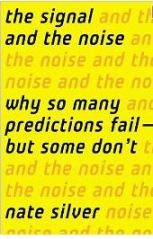
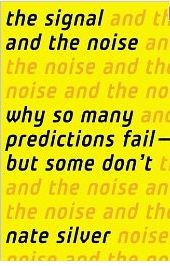
Nate Silver-The Signal and The NoiseThe Oakland As baseball team uncovered these principles in determining that  a superior measure of athletic performance in this sport is on-base percentage rather than the traditional measure, batting average.

In this case, on-base percentage has a higher correlation from one season to the next and a higher correlation with run production than batting average, fulfilling both criteria.

Daniel Kahneman also suggested that skill, expertise, and intuition render more uniform results in a predictable environment.

Thinking Fast and SlowHowever, many organizational environments are unstable and non-linear, rendering experts less accurate because they cannot employ an effective predictive model.

Collective judgments through “the wisdom of crowds” may mitigate the challenges of unstable contexts because they provide more data points.

Mauboussin advocated considering the continuum of stability vs instability in which the issue is situated to determine strategy and to beware of applying simple heuristics that are vulnerable to bias, and social or situational influences.

He suggested the guideline “think twice” to prepare, detect and correct for common mental traps, including:

  • The Inside-only View
  • Tunnel Vision
  • Oversimplification
  • Situational Power
  • Overvaluing Expert Knowledge

-*How do you optimize your performance when chance elements can affect your outcomes?

Related Posts

©Kathryn Welds

Genes Influence Investment Risk-Taking: Implications for Taking Career Risks?

Camelia Kuhnen

Camelia Kuhnen

Brian Knutson

Brian Knutson

Camelia Kuhnen, then of Stanford with her Stanford colleague Brian Knutson and Vanderbilt’s Gregory Samanez-Larkin posit a small but meaningful genetic basis to risk-averse financial investing, providing a biological basis for findings that women hedge fund managers outperformed male counterparts.

Volunteers with two short serotonin transporter genes (5-HTTLPR) reported that they tend to worry, and this pattern was associated with chosing less risky investment choices.

Gregory Samanez-Larkin

Gregory Samanez-Larkin

“Short allele carriers” also showed higher levels of the personality trait “neuroticism,” but no significant difference in cognitive skills, education, or financial status.
Kuhnen estimates that less than 30 percent of variance in risk-taking is attributable to short 5-HTTLPR, and the remaining difference is derived from experience, culture, education, and social environment.

Kuhnen and Knutson reported the neural basis of financial risk taking using event-related fMRI.
They observed that the nucleus accumbens was activated before volunteers made risky choices and made risk-seeking mistakes.
In contrast, they found that the anterior insula was activated before risk-free choices and risk-aversion mistakes.

They proposed that different neural circuits are associated with differing emotions as volunteers anticipate gain or loss associated with financial choices.
This emotional activation “signature” can lead to specific investment choices, favoring or avoiding risk, and may lead to investing mistakes.

In unpublished research, Kuhnen found that short-allele carriers showed increased anxiety before making a decision in a trial-and-error risk discovery task, but reacted no differently than long-allele carriers when they observed a negative outcome.

She noted that volunteers differ in how they anticipate and react to a potential decision before they make it rather that in their reactions to actual outcomes of investment decisions.

Joan Chiao

Joan Chiao

Kuhnen, now at Northwestern collaborated with Northwestern colleague Joan Chiao to investigate the impact of both the 5-HTTLPR gene and the DRD4, gene, which regulates dopamine transmission.
These genes and their related neurotransmitters have been linked to emotional behavior, anxiety and addiction.

Their research replicated Kuhnen’s earlier finding that individuals with two short 5-HTTLPR alleles take 28% less risk than people with other combinations, and they demonstrated that the double DRD4 7 allele carriers took 25% more risk than people with other combinations.
They conclude that serotonin is associated with risk-averse investment choices, whereas dopamine is associated with riskier choices.

Kuhnen and Chiao argue that risky investment behavior shares commonalities with other risky behaviors like drug use, gambling, unsafe sex, dangerous physical and social pursuits, and more.

-*How do you determine the right amount of risk to undertake in career development and financial investing?

Related Posts

©Kathryn Welds

Mastering the Power Sandwich with Skillful Upward Influence

David Bradford

David Bradford

Employees’ advancement in organizations is based on preventing problems before they develop, and pre-emptively uncovering opportunities to add value, according to Stanford’s David Bradford and Allan R. Cohen of Babson College in Influencing Up.

Allan Cohen

Allan Cohen

Complementing their Influence without Authority, they distilled common-sense win-win approaches to influence those over whom one has no formal authority or control: one’s manager and others higher in the hierarchy.

Influencing UpOrganizational power discrepancies can be accentuated when the employee is female or a member of a minority group.
Cohen and Bradford’s suggest six elements to reduce power differences, and improve influence and negotiation outcomes:

  • Clarify needs and priorities
  • Consider others as potential partners rather than adversaries
  • Establish trustworthiness by sharing information and develop understanding of the other’s perspective, concerns, and “care-abouts” — empathy in a business setting
  • Determine reciprocal value exchange in “currencies” that matter to others: information, budget, removing obstacles, brokering agreements, support
  • Gain access to others by showcasing your potential value exchange
  • Negotiate a win-win outcome

Robert Cialdini

Robert Cialdini

Bradford and Cohen’s work complements influential research by Stanford colleagues Margaret Neale and Deborah Gruenberg, as well as Robert Cialdini’s classic investigation of influence.

Roger Fisher

Roger Fisher

William Ury

William Ury

Their emphasis on crafting a win-win negotiated outcome echoes earlier work by Roger Fisher and William Ury in Getting to Yes and Linda Babcock’s consideration of negotiation challenges faced by women and minority group members in the workplace.

-*How do you manage the Power Sandwich, requiring skillful 360 degree influence in your organization?

Related Posts:

Twitter:  @kathrynwelds
Google+:
Blog: – Kathryn Welds | Curated Research and Commentary
LinkedIn Open Group
Facebook Notes:

©Kathryn Welds

Hiring by Cultural Matching: Potential for Bias

Lauren Rivera

Lauren Rivera

Northwestern’s Lauren Rivera found that job interviewing at elite professional services firms – and perhaps in other industries – is a process of skill sorting as well as cultural matching.

She noted that hiring interviewers who did not employ systematic measures of job-specific requirements tended to use themselves as a benchmark of qualification.
As a result, interviewees rated as “most qualified” tended to resemble their interviewers in educational and geographic backgrounds, self-presentation, hobbies, and more.

Katherine Phillips

Katherine Phillips

This hiring practice leads to cultural homogeneity, which undermines innovation from diversity of thought and experience, demonstrated in research by Katherine Phillips, then of Northwestern, with Katie Liljenquist of Brigham Young University, and Margaret Neale at Stanford University.

Katie Liljenquist

Katie Liljenquist

Their laboratory study demonstrated the value of diverse groups in task performance and decision making:    Teams with out-group newcomers correctly completed a task more frequently than teams joined by an in-group newcomer.
However members of the heterogenous group expressed lower confidence in their performance.

Margaret Neale

Margaret Neale

Newcomers can improve group performance by shifting alliances and group interaction, and bringing fresh information to problems.

eHarmony, the online dating service, is developing a job search and candidate matching product intended to reduce the rate of “job-hopping,” according to Grant Langston, VP of customer experience.

Grant Langston

Grant Langston

This online offering is expected to match supervisors with potential employees based on 40 dimensions including personalities, work habits, hobbies, in addition to competency metrics, corresponding to Rivera’s observation that elite professional service firms “hired in a manner more closely resembling the choice of friends or romantic partners than how sociologists portraying employers selecting new workers.”

Though eHarmony’s candidate matching product may offer a satisfying match between candidate and supervisor, it may exclude qualified candidates who may bring a fresh perspective to the organization and work group.

-*How do you ensure cultural match and diversity of thought and experience in candidate selection?

Related Posts

Twitter:    @kathrynwelds
Google+:
Blog: – Kathryn Welds | Curated Research and Commentary
LinkedIn Open Group Psychology in Human Resources (Organisational Psychology)
Facebook Notes:

©Kathryn Welds

STEAM-powered Innovation: Science, Technology, Engineering, Arts, Mathematics

Ainissa Ramirez

Ainissa Ramirez

“Science evangelist” and former Yale professor Ainissa Ramirez argues that STEM disciplines – Science, Technology, Engineering, and Mathematics – increase curiosity, creativity, and critical thinking by asking basic questions:

  • How can we succinctly describe this phenomenon?
  • Why does this phenomenon occur?
  • How can we apply insights about this phenomenon to make practical improvements in daily life?

Henri Poincare

Henri Poincare

She advocated combing Arts disciplines with STEM to STEAM-power fresh insights, as mathematician Henri Poincare noted: ‘To create consists of making new combinations. … The most fertile will often be those formed of elements drawn from domains which are far apart.

Ramirez credits her scientific training with allowing her “to stare at an unknown and not run away, because I learned that this melding of uncertainty and curiosity is where innovation and creativity occur…”  

She added the important reminder that in these fields, “…failure is a fact of life.
The whole process of discovery is trial and error.
When you innovate, you fail your way to your answer.
You make a series of choices that don’t work until you find the one that does.
Discoveries are made one failure at a time…We just brand it differently. We call it data.”

Artists understand this trial-and-error process and the challenge of tolerating ambiguity and enduring lack of “success” until persistence enables insightful experimentation that leads to satisfying resolution.

Vi Hart

Vi Hart

STEAM practitioners include Vi Hart, “recreational mathemusician” at Khan Academy, who doodles explanations of fractal fractions aka abacabadabacaba, Fibonacci sequences in plants, Pythagorean Theorem via origami, and binary trees illustrated by Turducken, Mobius strips via the story of Wind, Mr. Ug and the big earthquake

Robert Lang

Robert Lang

Robert Lang, former CalTech physicist, merges mathematics, engineering, computing, and aesthetics to fold complex origami forms by “discovering underlying law” – just as Ainissa Ramirez suggested.

Robert Lang - Origami FishHe is a prolific artist, with paper and metal forms in public and private collections around the world, while advancing origami mathematics, computational origami,and applied origami technology in engineering, industrial design, and technology in general.

Lang advises that “the secret to productivity in so many fields — and in origami — is letting dead people do your work for you.” by building on discoveries in other fields to develop solutions to current problems.

Ron Eglash

Ron Eglash

“Ethnomathematician” Ron Eglash of Rensselaer Polytechnic Institute, showed that  African design in architecture, art, hair braiding, are based on perfect fractal patterns in which parts looks like the whole via recursive self-similar cycles.

Ron Eglash Fractal African Hair BraidingHe teaches mathematical concepts by drawing on students’ cultural backgrounds to translate mathematical ideas already present in the cultural practices, such as transformational geometry in cornrow hair braiding, spiral arcs in graffiti, least common multiples in percussion rhythms, and analytic geometry in Native American beadwork.

Raymond Chandler

Raymond Chandler

American detective writer (and former oil executive), Raymond Chandler, summarized the reciprocal contributions of science and art:

There are two kinds of truth: the truth that lights the way and the truth that warms the heart.
The first of these is science, and the second is art.
Neither is independent of the other or more important than the other.
Without art science would be as useless as a pair of high forceps in the hands of a plumber. Without science art would become a crude mess of folklore and emotional quackery.
The truth of art keeps science from becoming inhuman, and the truth of science keeps art from becoming ridiculous.

 -*How do you combine insights from other fields to shed fresh perspective on challenging dilemmas?

-*How do you persist until new variations on trial solutions succeed in resolving issues?

Related Posts

Twitter:  @kathrynwelds
Google+:
Blog: – Kathryn Welds | Curated Research and Commentary
LinkedIn Open Group Stanford Social Innovation Review
Facebook Notes:

©Kathryn Welds