Tag Archives: Work-Life

Work-Life

Female and Minority Supervisor Influence

Katherine L. Milkman

Wharton operations and information management professor Katherine L. Milkman and Harvard Business School professor Kathleen L. McGinn, investigated how race and gender affect career mobility for young professionals, especially those entering career fields where they must be promoted to remain (law firms, universities, consulting firms).

Kathleen L. McGinn

They examined five years of personnel data and employee interviews from a large national law firm and found a correlation between the number of female supervisors and the probability of promotion and retention of junior-level female employees, published in Harvard Business School’s Working Knowledge as “Looking Up and Looking Out: Career Mobility Effects of Demographic Similarity among Professionals.”

The enabling benefit of demographically similar employees and supervisors was accompanied by a perhaps surprising correlation.
Work groups with a high number of same-gender or same-race underrepresented minorities had a higher attrition rate, attributed to employees’ perception that the competition reduced their chances for promotion.

Milkman and McGinn noted that placing many underrepresented employees (women and underrepresented minorities) in the same group may lead to structural marginalization, or “ghettoes” of low-power.
This effect was present in groups composed mostly of men.
In contrast, the exit decisions of white and Asian employees did not seem affected by working in groups with other white and Asian employees.

The researchers cited the massively unequal representation of women and minorities among partners in professional services organizations.
A 2009 study that showed women made up 46% of associates but 19% of partners across U.S. law firms, and racial minorities represented 20% of the lawyers across the country but only 6% of partners.

Milkman is currently analyzing data on the role that race and gender play in sponsorship or patronage in academia.
She sent emails to 6,500 professors at academic institutions across the country from purported male, female, white, or minority “students”  requesting a 10-minute meeting for one-time mentoring, either that day or next week.

She found that “female” and “minority” students received significantly fewer responses from prospective mentors, particularly when asked for assistance in the future.
She noted that these findings contrast with the popular expectation of less overt or unconscious discrimination in academic settings.

-*How have you seem race and gender affect career mobility in the past year?

LinkedIn Open Group – Diversity – A World of Change 
Twitter: @kathrynwelds
Google+
Facebook Notes:
Blog: – Kathryn Welds | Curated Research and Commentary

©Kathryn Welds

Passion, Purpose, “Personal Mastery” in Work and Life

Srikumar Rao

Srikumar Rao

Srikumar Rao gained acclaim at Columbia, Haas, Kellogg, and London Business Schools for his innovative course, Creativity and Personal Mastery (CPM), which he transformed into his book, Are You Ready to Succeed? Unconventional Strategies to Achieving Personal Mastery in Business and Life
TED talk

According to Rao, those who pursue Creativity and Personal Mastery (CPM) practices:

1) …find that their judgment improves.
While they become deeply passionate about what they do, they also become more objective and less wedded to any particular outcome.
Their newfound ability to entertain many different perspectives makes them vastly more creative.

2) …experience an increase in their ability to inspire others and release pent-up creativity.
They relate better to others – subordinates, peers and bosses – and become more adept at enlisting them to achieve a common goal.

His program is based on 10 principles, which are illustrated in 90-second Inner Espresso Video Clips, listed below:

1: Actions and Not Outcomes

2: Fallacy of Expecting Thanks and Gratitude

3: Whatever you focus on Expands

4: The Power of Labels

5: Time of Attitude

6: The Power of Shifting your Focus

7: Mental Models

8: Miracles Happen Every Day

9: What are others thinking about you?

10: Your Boss is the FedEx Guy

*What practices help you “master” your work and life challenges?

LinkedIn Open Group – Leadership Think Tank
Twitter: @kathrynwelds
Google+:
Facebook Notes:
Blog: – Kathryn Welds | Curated Research and Commentary

©Kathryn Welds

How Parents can Limit Girls’ Leadership and Achievement Potential

Forbes Woman observed that seven parenting and teaching practices may still persist, and have been shown to limit girls’ potential for achievement in school and sports.

These practices can lay the foundation for unchallenged assumptions that may continue to limit their potential to advance in workplace leadership roles.

1. Teach her to be polite and quiet without skills to be proactive and assertive

2. Buy her gender-specific toys

3. Focus on her appearance more than her accomplishments

4. Give in to the allure of the ”princess cult”

5. Assign her father or male caretaker all the physical tasks around the house

6. Limit most of her social contract to other girls

7. Criticize your own body, and/or women’s bodies

-*How do you help girls develop leadership and achievement skills they will need in the next decade and beyond?

LinkedIn Open Group – Leadership Think Tank
Twitter: @kathrynwelds
Google+
Facebook Notes:
Blog: – Kathryn Welds | Curated Research and Commentary

©Kathryn Welds

Reduce Stress by Resetting Expectations about Life’s Five “Givens”

David Richo

David Richo

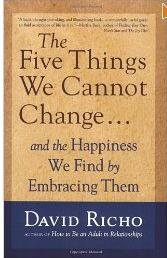
David Richo integrates Eastern and Western philosophies in his book, The Five Things We Cannot Change: And the Happiness We Find by Embracing Them,  to conclude that human life operates in the context of five unavoidable “givens”:

• Everything changes and ends
• Things do not always go as planned
• Life is not always fair
• Pain is a part of life
• People are not always loving and loyal

He asserts that people can experience misery, frustration, anxiety and a host of other uncomfortable emotions if they expect life to contradict these five “givens.”

An approach to reducing stress generated by fighting these “givens” is to reset expectations and to practice a “radical acceptance” of these realities.

Abundant social science research demonstrates that dissatisfaction is generated by the gap between expectations and experience.

Individuals have more control over their expectations than their actual experiences, so a stress-reduction tactic is to modify expectations related to life’s five “givens.”

-*How do you deal with life’s “givens” that may not be as you would like?

LinkedIn Open Group – Brazen Careerist:
Twitter @kathrynwelds
Google+
Facebook Notes:
Blog: – Kathryn Welds | Curated Research and Commentary

©Kathryn Welds

Work-Life Balance – “Getting to 50/50”

Sharon Meers

Sharon Meers

Sharon Meers and Joanna Strober are professionals with demanding careers in addition to their responsibilities as wives and parents.

Their book, Getting to 50/50: How Working Couples Can Have It All by Sharing It All, presents an action plan for couples to negotiate work-life balance (“have it all”), through equal participation so both partners “win.”

Joanna Strober

Joanna Strober

Many will question the feasibility and desirability of “having it all,” but the book’s practical suggestions on managing the sometimes conflicting demands of job, child-care, home-life, couple-relationship, and extended family responsibilities have been well-received by both men and women.

Meers and Strober conducted interviews with parents and employers, surveys with working mothers, and a comprehensive review of current social science research to conclude that children and parents benefit from equal partnership: Mothers work with less guilt, fathers bond more with their kids, and children have attention from two involved parents.

In addition to the tactical suggestions, Meers and Strober acknowledge that the foundation of this social change is based on acting on a new model of equal participation, and advocating for this model in the workplace and in social contexts.

-*What actions have helped you move toward “50/50”?

LinkedIn Open Group – Brazen Careerist
Twitter: @kathrynwelds
Google+
Facebook Notes:
Blog: – Kathryn Welds | Curated Research and Commentary

©Kathryn Welds

“The Motherhood Penalty” in the Workplace

Myra Strober

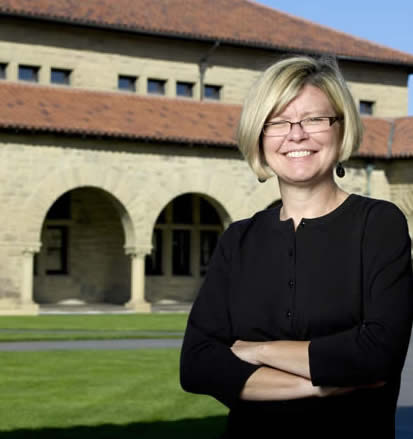
Myra Strober, Labor Economist at Stanford University and Founder of Clayman Center for Gender Research, argues that women who are mothers are at an economic disadvantage in the workplace.
TED Talk

She found that they are less likely to be hired, are offered lower salaries, and are perceived as being less committed to a job than fathers or women without children, according to a recent study by Stanford sociologist Shelley Correll.

Shelley Correll

Strober and Correll discuss costs of child care (day care as well as nannies), as well as the cost of lost wages for the time that women leave the workplace to serve as primary caregivers to children.

-*What career impacts have you observed among employees with parenting responsibilities?

©Kathryn Welds

Women’s Post-Business School Work-Life Issues

Claudia Goldin

Harvard Business School’s Claudia Goldin and Lawrence Katz showed the high price women pay if they choose careers in finance

Goldin and Katz’s survey of 6,500 Harvard and Radcliffe graduates from 1969 and 1992, found that women who had earned an M.B.A. were less likely to be employed and have children (30%) at their fifteenth class reunion than were female who earned M.D. degrees (45%).

Lawrence Katz

They concluded that female M.B.A.s with children select professions with shorter hours, compared to their male peers with children and childless peers of both genders.

The financial impact of this choice is significant: Goldin and Katz found that even after correcting for the amount of time out of work, female M.B.A.s who took a year and a half off made 41 percent less than their counterparts who had worked continuously.
The pay gap was somewhat less for J.D.s (29 percent) and M.D.s (16 percent).

Marianne Bertrand

Goldin and Katz collaborated with University of Chicago economist Marianne Bertrand on another survey of 2,500 male and female University of Chicago M.B.A.s graduating between 1990 and 2006, considered women M.B.A.s involvement in finance roles.

They found that only 8 percent of respondents working in venture capital were women, half the rate of women in investment banking.
In contrast, 59 percent worked in advertising and 71 percent held roles in human resources.

Again, this choice has a significant financial impact for women: Nine years after graduating, the Chicago M.B.A.s working in investment banking (both male and female) were making, on average, $700,000 a year (median was $470,000), compared to an average income for all respondents of $370,000 (median was $190,000).

Occupations with the highest numbers of men also had the highest average number of hours worked, with investment banking averaging 74 hours a week, and consulting averaging 61 hours per week.

In contrast, occupations with the highest numbers of women had the shortest hours: Human resources averaged 51 hours per week and advertising averaged 52 hours a week.
These occupations tend to have lower average pay in addition to requiring fewer average hours of work.

This trend was replicated in medical specialties, in which those with shorter and more predictable hours tend to have more females.
Women now make up 41 percent of new M.D.s in the U.S., but fewer than 30 percent of physicians under the age of 35 practice emergency medicine or general surgery, but 70 percent of gynecologists and nearly 60 percent of dermatologists in the same age cohort are women.

These studies demonstrate the relationship between income, hours worked, and gender-based occupational role choice.

LinkedIn Open Group – Diversity:
Twitter: @kathrynwelds
Google+
Blog: – Kathryn Welds | Curated Research and Commentary
Facebook Notes:

©Kathryn Welds

“Contemplative Neuroscience” Can Modify Brain Functioning

Richard Davidson

Richard Davidson

Richard Davidson, professor at the University of Wisconsin-Madison, says disorders like depression and anxiety can be changed with brain training.

He is an award-winning researcher in neuroplasticity, the process by which the brain’s adaptable, transformative capabilities are deployed.
Davidson asserts that this intentional transformation is enabled by contemplative cognitive practices, including meditation to increase moment-to-moment consciousness.

Davidson distinguishes the neural and behavioral consequences of various contemplative practices, and argues for their positive impacts on physical health for both beginning and experienced practitioners.

His recent research demonstrated that even meditation-based interventions delivered online can produce behavioral and neural changes.
He explained that the field of epigenetics investigates how genes are regulated by the environment, including the neural milieu.

Davidson suggested that contemplative practices can modify the neural environment, and revealed that neurally-inspired behavioral interventions (NIBI) can invoke greater change than any currently-known pharmacological intervention.

He detailed research studies of expert practitioners of contemplative practice, both in the US and in India. He discussed the work showing the link between brain and heart, citing work of Francisco Varela in “neurophenomenology”.

He cited results comparing the impact of training in compassion training (visualizing suffering and wishing freedom from suffering for loved one, self, stranger, difficult person, all beings with the thought: “May you be free from suffering. May you experience joy and ease,” while noticing visceral sensations around the heart) vs cognitive reappraisal training.

Daniel Goleman

Daniel Goleman

He collaborated with his Harvard University graduate student colleague, Daniel Goleman, now known as the originator of the term, “Emotional Intelligence,” to produce a book on Consciousness: the Brain, States of Awareness, and Alternate Realities .

-*How have you used contemplated practices to evoke personal change in attitudes or behaviors?

LinkedIn Open Group – Mindful Leadership:
Twitter: @kathrynwelds
Google+
Facebook Notes:

©Kathryn Welds

Developing “Charisma” and “Presence”

Olivia Fox Cabane

Olivia Fox Cabane

Olivia Fox Cabane integrated research findings from social psychology and neuropsychology with principles of Emotional Intelligence and “Practical Buddhist Philosophy” in her book, The Charisma Myth: How Anyone Can Master the Art and Science of Personal Magnetism

She concluded that charismatic behaviors are based on managing internal state and beliefs through self-awareness to focus on others and “make them feel good.”

She found that “charisma” or “presence” is composed of:

•Presence – mindful attention, patient listening, avoiding interruption

•Power – appearance, clothing, occupy space, positive wording (avoid “don’t”), placebo effect

•Warmth – chin down, eye contact, Duchenne smile (mouth corners, eye corners), gratitude, compassion, appreciation – counteract “hedonic adaptation”

•Goodwill – wishing the other person well

•Empathy – understanding the other’s experience

•Altruism

•Compassion – a combination of empathy+goodwill

•Forgiveness of self and others

•Self-compassion – self-acceptance. Positively correlated with emotional resilience, sense of personal responsibility, accountability, sense of connectedness, life satisfaction, positive relationships with others, self-confidence, willingness to admit errors, low self-pity, low depression, low anxiety, improved immune system functioning

•”Metta” – loving kindness to self, others

Fox Cabane offered three “quick fixes” to increase your “charisma”:

•Lower the intonation of your voice at the end of your sentences (no “Valley Girl talk”…)
•Reduce the speed and rapidity of nodding
•Pause for two seconds before you speak

-*When you see a charismatic person in action, what behaviors and attitudes add to the interpersonal impact and appeal?

©Kathryn Welds