
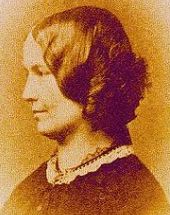
Charlotte Brontë
Feminine charm” was one of the few available negotiation tactics for women in past decades, portrayed in novels by Charlotte Brontë, Jane Austen, and George Eliot

Jane Austen
Former United States Secretary of State Madeleine Albright said that she used “charm” in negotiations with heads of state. This statement inspired University of California, Berkeley’s Laura Kray and Alex Van Zant with Connson Locke of London School of Economics to investigate “feminine charm” in negotiation situations.

Madeleine Albright
They found that “the aim of feminine charm is to make an interaction partner feel good as a way of gaining compliance” and “charm” is characterised by:

Laura Kray
- Friendliness, or concern for the other person,
- Flirtation, or concern for self-presentation.

Hannah Riley Bowles
“Feminine charm” (friendliness plus flirtation) partially buffered the social penalties (“backlash”) against women’s efforts to negotiate, identified by Harvard’s Hannah Riley Bowles and her colleagues.

Linda Babcock
Women who were perceived as flirtatious achieved superior economic deals in negotiations compared with women who were seen as friendly.
This finding validates Carnegie Mellon’s Linda Babcock’s observation that women achieve better negotiation outcomes when they combine power tactics with warmth.
These research results expose “a financial risk associated with female friendliness:…the resulting division of resources may be unfavourable if she is perceived as ‘too nice’.”
-*How do you mitigate the “financial risk associated with female friendliness”?RELATED POSTS:
- How Effective are Strategic Threats, Anger, and Unpredictability in Negotiations?
- Women’s Career Development Model – Individual Action in Negotiation, Networking-Mentoring-Sponsorship, Skillful Self-Promotion – Part 2 of 2
-
Women’s Likeability–Competence Dilemma: Overcoming the Backlash Effect
- Women Don’t Ask for Raises or Promotions as Often as Men
©Kathryn Welds
 Kathryn Welds, PhD | Curated Research + Commentary