Tag Archives: David Dubois

Writing Power Primer Increases Efficacy in High-Stakes Performance

Adam Galinsky

Adam Galinsky

Power ...(regulates) human interaction…it creates patterns of deference, reduces conflict, creates division of labor,” wrote Columbia’s Adam Galinsky.

He evaluated a power-enhancing technique to investigate whether feelings of power are associated with different outcomes in professional interviews.

David Dubois

David Dubois

Collaborating with David Dubois of INSEAD, Tilburg University’s Joris Lammers, and Derek Rucker of Northwestern University, they asked job applicants and business school admission candidates to write about a time they felt powerful or powerless.

Joris Lammers

Joris Lammers

Independent judges who were unaware of the different instructions, rated “applicant’s” written and face-to-face interview performance.
Evaluators assigned highest scores to those who recalled power experiences.

Derek Rucker

Derek Rucker

Judges preferred power-primed applicants, citing their greater persuasiveness and confidence.
These candidates received more offers of job roles and business school admission than those who wrote about powerless experiences or situations unrelated to feelings of power and powerlessness.

Sian Beilock

Sian Beilock

An earlier post highlighted Sian Beilock’s investigation of writing as a coping tool in stressful academic situations.
Her collaborators at University of Chicago, Vanderbilt, and Pace Universities showed that students could manage test anxiety by writing about their concerns to maintain a calm mindset.

Recalling an experience of personal power can influence impressions of persuasiveness, competence, and likeability in professional interviews.
This effect can be enhanced by writing about power experiences to increase confidence and optimism when working toward desired goals.

-*How do you prepare for challenging professional interviews?

-*How effective have your found “power primes” in high-stakes performance situations?

RELATED POSTS:

©Kathryn Welds

Perceived Power Affects Vocal Characteristics, Life Outcomes

Margaret Thatcher

Margaret Thatcher

British Prime Minister Margaret Thatcher participated in vocal training to project greater authority in her political role, with highly effective results.

Even without specific vocal training, research volunteers adopted powerful vocal elements when believed they had power and informational advantages in lab experiments by San Diego State University’s Sei Jin Ko and Melody S. Sadler with Adam D. Galinsky of Columbia.

Sei Jin Ko

Sei Jin Ko

Ko’s team asked more than 160 volunteers to read a text designed to evaluate speaking skills as a baseline for later comparison.
Then, they randomly assigned volunteers to a “high” ranking role with the prime “you have a strong alternative offer, valuable inside information, or high status in the workplace, or by asking participants to recall an experience in which they had power.

The remaining participants were told they had “a weak offer, no inside information, or low workplace status,” or were asked to recall an experience in which they lacked power.

Melody Sadler

Melody Sadler

To compare the impact of these power primes with the baseline reading performance, participants in both groups read a text about negotiating.
People in the high power group spoke in a higher pitch, with greater volume, and less tone variability than the low-power group.
In fact, team Ko found that people in the high power prime group had a similar vocal profile to Thatcher following her vocal training.

Mariëlle Stel

Mariëlle Stel

This contrasts previous research that demonstrated lower vocal pitch is associated with greater perceived power in work by Tilburg University’s Mariëlle Stel and Farah M. Djalal with Eric van Dijk and Wilco W. van Dijk of Leiden University, collaborating with University of California, San Diego’s Pamela K. Smith.

Eric van Dijk

Eric van Dijk

In additional investigations by Ko’s team, additional participants listened to recordings of people who read in the previous condition, and accurately determined which volunteers conveyed higher status and were more likely to engage in high-power behaviors, based only on vocal elements.

Joris Lammers

Joris Lammers

Power primes” or asking people to recall a time they had power and felt powerful, can significantly influence important life opportunities determined by hiring and university admission decisions, reported Tilburg University’s Joris Lammers with David Dubois of INSEAD and Northwestern’s Derek D. Rucker collaborating with Adam D. Galinsky of Columbia.

Thomas Mussweiler

Thomas Mussweiler

Self-generated primes are especially influential because they lead to “assimilation of the power suggestion, whereas primes provided by other people, as in Ko’s investigation, yield “contrast,” suggested Universität Würzburg’s Thomas Mussweiler and Roland Neumann.

Egon Brunswik

Egon Brunswik

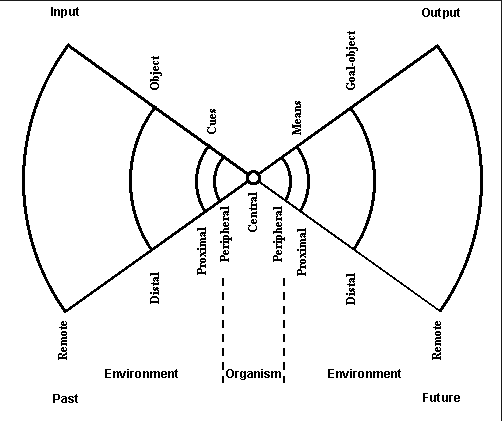
The strong impact of beliefs about power has been explained by Egon Brunswik of Berkeley’s “lens model” of perception, self-fulfilling prophecy theory by University of California’s Robert Rosenthal, and self-efficacy theory described Stanford’s Albert Bandura.

These findings suggest that beliefs about personal power shape behaviors like vocal profile, which can lead to differing outcomes in occupational and life opportunities.

Egon Brunswik's Lens Model

Egon Brunswik’s Lens Model

  • How do you modify your voice to convey power and authority?
  • How do you develop confidence in your power?

RELATED POSTS:

©Kathryn Welds