Category Archives: Thinking

Cognition

Oxytocin Receptor Gene’s Link to Optimism, Self-Esteem, Coping with Stress

Shelley Taylor

Shelley Taylor

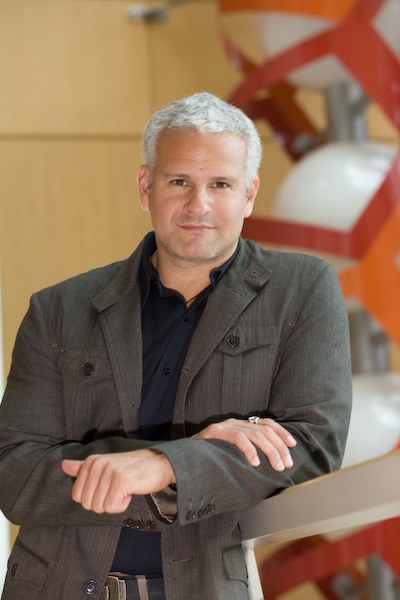
Shelley E. Taylor, distinguished professor at UCLA identified the oxytocin receptor gene (OXTR) link to optimism, self-esteem and “mastery” — the belief that one has control over one’s own life.
These three elements are required to manage stress and depression.

Reported in the Proceedings of the National Academy of Sciences (PNAS), she notes that oxytocin, a hormone that increases in response to stress, is associated with good social skills such as empathy and social behavior, especially under stress.

In one location on the oxytocin receptor gene, two variants occur:

•    “A” (adenine) variant, associated with increased sensitivity to stress, poorer social skills, depressive symptoms and worse mental health outcomes

•    “G” (guanine) variant, associated with optimism, self-esteem and mastery.

This effect was demonstrated in 326 volunteers, who completed measured by self-assessments and saliva samples for DNA analysis.
Those with two “A” nucleotides or one “A” and one “G” at this oxytocin receptor gene location, showed lower levels of optimism, self-esteem and mastery and higher levels of depressive symptoms than people with two “G” nucleotides,

Taylor notes that genes may predict behavior, but do not determine it because many environmental factors and other genes interact with oxytocin receptor gene variants in stress, coping, and emotional behaviors.

These findings suggest people who train themselves to appraise situations more optimistically, to see themselves more worthy, capable and competent, are able to improve ability to cope with stressful events.

Taylor’s book, The Tending Instinct: Women, Men, and the Biology of Relationships, outlines the importance of cultivating socially nurturing environments to mitigate genetic vulnerabilities.

She notes that “a mother’s tending can completely eliminate the potential effects of a gene; a risk for a disease can fail to materialize with nurturing, and a genetic propensity may lead to one outcome for one person and the opposite for another, based on the tending they received.”
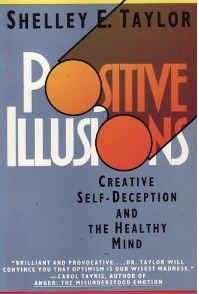
Her most influential work demonstrated a “self-enhancement bias” in her book, Positive Illusions: Creative Self-Deception and the Healthy Mind ,
she explained that “most people regard themselves, their circumstances, and the future as considerably more positive than is objectively likely…. These illusions are not merely characteristic of human thought; they appear actually to be adaptive, promoting rather than undermining good mental health.”

In contrast, Rick Hanson argues that a negative bias is more adaptive to survival than a positive bias.
He notes that negative stimuli produce more neural activity than do equally intense positive ones, and are perceived more easily and quickly: “The brain is like Velcro for negative experiences but Teflon for positive ones.”

His book, Just One Thing: Developing a Buddha Brain One Simple Practice at a Time, recommends meditation to tame automatic negative thoughts.

-*Where have you seen examples of “the tending instinct,” positive illusions and negative bias in the workplace?

See related posts on Hormones and Emotional Expression:
•    Oxytocin, Testoterone: Oxytocin Increases Empathic Work Relationships, Workplace Trust, Generosity
•    Cortisol, Testosterone: Thoughts Change Bodies, Bodies Change Minds, Roles Shape Hormones: “Faking Until It’s Real”

Twitter:  @kathrynwelds
Google+
LinkedIn Open Group Mindful Leadership
Facebook Notes 

Blog: – Kathryn Welds | Curated Research and Commentary

©Kathryn Welds

Minimize “Quest for the Best” Bias

Sheena Iyengar
Sheena Iyengar

Columbia Business School professor Sheena Iyengar, Cassie Mogilner of University of Pennsylvania’s Wharton School, and Baba Shiv of Stanford’s Graduate School of Business collaborated to assess the relative satisfaction and commitment to “sequential choices,” as in “love marriages,” compared with “simultaneous choices”, like arranged marriages.

The Art of Choosing

Iyengar’s earlier research revealed that more choices available at one time are associated with reduced satisfaction.
To evaluate satisfaction with simultaneous vs sequential choosing, Iyengar, Shiv, and Mogilner studied volunteers’ satisfaction and commitment to choices of wine, chocolate, and nail polish colors.
Results, forthcoming in the Journal of Consumer Research, found thatsimultaneous” choosers were more satisfied and committed to their decisions than “sequential” choosers.

Cassie Moligner

In the chocolate experiment, participants considered detailed descriptions of fine chocolates (“dark chocolate ganache with black tea and hints of citrus and vanilla”), and chose which they wanted to taste.
The “simultaneous” group saw the entire list, whereas the “sequential” group saw one choice at a time.

After they selected and tasted the chocolate, participants rated their satisfaction with their choice.
Verdict? “Simultaneous” choosers were more satisfied with their choices than “sequential” choosers.

Baba Shiv

When participants had an opportunity to switch to a different but randomly-selected chocolate, more “sequential” choosers took this option, though they had little information about the choice.
However, when “sequential” choosers were permitted to choose an option they’d already considered, they were less committed to their choice.

The researchers suggest that “sequential” choosers may have regretted forgoing options they didn’t select, and hoped that a future option would be better.

Shiv summarized the dilemma of the “sequential” chooser (or serial dater, serial monogamist): Hope and regret prompt people to move to the next option even though the next option could be worse.
In contrast, “simultaneous” choosers are aware of available options at a point in time, so may spend less time in regret and hope.

Retailers, daters, venture capitalists, hiring managers, house purchasers, and job candidates benefit from presenting and evaluating all choices at one time.

However, simultaneous choice may not be possible, and to avoid the “bias of the eternal quest for the best,” Shiv suggests “mentally converting sequential choices into “quasi-simultaneous” choices by recalling situations when you were happy with you choice, and when you regretted your choices.”

Though an imperfect heuristic, quasi-simultaneous choice may may provide instructive clues to the elements of a satisfying decision.

-*How do you take decisions among many options?

Related Posts on Decision-Making and Bias:

©Kathryn Welds

Hypothetical Questions May Lead to Bias

Baba Shiv

Baba Shiv, Stanford Graduate School of Business profession, showed that hypothetical questions can sway opinion and affect behavior through innuendo and implied rumor.

One example is a political “push poll” during the 2000 South Carolina Republican Primary Elections, which asked voters whether they’d vote for John McCain if they learned that he had fathered an illegitimate child.

Shiv and Duke University Fuqua School of Business professor Gavan Fitzsimons  conducted experimental inquiries of voter attitudes and behavior in 2001, and found that hypothetical questions increase information “accessibility” because the implied criticism is memorable and may align with existing stereotypes, becomes “top-of-mind,” and can direct behavioral choices.

Gavan Fitzsimons

The researchers found that participants simply focus on the hypothetical content, and don’t evaluate its credibility, even when reminded that the situation is hypothetical.

This effect was seen in one experiment where researchers gave a pretrial jury selection questionnaire to a group of actual prospective jurors.

The potential jurors were told not to use the questions to draw conclusions about the case, then some of the prospective jurors were asked how their decision would be affected by learning that the defendant was a gang member.

Participants who received the hypothetical question gave more hypothetical guilty verdicts and harsher sentences than those who received no suggestive questions.

Shiv cautions against posing hypothetical questions in situations where they are frequently used: Jury selection, political polls, marketing focus groups, job interviews.

Despite research findings (by many including Wiesner & Cronshaw’s classic 1988 article in Journal of Applied Psychology) that hypothetical questions about future behavior in work situations do not predict job performance as effectively as actual past job performance, this interview tactic is still used by some employers.

Astute job candidates can respond to hypothetical questions by citing actual past behavior as a “proof-point” of expected job performance, and may explore the interviewer’s underlying concerns in posing hypothetical questions.

-*What impact have you observed for hypothetical questions posed in the workplace?

Related Posts on Decision-Making and Bias:

Twitter:  @kathrynwelds
Google+
LinkedIn Open Group Mindful Leadership
Facebook Notes:

Blog: – Kathryn Welds | Curated Research and Commentary

©Kathryn Welds

Organizational Hierarchies are Easier to Understand, Remember, Manage – Especially those Lead by Men…

Larissa Tiedens

Larissa Tiedens of Stanford’s Graduate School of Business and Emily Zitek of Cornell, assert that “we produce hierarchies to make our lives easier cognitively… (so we) like them more.”

They conducted a series of studies, published in the Journal of Personality and Social Psychology, to investigate organizational structure preferences and their impact on organizational performance. They suggest that organizational design should be determined by organizational objectives rather than allegiance to the ideal of “equality” in all situations.

Emily Zitek

Tiedens and Zitek demonstrated that there was a negative correlation between remembering and liking hierarchies; that is, people didn’t like what they couldn’t easily remember, and they liked what they could remember.

They observed that participants had difficulty understanding and learning symmetric organizational relationships, in which people could give orders to peers and receive orders from these same peers.

Their final experiment determined that participants more quickly memorized hierarchies in which men were at the top, and surmised that male hierarchies are more familiar and expected than other types of social structures.
As with the other experiments, the subjects were more likely to express a preference for the structure they learned the quickest.

Tiedens and Zitek conclude that people generally understand, learn, and like hierarchies more than egalitarian relationships because they are predictable and familiar.
If firms eliminate hierarchies, Tiedens suggests making explicit specific role because “people need a way of organizing information, including information about relationships among people. You need a way to enhance people’s ability to understand what the organization is and how individuals operate within it.”

-*Which organizational hierarchies do you find most memorable? Which are most attractive to you?

LinkedIn Open Group – Psychology in HR (Organisational Psychology)
Twitter: @kathrynwelds
Facebook Notes:
Google+:

Blog: – Kathryn Welds | Curated Research and Commentary

©Kathryn Welds
Google+

Biases in Unconscious Automatic Mental Processing, and “Work-Arounds”

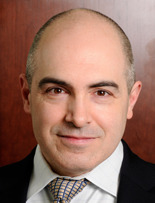
Leonard Mlodinow
Leonard Mlodinow

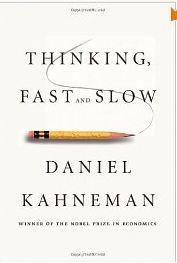
Leonard Mlodinow’s Subliminal: How Your Unconscious Mind Rules Your Behavior reviews evidence of automatic, out-of-awareness brain processing that handles emotional experience and routine task execution, in the same vein as  best sellers by Nobel laureate Daniel Kahneman (Thinking, Fast and Slow) and writer Malcolm Gladwell (Blink: The Power of Thinking Without Thinking).

Daniel Kahneman
Daniel Kahneman

All three authors outline the potential costs of rapid mental processing: error and bias in perception and decision-making, which are less present during mindful analytic problem-solving.

Mlodinow, a Physics Professor at CalTech, has collaborated with Stephen Hawking on two books, and like Kahneman and Gladwell, is a talented storyteller who explains implications of laboratory-based research on cognition and brain functioning.

Carol Tavris
Carol Tavris

Psychologist Carol Tavris discusses the cost of similar biases in cognitive processing in Mistakes Were Made (But Not by Me): Why We Justify Foolish Beliefs, Bad Decisions, 

Numerous studies of erroneous eyewitness testimony demonstrate that memory is constructed of fragmentary elements “stitched” together to form a cohesive narrative.
This contrasts the notion that memory is a “snapshot” replica of an event.

Opportunities for cognitive error are apparent in this Constructivist view of perception and cognition.

Most authors suggest “mindful” practices to counteract inherent biases in cognitive short-cuts, consciously focusing in present perceptions and experiences.

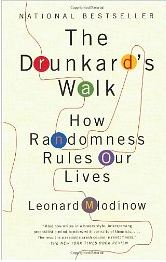
Mlodinow’s previous book, The Drunkard’s Walk: How Randomness Rules Our Lives, demystifies the use of statistics in everyday life, and prepares readers with considered questions to avoid mis-judgments based on seemingly convincing quantitative data.

He demonstrates the prevalence of chance influences in life outcomes, and the pervasive illusion that people have control over many more outcomes than they actually do.

Mlodinow reminds readers that “success” and “failure” contain random influences, and “success” is more dependent on persistence and maintaining an optimistic outlook than raw ability.

-*What practices have helped you mitigate potential cognitive bias associated with rapid mental processing and cognitive “short-cuts”?

*Related posts:

©Kathryn Welds

How Gaming Can Help You Live Better and Longer

Jane McGonigal

Jane McGonigal

Game designer Jane McGonigal’s TED Talk that gaming fulfills the basic human wishes expressed by dying hospice patients:

• Work less hard,
• Stay in touch with friends,
• Let myself be happier,
• Have the courage to express my true self,
• Live a life true to my dreams.

She discussed a practical game, Superbetter, she developed following her own experience of Traumatic Brain Injury (TBI), which left her bedridden, in persistent pain, and suicidal for more than a year.

Based on her love of “Special Missions and Secret Objectives”, she developed four research-based challenges to increase her resilience and capabilities:

• Physical,
• Mental,
• Emotional,
• Social.

She asserts that these tasks help players strengthen abilities to remain motivated and optimistic even in the face of difficulty challenge, and boost physical and emotional well-being.
McGonigal links these capabilities to strengthening social support, increasing stamina and willpower.

Perhaps it’s no coincidence that McGonigal’s twin sister and fellow Ph.D., Kelly McGonigal, conducts research at Stanford University on methods to increase willpower and compassion, and to reduce stress and pain.

Her recent book is The Willpower Instinct: How Self-Control Works, Why It Matters, and What You Can Do To Get More of It

Jane McGonigal seems to triumph in this Jane vs. Colbert face-off …though he may have tried to distract her by mentioning that she is “a girl, and an attractive one at that…with that Big Hair…”

Stephen Colbert

Stephen Colbert

Six-time Stephen Colbert guest, Hayden Planetarium astrophysicist Neil DeGrasse Tyson’s commented that “you’re lucky to come away with your skin when you appear on Colbert’s show.”  Jane seemed to come away with her skin intact.

-*How have you seen gaming improve lives?
-*To what extent do you concur with the hospice patients’ wishes – and implied advice to younger people?

©Kathryn Welds

“Nudging” Compassion, Resilience to Reduce Conflict, Stress

David DeSteno

David DeSteno, directs Northeastern University’s Social Emotions Lab, where he investigates cognitive and neurological mechanism related to social behavior.
In Out of Character: Surprising Truths About the Liar, Cheat, Sinner (and Saint) Lurking in All of Us , and at his PopTech talk, he shared how he investigated whether evoked compassion and empathy is associated with reduced aggression.

He described experiments in which volunteers solve math problems for money.
In some conditions, one of DeSteno’s associates posed as another volunteer and noticeably cheated to earn more money than the real volunteer.
In other conditions, the confederate abided by the rules.

For some experiments, the cheating confederate, a professional actor, evoked empathy and compassion by saying that she was  worried about her brother, who was just diagnosed with a terminal illness.

In these situations, the volunteers were less likely to intentionally inflict discomfort on her in the following study of “taste perception,” a measure of aggression.

In this experimental trial, the volunteer measured a discretionary amount of extra-hot sauce into a cup for the cheating or non-cheating confederates to taste.

Volunteers poured five times more hot sauce for cheating confederates than non-cheating confederates, but they treated cheaters who evoked empathy the same as non-cheaters.

DeSteno noted most people are willing to help others who have some similarity to them, such as a shared identity of sharing a religious faith or hometown, or even are moving together as in conga lines, military drills.

He suggested that movement “synchrony causes separate identities to merge into one,” and demonstrated this trend in a music perception study, where volunteers in the same room tapped their hands on sensors when they heard tones.

In some conditions, the tones were synchronized so the volunteers were tapping at the same time as other volunteers, and in other conditions, the tones were independent.
De Steno found that 50% of volunteers who tapped at the same time were willing to help other volunteers, whereas 20% of those who tapped at different times helped others.
He concluded that volunteers felt more similar by tapping together, so felt more compassion, and were more likely to help others.

DeSteno is investigating social media like Facebook as a platform for sharing similarities to reduce aggression in conflict, cyber-bullying, victims of distant natural disasters.

He  said uses Cass Sunstein’s and Richard Thaler’s idea that small behavioral and organizational changes can “nudge” people to healthier, safer, more productive, and prosperous habits outlined in Nudge: Improving Decisions About Health, Wealth, and Happiness 

Their practical recommendations for designing effective “choice architecture” are consistent with DeSteno’s research-based findings:

* Align incentives with desired outcomes
* Identify possible alternative outcomes in familiar terms
* Provide default options that favor desired outcome behaviors
* Offer prompt, relevant feedback about choices and outcomes.
* Expect deviation from the targeted outcome, and build in ways to prevent, detect, and minimize this variance.
* Structure complex choices to reduce the difficulty of decisions-making

-*How have you seen “similarity” affect workplace collaboration and support?

-*Where have you seen organizations implement “choice architecture” to encourage employee behaviors toward positive goals?

BJ Fogg

Related Post
“Tiny Habits” Start, Maintain Changes

Twitter @kathrynwelds
Google+
LinkedIn Open Group – Stanford Social Innovation Review
Facebook Notes:

Blog: – Kathryn Welds | Curated Research and Commentary

©Kathryn Welds

Online Brain Training For Attention, Memory, Processing Speed, Interpersonal Skills

Michael Merzenich

Michael Merzenich

Michael Merzenich is Chief Scientific Officer of Posit Science and his work has been featured on four PBS specials: The Brain Fitness Program, Brain Fitness 2: Sight and Sound, The New Science of Learning, and Brain Fitness Frontiers.

He asserts that “you can change your brain at any age…You lose your memory because what you hear is not represented clearly in your brain.”
Posit’s online BrainHQ training is designed to help users develop and maintain accurate listening to better remember and speak

This 30-40 hour training uses tasks validated by scientific research to improve the accuracy of receiving information and using it.
Peer-reviewed research studies support the use of systematic brain training to combat the effects of age-related performance decrements, and to assist children with conditions that slow their progress in learning to read.

Posit’s online brain training helps users:
• Focus attention
• Increase brain speed
• Improve memory
• Enhance people skills

Like a gym membership, this series of exercises focuses on increasing strength, stamina, speed, resilience, and capacity.
Exercises include auditory processing, a foundation of accurate memory processing, and useful field of view, imperative in tasks like driving a car safely.

Merzenich discusses the development of brain plasticity from birth
and his TED Talk expands his remarks.

MyBrainSolution offers a different solution based on similar findings in brain plasticity and training studies.
Free trial .

-*What brain development practices have you seen render more benefits?

LinkedIn Open Group Women in Technology (Sponsored by EMC)
Twitter: @kathrynwelds
Google+
Facebook Notes:
Blog: – Kathryn Welds | Curated Research and Commentary

©Kathryn Welds

claim token A44X23VUV3Q6

Cooperative Instinct, Reflective Self-Interest

David Rand

Harvard scientists, led by postdoctoral researcher David Rand found that volunteers who were asked to contribute to the greater good at their own expense at first tended toward generous and cooperative behavior, but upon reflection, they chose self-interest.
Evolutionary biologist Martin Nowak and psychology professor Joshua Greene collaborated with Rand in the study published in Nature .

Martin Nowak

Rand, Nowak, and Greene gave money to volunteers for use in games where they could earn more, depending on choices about cooperating with others.

The team found that people acted most generously when they made immediate decisions about how much to contribute, or were asked to report a time when their intuitions and emotions guided them to a good decision.

When volunteers took more time to consider decisions, or were asked to remember a time they benefitted because rational thinking or when an emotional response led them to an adverse decision, they contributed less to the common pool of money.

Joshua Greene

In one situation, four participants were given 40 cents each and told that they could contribute as much money as desired to the common pool, which would be doubled and then divided equally among the four people.

People decided most quickly on their contribution strategy were more willing to contribute than those who considered the choice for more than 10 seconds.

When researchers forced some volunteers to decide a strategy rapidly and others to wait at least 10 seconds before deciding, they again observed that those who decided most quickly contributed most.

Daniel Kahneman, a Nobel laureate and author of the book, Thinking, Fast and Slow, which examines the two cognitive systems and the role they play in decision-making.

The researchers suggest that people’s intuitive responses are associated with what they have learned to benefit them, through experiences in various situations.

They asked participants if their everyday interactions with others were typically cooperative or uncooperative.
Those who reported having mainly cooperative interactions made quick decisions to contribute more and gave less when they had more time to ponder the scenario.
In contrast, those who reported uncooperative interactions in daily life gave the same amount when they made fast vs more deliberate decisions.

These studies could suggest policies or incentives to encourage desired behavior.
One complication that researchers consider is that a monetary reward or a fine is introduced, people may begin to ignore their first response and weigh the costs and benefits.
This delay can lead to people acting more in self-interest, and less for the common good.

An example of this paradox is seen in a study of Israeli day care programs.
Monetary fines were levied when parents picked up their children late, and the number of parents who arrived late increased rather than decreased.

This finding is consistent with punishment’s lower efficacy in motivating behavior.

-*In which work situations do you favor cooperation with colleagues?
-*When do you find that “enlightened self-interest” is the more prudent approach at work?

LinkedIn Open Group Stanford Social Innovation Review
Twitter: @kathrynwelds
Google+
Facebook Notes:
Blog: – Kathryn Welds | Curated Research and Commentary

©Kathryn Welds

Video Games as Cognitive Enhancers

Adam Gazzaley

Neuroscientist Adam Gazzaley of UCSF presents convincing data to suggest that video games can improve cognitive functioning in people of all ages, due to increasing performance based on training and generalization of learning in three limiting areas of:

• Processing speed
• Attention
• Working memory

Training in one skill has been shown in previous research not to generalize to other skills, so Gazzaley’s lab investigated whether training with video games can generalize to improve the brain’s three limitations (above).

His recent work has confirmed this trend, and next studies are intended to monitor generalizability to Activities of Daily Living such as shopping and finding directions.

Training may be strategic, to instruct in “tips” to manage challenging situations, as in occupational therapy or physical therapy or plasticity-based, using repetition, feedback, adaptive adjustment of difficulty based on performance.

Medal of Honor, a first person shooter game, proved more effective than Tetris or crossword puzzles in counteracting the brain’s three limitations (above).

Most effective games are:
• Fast-paced
• Unpredictable
• Engaging, immersive
• Provide feedback
• Adjust difficulty based on performance
• Provide changes to the brain’s three limitations: working memory, attention, processing speed via interference

Cliff Nass

Mastering interference is important because research in Gazzaley’s lab as well as work by Cliff Nass of Stanford, and Daphne Bavelier, University of Rochester, confirm that attention can be impaired by internal intrusions (mind-wandering), intentional multi-tasking (for fun, diversion) or external interference through distraction or interruption (semi-intentional multi-tasking).

Distraction and interruption reduce cognitive performance when people try to multi-task.
These researchers conclude that “multi-tasking is a myth” because “task-switching” occurs instead of simultaneous processing.
They note that task-switching (also important in driving skills) becomes slower with age, but can be improved through training on video games like Neuroracer.

Daphne Bavelier

Bavelier demonstrated that video gamers show improved skills in visual perception (contrast sensitivity, resolve small detail in context of clutter, resolve different levels of threat), attention (retain focus, less distractable).
In addition, these skills can generalize to improvements in other “real-world skills” like spatial cognition.

Skilled gamers’ have efficient neural firings and in different areas of the brain than in less adept individuals, similar to a trend seen among musicians vs non-musicians.
fMRI studies have demonstrated that gamers’ brain structures actually change in brain networks that control attention:

• Parietal cortex – orienting attention
• Frontal lobe – maintaining attention
• Anterior cingulate –allocate, regulate attention, resolve conflicts
Your brains on action games

Games may be recommended for people of all ages to enhance cognition as further research findings add to these trends in the next decade.

Videogames as cognitive neurotherapeutics
Brain – Memory and Multitasking
Exercising Your Brain
Memory and the Aging Brain
The Distracted Mind

-*How have you used game-based training to strengthen your brain functioning?
-*How effective is multi-tasking in your work organization?


©Kathryn Welds