
Developing accurate inferences about others’ expectations and possible actions is essential for successful social interactions.

Demis Hassabis
The brain’s process to predict others’ thoughts and behaviors was investigated by University College London’s Demis Hassabis, with R. Nathan Spreng of Cornell University, Vrije Universiteit’s Andrei A. Rusu, Harvard’s Clifford A. Robbins and Daniel Schacter, and Raymond A. Mar of York University.

R. Nathan Spreng
Volunteers read about four fictional individuals’ personality traits, then imagined each character’s behaviors in different situations.
Afterward, participants underwent fMRI brain scans.

Andrei Rusu
Accurate inferences about characters’ personality traits and behaviors were associated with activity in the medial prefrontal cortex of the brain, demonstrating that “brain activity can reveal what and whom someone is thinking about.”

Clifford Robbins
Judgments of people’s degree of agreeableness and extraversion were associated with activity other cortical areas (Lateral temporal cingulate and posterior cingulate, respectively).
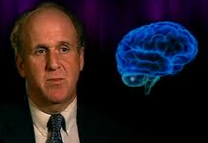
Daniel Schachter
These brain regions “code” inferred personality traits in others and synthesize these characteristics into “personality models” that represent individuals and their likely behaviors in new situations.

Matthew Hertenstein
People can also infer others’ emotional intentions through unseen touch, reported Matthew Hertenstein with DePauw University colleagues Brittany Bulleit and Ariane Jaskolka, UC Berkeley’s Dacher Keltner and Betsy App of University of Denver.

Brittany Bulleit-Ariane Jaskolka
Two hundred volunteers in the United States and Spain accurately perceived anger, fear, disgust, love, gratitude, and sympathy through a stranger’s unseen touch on the participants’ arms.

Dacher Keltner
Observers also accurately identified emotions conveyed by touchers’ “tactile displays” toward paired volunteers.

Betsy App
Gian Gonzaga of UCLA collaborated with Keltner and University of Wisconsin’s Daniel Ward to investigate male-female communication pairs’ ability to infer emotion.

Gian Gonzaga
The researchers attributed high power to one volunteer in a communication pair, then compared interactions when male-female pairs were in an equal-power condition.
Participants who were ascribed high power made less accurate judgments of the communication partner’s emotion.
In contrast, individuals who were assigned the low power role reported greater self-consciousness and anxiety.
Men engaged in power behaviours even when female participants were attributed equal power, but displayed fewer power behaviours when both participants were men.
These studies confirm power differentials between women and men, and that male-female pairs misinterpreted each other’s attempts to convey emotions (“emotion blindness” ).
Male pairs accurately detected anger, but men did not understand women’s attempts to convey anger in male-female pairs.
Likewise, women did not accurately detect men’s attempts to convey compassion.
This demonstrates gender-related limitations to accurate empathy and emotionally intelligent interpersonal inferences.
-*How do you develop accurate inferences about others’ opinions and behaviors?
-*How do you revise your hypotheses about others’ personalities?
RELATED POSTS:
- Reduce “Affective Forecasting” Errors
- Developing a SMARTER Mindset to increase Resilience, Emotional Intelligence – Part 1
- Developing a SMARTER Mindset for Resilience, Emotional Intelligence – Part 2
©Kathryn Welds
 Kathryn Welds, PhD | Curated Research + Commentary
Pingback: How Accurate are Personality Judgments Based on Physical Appearance? | Kathryn Welds | Curated Research and Commentary
Pingback: Gender Differences in Emotional Expression: Smiling | Kathryn Welds | Curated Research and Commentary
Pingback: Your Brain in Court: Cognitive Privacy, US Constitution and Neuroimaging | Kathryn Welds | Curated Research and Commentary
Pingback: Reading Literary Fiction Increases “Theory of Mind” Empathic Insight | Kathryn Welds | Curated Research and Commentary
Pingback: Detecting Trustworthiness, Opening Your Mind? | Kathryn Welds | Curated Research and Commentary
Pingback: Emotional Awareness Enables Focus, Risk-taking Even When “Stressed” | Kathryn Welds | Curated Research and Commentary
Pingback: Stress Increases Women’s Performance and Empathic Attunement, but not Men’s | Kathryn Welds | Curated Research and Commentary