Tag Archives: Thinking

Thinking

Leadership “From the Inside Out”

Kevin Cashman

Kevin Cashman

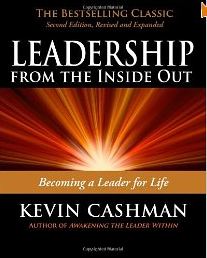
Kevin Cashman provides a leadership development frame that complements Daniel Goleman’s Emotional Intelligence concepts and Jim Collins’s delineation of Level 5 Leadership, in his book Leadership from the Inside Out.

He is Senior Partner, Korn/Ferry International, and Leadership From the Inside Outhis research and experience indicate that leadership effectiveness originates in the individual’s personal character.
If individuals wish to develop leadership skills, they must apply “learning agility” to acquire new perspectives and skills, then deploy them under new business circumstances.

Cashman reviewed the four elements of “learning agility”:

Mental agility, characterized by questioning solutions, consulting others, demonstrating openness

Interpersonal agility, based on effective, precise listening, using questions to elicit clarification

Results agility, or developing new approaches to achieve results, incorporate new ways to resolve problems

Change agility, which includes flexibility and adaptability

Cashman found three steps in leadership development, common across many approaches, and recommended these elements in any leadership development program:

Building Awareness – Self-discovery of strengths, development areas

Building Commitment – Developing emotional engagement to act on developmental needs and to apply strengths

Building Practice – Undertaking new actions such as journaling to build awareness, commitment and reflection on learnings.

The goal of these steps is to develop three aspects of leadership:

Authenticity, characterized by integrity, alignment between words and actions that is recognized by others; continued striving toward authenticity in future potential

Influence, involving the self-expression and application of personal strengths to create value

Value creation in work and community

Leadership from the Inside Out outlines seven related pathways to leadership mastery, with related practices.
Many of these recommendations may sound spiritual, philosophical, non-specific, and difficult to translate into specific actions.
One element of self-reflection in Cashman’s process may be to operationalize these recommendations into concrete, measurable actions:

Personal Mastery, based on developing self-awareness

Purpose Mastery involves applying talents to serve values and add value through authentic self-expression in leading others

Change Mastery, incorporates acceptance of uncertainty and impermanence to learn from these changes and demonstrate agility in adapting to new circumstances

Interpersonal Mastery relates to human connection, the second element of Goleman’s Emotional Intelligence. Collaboration is a foundation to create contribution and long-term value

Being Mastery represents a spiritual dimension, however the individual defines it, to connect one’s depth of character to support effectiveness and contribution

Balance Mastery refers to building, maintaining energy to foster resilience, effectiveness, fulfillment. It moves beyond time management, a practice to manage a limited resource, to generate and regenerate energy to lead

Action Mastery practices leading by coaching others and self to create value.

-*What actions have helped develop leadership from the inside out?

Related Posts:
The Considered “Pursuit of Less”
Whom Do You Serve as a (Level 5, Level 6) Leader?  
“Contemplative Neuroscience”: Transform your Mind, Change your Brain
Developing “Big 8” Job Competencies

©Kathryn Welds

Considered “Pursuit of Less”

Jim Collins

Jim Collins

Jim Collins in his book How the Mighty Fall: And Why Some Companies Never Give In, outlined how once-successful companies failed, and discovered that one significant contributor was what he labeled “the undisciplined pursuit of more.”  It is true for companies and it is true for careers.
“The Pursuit of Less” can be easier after separating “The Trivial Many from The Significant Few, as Vilfredo Pareto‘s

Vilfredo Pareto

Vilfredo Pareto

principle outlines.

 
Greg McKeown

Greg McKeown

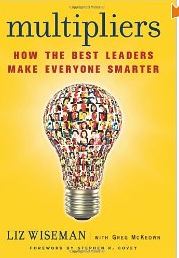
Greg McKeown, co-author with Liz Wiseman (former VP at Oracle Corporation) of Multipliers: How the Best Leaders Make Everyone Smarter, suggests the following steps:

Liz Wiseman

Liz Wiseman

Use more extreme criteria:

  • Do I love this career?
  • Do I love these career activities?

• “What am I deeply passionate about?
• “What taps my talent?
• “What meets a significant need in the world?

These can be organized as a Venn diagram of Talent x Market x Passion to reveal an intersecting area of optimal contribution.

  • What is essential?
    Eliminate the rest
  • Conduct a life audit.
    Eliminate an old activity before you add a new one.

Beware of the endowment effect or divestiture aversion, the self-confirmation bias of valuing something more once we own it.

Kahneman, Knetsch and Thaler found that when coffee mugs and pens of equal value were randomly distributed to volunteers, people were less willing to trade the item they were given for the other item.

The researchers concluded that “owning” either the pen or the coffee mug decreased the volunteers’ willingness to part with their objects, contradicting

Ronald Coase

Ronald Coase

Nobel prize winner Ronald Coase’s economic theorem which predicted that 50% of the objects would be traded.

To break this cognitive bias, Tom Stafford, psychology professor at

Tom Stafford

Tom Stafford

University of Sheffield and author of Mind Hacks, suggests asking “If I did not own this item, how much would I pay, invest, or sacrifice to obtain it?”

Similarly, McKeown argues for considered minimalism and simplicity in organizations, careers, and life.

-*How are you selective about your pursuits in career and life?

LinkedIn Open Group Brazen Careerist:
Twitter @kathrynwelds
Google+
Facebook Notes:
Blog: – Kathryn Welds | Curated Research and Commentary

©Kathryn Welds

Overcoming Decision Bias: Allure of “Availability Heuristic”, “Primacy Effect”

Dana Carney

Dana Carney of Berkeley’s Haas School of Business and Mahzarin Banaji of Harvard University investigated whether people prefer the first option they receive in their paper, “First is Best”.

Olympics gymnastic competitors are aware of this phenomenon, and typically prefer to perform first, to “set the standard” against which other competitors must excel.
Volunteers in one experience were shown pictures of two violent criminals and then asked which one deserved parole.

Mahzarin Banaji

Mahzarin Banaji

Most favored the first mug shot they viewed, no matter the order of viewing.
Similarly, 68% of respondents at a railway station in Boston preferred the first stick of gum they were offered, and volunteers preferred to buy a car from the first salesperson they met.
This is one reason that the first advertisement break on television costs 10-15% more than the second, according to Jonathan Allan, sales director at British broadcaster Channel 4.

Carney and Banaji concluded that people “consistently” the first choice if they have time limits or are distracted, and that this primacy effect is even more important online, because few people scroll through dozens of pages of search results.
Google page rankings, and dating sites such as Badoo, are aware of this trend, and offer enhancements to position results in a more eye-catching location.

Awareness of the human cognitive short-cuts that bias decision making can mitigate their effects.

-*What decision short-cuts do you use?
-*When have you seen these heuristics lead to decision bias?

Blindspot: Hidden Biases of Good People, Mahzarin R. Banaji, Anthony G. Greenwald

LinkedIn Open Group: Mindful Leadership
Twitter: @kathrynwelds
Google+:
Facebook Notes:
Blog: – Kathryn Welds | Curated Research and Commentary

©Kathryn Welds

Organizational “Learning Agility” Interventions

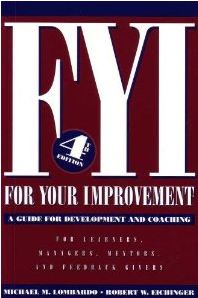
M.M. Lombardo and R.W. Eichinger introduced the concept of “learning agility” in organizations, and proposed its correlates to workplace performance.

They defined four elements of learning agility in employees:

·         People agility – know themselves, learn from experience, treat others with consideration, display calm and resilience under changing conditions

·         Results agility – obtain results under difficult conditions, inspire others to perform “above and beyond”, inspire confidence in other

·         Mental agility – think through problems with a fresh perspective, comfortable with complexity, ambiguity, communicating  reasoning

·         Change agility – curious about ideas, willing to experiment and develop skills.

Lombardo and Eichinger’s framework has been used by subsequent researchers to measure the impact of learning agility (“learning from experience”) on workplace performance.

De Rue, Ashford, and Myers point out that this concept “lacks conceptual clarity” in their recent article in Industrial and Organizational Psychology, and  they propose that learning agility is characterized by differences in speed of learning and flexibility in incorporating new information and skills.

In addition, they suggest that learning agility  includes  both cognitive processes and behavioral processes that can be enhanced by:

·         Cognitive simulations – visualizing scenarios to forecast issues and potential solutions

·         Counterfactual thinking – imagining “what might have been” if different choices had been taken to clarify cause-and effect relations

·         Recognizing patterns – categorizing apparently dissimilar experiences into repeating patterns

·         Seeking feedback  – proactively requesting corrective recommendations and varied perspectives from others, and making it “safe” to provide this information

·         Experimenting – trying new behavioral and thought patterns

·         Reflecting – considering and consolidating “lessons learned” to guide futures behavior decisions

Peter Senge

Peter Senge

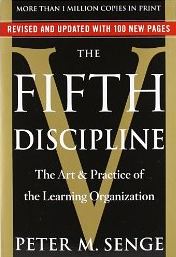
Much past research on learning agility has not fully considered the degree to which the organizational culture and climate provide a context of psychological safety and acceptance of risk-taking, but Peter Senge has called for this type of supportive context in his work on The Learning Organization.

-*How do you differentiate “learning agility” from elements of “Emotional Intelligence”?

LinkedIn Open Group – Psychology in Human Resources (Organisational Psychology)
Twitter: @kathrynwelds
Google+
Facebook Notes:
Blog: – Kathryn Welds | Curated Research and Commentary

©Kathryn Welds

Human Decision Biases Modeled with Automatons

Yuval Salant

Yuval Salant

Yuval Salant of Northwestern University’s Kellogg School of Management, notes that research by psychologists and behavioral economists established that humans exhibit predictable biases in making decisions.

He created an algorithm-based mathematical model of how a machine would make choices with limited information.
Some automatons make the same type of predictable errors as humans, including the “primacy” effect (choosing one of the first items on a list) or the “recency” effect (selecting the last item on a list).

One of Salant’s automatons is based the decision-making strategy known as “satisficing”, or establishing in advance the criteria an option must fulfill to be selected.
This type of decision-making may pertain in selecting a meal, a residence, vehicle, vacation, or mate.

These three decision-making tendencies might be considered short-cuts, or heuristics, to avoid the exhaustive task of thoroughly analyzing every possible option.

As a result, computer scientists surmise that this type of “rational” (thorough) decision making does not scale for large problems, due to limitations of processing power and memory.
The same may be true for human decision-making in light of limitations to “working memory” (correlated with IQ), not to mention inevitable time constraints.

Salant’s most human-like automaton is a “history-dependent satisficer,” which may remember previously-considered and may modify its decision criteria based on available options.

He pointed to examples that support the decision biases he identified: people are more likely to vote for candidates who appear first on a ballot, to order one of the first items on a menu, to click on options at the top of a computer screen (such as an airline or hotel option).

-*What decision biases do you experience?
-*How do you neutralize your potential decision biases?

LinkedIn Open Group – Social Media Marketing
Twitter: @kathrynwelds
Google+
Facebook Notes:
Blog: – Kathryn Welds | Curated Research and Commentary

©Kathryn Welds

Passion, Purpose, “Personal Mastery” in Work and Life

Srikumar Rao

Srikumar Rao

Srikumar Rao gained acclaim at Columbia, Haas, Kellogg, and London Business Schools for his innovative course, Creativity and Personal Mastery (CPM), which he transformed into his book, Are You Ready to Succeed? Unconventional Strategies to Achieving Personal Mastery in Business and Life
TED talk

According to Rao, those who pursue Creativity and Personal Mastery (CPM) practices:

1) …find that their judgment improves.
While they become deeply passionate about what they do, they also become more objective and less wedded to any particular outcome.
Their newfound ability to entertain many different perspectives makes them vastly more creative.

2) …experience an increase in their ability to inspire others and release pent-up creativity.
They relate better to others – subordinates, peers and bosses – and become more adept at enlisting them to achieve a common goal.

His program is based on 10 principles, which are illustrated in 90-second Inner Espresso Video Clips, listed below:

1: Actions and Not Outcomes

2: Fallacy of Expecting Thanks and Gratitude

3: Whatever you focus on Expands

4: The Power of Labels

5: Time of Attitude

6: The Power of Shifting your Focus

7: Mental Models

8: Miracles Happen Every Day

9: What are others thinking about you?

10: Your Boss is the FedEx Guy

*What practices help you “master” your work and life challenges?

LinkedIn Open Group – Leadership Think Tank
Twitter: @kathrynwelds
Google+:
Facebook Notes:
Blog: – Kathryn Welds | Curated Research and Commentary

©Kathryn Welds

Detect and Mitigate Decision Biases

Sydney Finkelstein

Sydney Finkelstein

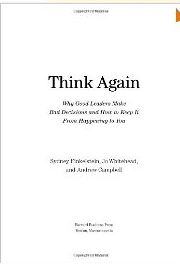
Sydney Finkelstein, Jo Whitehead and Andrew Campbell of Dartmouth’s Tuck Business School, posit that leaders make decisions largely through unconscious neural processes in their book and Harvard Business Review article, Think Again: Why Good Leaders Make Bad Decisions and How to Keep it from Happening to You

• Pattern recognition
• Emotional tagging.

Although these processes are usually effective “heuristics” that enable quick and often prudent decisions, pattern recognition and emotional tagging can be distorted by biases including:

• Self-interest
• Emotional attachments to a position
• Misleading memories derived from inaccurate generalizations from dissimilar previous situations

The authors articulate common-sense recommendations to detect and mitigate “red flags” to decisional bias, echoing conclusions from much-earlier research on “GroupThink” more than four decades ago:

• Enlist the perspective of an independent person to identify which decision makers are likely to be affected by self-interest, emotional attachments, or misleading memories

• Develop safeguards and oversight mechanisms in organizational governance processes

• Alert decision-makers to possible sources of bias

• Build in opportunities to analyze, “spar”, challenge, decisions

-*What approaches do you use to detect and neutralize your potential biases in decision-making?

LinkedIn Open Group – Mindful Leadership:
Twitter: @kathrynwelds
Google+
Facebook Notes:

©Kathryn Welds

“Contemplative Neuroscience” Can Modify Brain Functioning

Richard Davidson

Richard Davidson

Richard Davidson, professor at the University of Wisconsin-Madison, says disorders like depression and anxiety can be changed with brain training.

He is an award-winning researcher in neuroplasticity, the process by which the brain’s adaptable, transformative capabilities are deployed.
Davidson asserts that this intentional transformation is enabled by contemplative cognitive practices, including meditation to increase moment-to-moment consciousness.

Davidson distinguishes the neural and behavioral consequences of various contemplative practices, and argues for their positive impacts on physical health for both beginning and experienced practitioners.

His recent research demonstrated that even meditation-based interventions delivered online can produce behavioral and neural changes.
He explained that the field of epigenetics investigates how genes are regulated by the environment, including the neural milieu.

Davidson suggested that contemplative practices can modify the neural environment, and revealed that neurally-inspired behavioral interventions (NIBI) can invoke greater change than any currently-known pharmacological intervention.

He detailed research studies of expert practitioners of contemplative practice, both in the US and in India. He discussed the work showing the link between brain and heart, citing work of Francisco Varela in “neurophenomenology”.

He cited results comparing the impact of training in compassion training (visualizing suffering and wishing freedom from suffering for loved one, self, stranger, difficult person, all beings with the thought: “May you be free from suffering. May you experience joy and ease,” while noticing visceral sensations around the heart) vs cognitive reappraisal training.

Daniel Goleman

Daniel Goleman

He collaborated with his Harvard University graduate student colleague, Daniel Goleman, now known as the originator of the term, “Emotional Intelligence,” to produce a book on Consciousness: the Brain, States of Awareness, and Alternate Realities .

-*How have you used contemplated practices to evoke personal change in attitudes or behaviors?

LinkedIn Open Group – Mindful Leadership:
Twitter: @kathrynwelds
Google+
Facebook Notes:

©Kathryn Welds