Oxytocin Receptor Gene’s Link to Optimism, Self-Esteem, Coping with Stress

Shelley Taylor

Shelley Taylor

Shelley E. Taylor, distinguished professor at UCLA identified the oxytocin receptor gene (OXTR) link to optimism, self-esteem and “mastery” — the belief that one has control over one’s own life.
These three elements are required to manage stress and depression.

Reported in the Proceedings of the National Academy of Sciences (PNAS), she notes that oxytocin, a hormone that increases in response to stress, is associated with good social skills such as empathy and social behavior, especially under stress.

In one location on the oxytocin receptor gene, two variants occur:

•    “A” (adenine) variant, associated with increased sensitivity to stress, poorer social skills, depressive symptoms and worse mental health outcomes

•    “G” (guanine) variant, associated with optimism, self-esteem and mastery.

This effect was demonstrated in 326 volunteers, who completed measured by self-assessments and saliva samples for DNA analysis.
Those with two “A” nucleotides or one “A” and one “G” at this oxytocin receptor gene location, showed lower levels of optimism, self-esteem and mastery and higher levels of depressive symptoms than people with two “G” nucleotides,

Taylor notes that genes may predict behavior, but do not determine it because many environmental factors and other genes interact with oxytocin receptor gene variants in stress, coping, and emotional behaviors.

These findings suggest people who train themselves to appraise situations more optimistically, to see themselves more worthy, capable and competent, are able to improve ability to cope with stressful events.

Taylor’s book, The Tending Instinct: Women, Men, and the Biology of Relationships, outlines the importance of cultivating socially nurturing environments to mitigate genetic vulnerabilities.

She notes that “a mother’s tending can completely eliminate the potential effects of a gene; a risk for a disease can fail to materialize with nurturing, and a genetic propensity may lead to one outcome for one person and the opposite for another, based on the tending they received.”
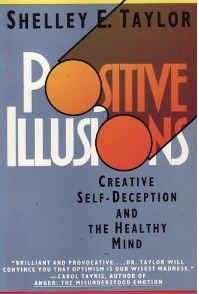
Her most influential work demonstrated a “self-enhancement bias” in her book, Positive Illusions: Creative Self-Deception and the Healthy Mind ,
she explained that “most people regard themselves, their circumstances, and the future as considerably more positive than is objectively likely…. These illusions are not merely characteristic of human thought; they appear actually to be adaptive, promoting rather than undermining good mental health.”

In contrast, Rick Hanson argues that a negative bias is more adaptive to survival than a positive bias.
He notes that negative stimuli produce more neural activity than do equally intense positive ones, and are perceived more easily and quickly: “The brain is like Velcro for negative experiences but Teflon for positive ones.”

His book, Just One Thing: Developing a Buddha Brain One Simple Practice at a Time, recommends meditation to tame automatic negative thoughts.

-*Where have you seen examples of “the tending instinct,” positive illusions and negative bias in the workplace?

See related posts on Hormones and Emotional Expression:
•    Oxytocin, Testoterone: Oxytocin Increases Empathic Work Relationships, Workplace Trust, Generosity
•    Cortisol, Testosterone: Thoughts Change Bodies, Bodies Change Minds, Roles Shape Hormones: “Faking Until It’s Real”

Twitter:  @kathrynwelds
Google+
LinkedIn Open Group Mindful Leadership
Facebook Notes 

Blog: – Kathryn Welds | Curated Research and Commentary

©Kathryn Welds

Minimize “Quest for the Best” Bias

Sheena Iyengar
Sheena Iyengar

Columbia Business School professor Sheena Iyengar, Cassie Mogilner of University of Pennsylvania’s Wharton School, and Baba Shiv of Stanford’s Graduate School of Business collaborated to assess the relative satisfaction and commitment to “sequential choices,” as in “love marriages,” compared with “simultaneous choices”, like arranged marriages.

The Art of Choosing

Iyengar’s earlier research revealed that more choices available at one time are associated with reduced satisfaction.
To evaluate satisfaction with simultaneous vs sequential choosing, Iyengar, Shiv, and Mogilner studied volunteers’ satisfaction and commitment to choices of wine, chocolate, and nail polish colors.
Results, forthcoming in the Journal of Consumer Research, found thatsimultaneous” choosers were more satisfied and committed to their decisions than “sequential” choosers.

Cassie Moligner

In the chocolate experiment, participants considered detailed descriptions of fine chocolates (“dark chocolate ganache with black tea and hints of citrus and vanilla”), and chose which they wanted to taste.
The “simultaneous” group saw the entire list, whereas the “sequential” group saw one choice at a time.

After they selected and tasted the chocolate, participants rated their satisfaction with their choice.
Verdict? “Simultaneous” choosers were more satisfied with their choices than “sequential” choosers.

Baba Shiv

When participants had an opportunity to switch to a different but randomly-selected chocolate, more “sequential” choosers took this option, though they had little information about the choice.
However, when “sequential” choosers were permitted to choose an option they’d already considered, they were less committed to their choice.

The researchers suggest that “sequential” choosers may have regretted forgoing options they didn’t select, and hoped that a future option would be better.

Shiv summarized the dilemma of the “sequential” chooser (or serial dater, serial monogamist): Hope and regret prompt people to move to the next option even though the next option could be worse.
In contrast, “simultaneous” choosers are aware of available options at a point in time, so may spend less time in regret and hope.

Retailers, daters, venture capitalists, hiring managers, house purchasers, and job candidates benefit from presenting and evaluating all choices at one time.

However, simultaneous choice may not be possible, and to avoid the “bias of the eternal quest for the best,” Shiv suggests “mentally converting sequential choices into “quasi-simultaneous” choices by recalling situations when you were happy with you choice, and when you regretted your choices.”

Though an imperfect heuristic, quasi-simultaneous choice may may provide instructive clues to the elements of a satisfying decision.

-*How do you take decisions among many options?

Related Posts on Decision-Making and Bias:

©Kathryn Welds

Squeeze a Ball, Improve Performance under Pressure

Jürgen Beckmann

Improve performance under pressure by squeezing a ball or clenching the non-dominant hand before competition to activate specific motor regions of the brain, according to Jürgen Beckmann and his research team, who studied experienced soccer players, tae kwon do experts and badminton players.

The Journal of Experimental Psychology: General reported that right-handed athletes who squeezed a ball in their left hand before competing were less like to “choke under pressure” than right-handed players who squeeze a ball in their right hand.

Beckmann and collaborators Peter Gröpel and Felix Ehrlenspiel noted that when athletes don’t perform well “under pressure,” they may be focusing on their own movements rather than relying on automatic motor skills developed through repeated practice – or “muscle memory.”

They explained, “Rumination can interfere with concentration and performance on motor tasks … Many movements…can be impaired by attempts at consciously controlling them. This technique can be helpful for many situations and tasks.”

Iris Hung

Iris Hung

Other applications include business situations like presentations or negotiations, or helping elderly people improve balance by clenching a ball before walking or climbing stairs.
Iris Hung the National University of Singapore found additional applications: Avoiding the temptation of sugary snacks in a cafeteria, enduring physical pain, and disturbing information.

Hendrie Weisinger

Hendrie Weisinger, whose best-seller Nobody’s Perfect was the first of 8 books, integrates this finding with other research-based recommendations to manage performance pressure with “Nerves of Steel.” His new book is scheduled for release by Random House in 2013.

His other books, including Emotional Intelligence at Work and Anger at Work, along with video excerpts are available on his website.

-*How do you maintain performance when experiencing pressure?

Twitter:  @kathrynwelds
Google+
LinkedIn Open Group Executive Coach
Facebook Notes:

Blog: – Kathryn Welds | Curated Research and Commentary

©Kathryn Welds

Hypothetical Questions May Lead to Bias

Baba Shiv

Baba Shiv, Stanford Graduate School of Business profession, showed that hypothetical questions can sway opinion and affect behavior through innuendo and implied rumor.

One example is a political “push poll” during the 2000 South Carolina Republican Primary Elections, which asked voters whether they’d vote for John McCain if they learned that he had fathered an illegitimate child.

Shiv and Duke University Fuqua School of Business professor Gavan Fitzsimons  conducted experimental inquiries of voter attitudes and behavior in 2001, and found that hypothetical questions increase information “accessibility” because the implied criticism is memorable and may align with existing stereotypes, becomes “top-of-mind,” and can direct behavioral choices.

Gavan Fitzsimons

The researchers found that participants simply focus on the hypothetical content, and don’t evaluate its credibility, even when reminded that the situation is hypothetical.

This effect was seen in one experiment where researchers gave a pretrial jury selection questionnaire to a group of actual prospective jurors.

The potential jurors were told not to use the questions to draw conclusions about the case, then some of the prospective jurors were asked how their decision would be affected by learning that the defendant was a gang member.

Participants who received the hypothetical question gave more hypothetical guilty verdicts and harsher sentences than those who received no suggestive questions.

Shiv cautions against posing hypothetical questions in situations where they are frequently used: Jury selection, political polls, marketing focus groups, job interviews.

Despite research findings (by many including Wiesner & Cronshaw’s classic 1988 article in Journal of Applied Psychology) that hypothetical questions about future behavior in work situations do not predict job performance as effectively as actual past job performance, this interview tactic is still used by some employers.

Astute job candidates can respond to hypothetical questions by citing actual past behavior as a “proof-point” of expected job performance, and may explore the interviewer’s underlying concerns in posing hypothetical questions.

-*What impact have you observed for hypothetical questions posed in the workplace?

Related Posts on Decision-Making and Bias:

Twitter:  @kathrynwelds
Google+
LinkedIn Open Group Mindful Leadership
Facebook Notes:

Blog: – Kathryn Welds | Curated Research and Commentary

©Kathryn Welds

“Greenlight Group”: No-cost, Self-managed Support to Achieve Professional, Personal Goals

Gary Burlingame

Gary Burlingame recently published a meta-analysis of 40 studies that demonstrate the efficacy of groups for a number of conditions, and Dennis Kivlighan noted that group success is associated with participants’:

  • Shared purpose
  • Common identity
  • Social support through interaction
  • Reciprocal influence of the members on one another
  • Interpersonal feedback to reduce idiosyncratic individual perspectives and attitudes.

Dennis Kivlighan

In addition, groups can benefit more people at lower cost than individual coaching.

An example of these principles at work was reported recently at a large Silicon Valley technology company.

Jennifer Hartnett-Henderson

Jennifer Hartnett-Henderson [@JHartnettHender] organized a “Greenlight Group”, based on Keith Ferrazzi’s model outlined in his book, Who’s Got Your Back?

Using a “snowball” recruitment strategy, she brought together five individuals from different internal organizations, in varied roles and job levels.

The goal was to meet six times as a team over a 90 day period, to help each other achieve their most challenging professional and personal goals by giving each other feedback, supporting each other, and holding each other accountable to progress.

She outlined the benefits of “Greenlight Groups”, and executives at the company were impressed with the value proposition when they learned about it via “word-of-mouth”:

  • Self-manage career goals with no-cost peer support
  • Achieve personal goals
  • Access confidential peer support, feedback from trusted advisors

Over the six meetings:

  • Two participants transferred to new internal roles at higher grade levels
  • Two participants achieved greater work-life balance by reducing number of weekly work hours to less than 55 per week
  • Two participants dramatically increased social media presence
  • Two participants explored internal and external career opportunities
  • Two participants explored monetizing entrepreneurial opportunities
  • Two participants initiated weight-reduction program
  • One participant initiated exercise program
  • One participant increased exercise time and performance

This example suggests the value of self-organized, mutual-assistance groups to achieve professional and personal goals over a defined time period.

-*What self-managed career development programs have been effective in your workplaces?

Twitter  @kathrynwelds
Google+
LinkedIn Open Group Brazen Careerist
Psychology in Human Resources (Organisational Psychology)
Facebook Notes:

Blog: – Kathryn Welds | Curated Research and Commentary 

©Kathryn Welds

How and Who of Innovation

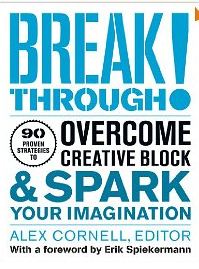
Many innovation experts urge overcoming roadblocks by “doing something different”, and Alex Cornell joins the chorus in his Breakthrough!: Proven Strategies to Overcome Creative Block and Spark Your Imagination 

In contrast, Tom Kelley offered more specific guidance in the stages of “how” innovation is managed at IDEO in   
  The Art of Innovation: Lessons in Creativity from IDEO, America’s Leading Design Firm:

•              Analyze the market, potential client groups, technology, and constraints for each innovation problem
•              Observe people in typical life situations
•              Visualize novel concepts and their intended customers
•              Evaluate and refine prototypes during rapid iterations
•              Implement new concept for commercialization

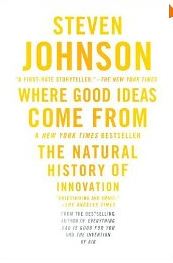
Steven Johnson offers seven non-linear principles of innovation in Where Good Ideas Come From: The Natural History of Innovation:                                                          

•              Adjacent possible: Timing is essential for innovation to be accepted

•              Liquid networks: Connections between different disciplines to enable ideas development and implementation

•              Slow hunch: Insights incubate, germinate over time before becoming executable

•              Serendipity: Spontaneous, chance juxtaposition of ideas applied to other

•              Error: Outcomes considered “failures” from numerous trials  may lead to – and be required – to successfully implement ideas

•              Exaptation: Reusing existing ideas, technologies for a different purpose

•              Platforms: Adapting, recombining existing knowledge, components, implementation approaches to develop something new

Expert innovators seem to follow these guidelines and have developed skill through what Geoff Colvin calls “Deliberate Practice” in “What Really Separates World-Class Performers from Everybody Else”, the sub-title of his book, Talent is Overrated.

He notes that Deliberate Practice is not considered “fun”, but is a highly demanding and repeated mental challenge, systematically designed to improve performance with consistent expert monitoring and feedback.

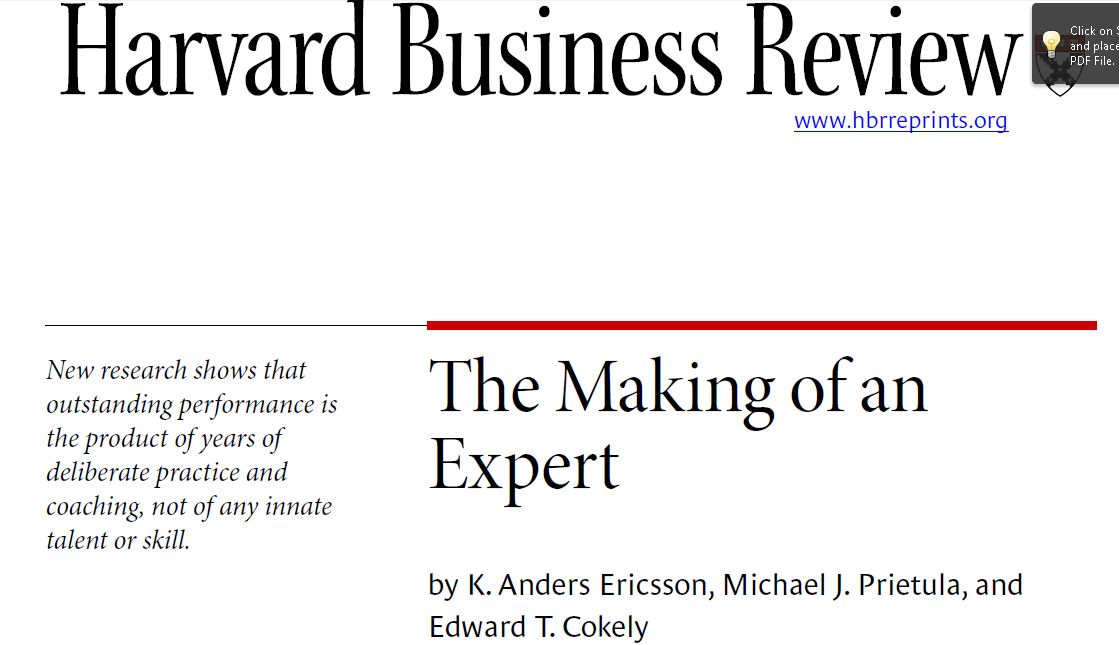
Colvin’s premise is based on K. Anders Ericsson’s classic Harvard Business Review article, “The Making of an Expert“, which outlines three contributors to superior performance across disciplines:

•             Deliberate Practice to improve existing skills and to extend the reach and range of skills
•             Expert coaching with consistent monitoring and corrective feedback
•              Support from family and mentors

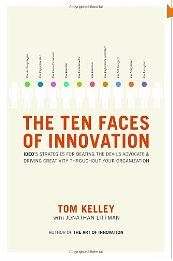
Kelley of IDEO focused more recently on the “who” of innovation in The Ten Faces of Innovation: IDEO’s Strategies for Defeating the Devil’s Advocate and Driving Creativity Throughout Your Organization, organized by Learning, Building, and Organizing capabilities:                     

•              Experience
•              Set Designer
•              Caregiver
•              Storyteller
•              Anthropologist
•              Cross-pollinator
•              Hurdler
•              Experimenter
•              Collaborator
•              Director
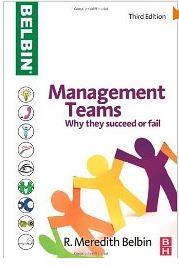
Meredith Belbin offered similar analysis of eight team roles in his Team Roles at Work  and Management Teams: Why they succeed or fail  to ignite collaborative strategy definition and execution.   

These findings suggest that processes and practices can help shape innovation, but consistent, focused and attentive practice increases capacity to innovate more than “natural talent” — validating the well-known homespun advice to “work hard” and demonstrate a “strong work ethic.”

-*What processes and roles do you use to increase innovation at work?

Related post:  
It’s Mostly Random, So Just Do Something: Suggestions to Guide Innovation, Creativity

Twitter: @kathrynwelds
LinkedIn Open Group The Executive Coach
Google+
Facebook Notes:

Blog: – Kathryn Welds | Curated Research and Commentary

©Kathryn Welds

It’s Mostly Random, So Just Do Something

Several recent books showcase Big Ideas in innovation:

  • Success often has random elements
  • Active experiments and reflective “incubation” are required for effective innovation.

Frans Johansson

Frans Johansson

Frans Johansson argues that most success “comes from things we cannot predict and plan: serendipitous moments, unexpected and spontaneous approaches, unusual combinations, and lucky breaks,” in the form of “click moments”, which can move people and ideas to a new, unexpected direction” in in Click: Seizing Opportunity in an Unpredictable World.

Leonard Mlodinow

Leonard Mlodinow

Johansson, Leonard Mlodinow and Nate Silver (“American statistician, sabermetrician, psephologist”) all demonstrate that events are more random than people typically acknowledge, and Johansson recommends specific actions that individuals and organizations can take to favorably focus this randomness

Nate Silver

Nate Silver

Follow your curiosity:  Capitalize on interests and “passions” to drive creative explorations

  • Use cross-disciplinary, “inter-sectional” thinking to break “associative barriers”
  • Examine surprises and unintended consequences for possible inspiration and re-usable ideas
  • Be aware of opportunities everywhere, requiring a mindful engagement rather than living “automatically”, and explore “all” opportunities
  • Scan for momentum and align to it
  • Choose a less predictable, or more “contrarian” solution
  • Act: Place many “purposeful bets” to try many options, with no expectation or guarantee of “success”
  • Minimize bet size to reduce the impact of loss
  • Take the smallest executable step (measured by time, money, partners)
  • Calculate acceptable loss rather than focusing on return on investment
  • Create “large hooks” to scaffold and leverage creative “borrowing” from existing sources
  • Shift focus from the problem to enable cognitive “incubation” of ideas
  • “Double down” when opportunities are not obvious

Many of these recommendations are more similar to behaviors intended to increase creativity and innovation than to quantitative finesse maneuvers.

For example Johansson’s recommendation to engage in “purposeful bets” draws from Peter Sims’ recommendations to place Little Bets: How Breakthrough Ideas Emerge from Small Discoveries, which are low-risk experiments to discover, develop, and test an idea.

  • Experiment to “fail quickly to learn fast”  – see post on Eddie Obeng
  • “Play”  by establishing a fun environment to cultivate innovation
  • Immerse  by interacting with customers
  • Reorient by make celebrating small wins and undertaking improvement “pivots”
  • Iterate by frequently testing, refining and improving-*How do you detect and optimize opportunities?
    -*How do you manage uncertainty in your career?

See more recommendations to boost innovation and creativity at: How and Who of Innovation  LinkedIn Open Group The Executive Coach

Related posts
Cognitive Biases in Unconscious Automatic Mental Processing, and “Work-Arounds”

Twitter @kathrynwelds
Google+
LinkedIn Open Group-Mindful Leadership:
LinkedIn Open Group – Women in Technology (sponsored by EMC)
Facebook Notes:

Blog: – Kathryn Welds | Curated Research and Commentary

©Kathryn Welds

Doonesbury Celebrates Women’s Contributions to Work Groups via Thought Diversity and Emotional Intelligence

Doonesbury Celebrates Women’s Contributions to Work Groups via Thought Diversity and Emotional Intelligence

-* How have you seen women’s Emotional Intelligence applied in the workplace?

Use Your Own Stories to Communicate with Power and Impact

Annette Simmons

Annette Simmons

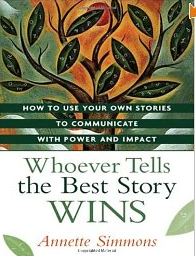
Annette Simmons asserts that the power of stories derives from stimulating feelings and focusing these sentiments on a goal or action in her book, Whoever Tells the Best Story Wins: How to Use Your Own Stories to Communicate with Power and Impact

Nancy Duarte

Nancy Duarte

Nancy Duarte, who designed Al Gore’s original Inconvenient Truth slides, concurs in her most recent book, Resonate: Present Visual Stories that Transform Audiences 

George Lakoff

George Lakoff

UC Berkeley professor George Lakoff, in his classic, Metaphors We Live By, contends that stories create a framework that directs and filters attention, and enables the speaker to “control the conclusions.”

Simmons suggests the following sources of stories:

1.Personal stories of your successes
2.Personal stories of failures, to demonstrate learning, and to build trust and credibility
3.Stories of mentors and other people who influenced you
4.Memorable stories from books, movies, and current events that influenced you.

Aristotle

Aristotle

She referred to Aristotle‘s premise that the best stories contain knowledge (logos), feeling (pathos), and credibility (ethos) when she offered guidelines for effective story-telling:

1. Describe events in a way that evokes a concrete, sensory experience, as it is the way to stimulating emotion
2. Be brief
3. Offer measurable outcomes
4. Enable the listener to similar situations, organizations
5.Solidarity, or enabling the listener to experience another person’s point-of-view

-*What practices enable you to craft influential, memorable “stories”?

LinkedIn Open Group – Psychology in HR (Organisational Psychology)
Twitter: @kathrynwelds
Google+
Facebook Notes:

Blog: – Kathryn Welds | Curated Research and Commentary

©Kathryn Welds

Trusted Leader Assessment without a 360 Degree Evaluation

Ever wonder how you are perceived by the team? … and don’t have the time or budget for a complete 360 degree assessment?

Mike Figliuolo

Mike Figliuolo

Mike Figliuolo proposes Trusted Leader Assessment without a full 360 degree evaluation in his book, One Piece of Paper: The Simple Approach to Powerful, Personal Leadership

His Trusted Leader Self-Assessment is based on his Leadership Maxims training course, and expands his advocacy for the value of creating, articulating, and fulfilling a personal leadership philosophy.

He asks individuals to consider four areas of personal leadership:

Leading yourself:
What motivates you?
What are your personal rules of conduct?
What do you want the “future you” to stand for? Does your team know what you are passionate about at work?
Does your team know your ultimate professional goal?
Have you ever shared your personal ethical code with your team?
Does your team know your sources of inner strength and motivation?
Do your team members understand your perspective on personal accountability?

Leading thinking:
Where are you taking your team?
How will you innovate to drive change?
Is your team clear on what your most critical performance standards are?
Does your team know your view of the team’s vision and mission?
Does your team know how you like to generate new ideas?
Does your team know your views on how you make decisions?

Leading people:
Is your preferred leadership style clearly understood by your team?
Do your team members feel like you genuinely treat them like individuals?
Does your team feel that you understand the day-to-day reality of each of their jobs?
Do your team members feel like you’re fully committed to their growth and development?

Leading a balanced life:
How do you achieve equilibrium between work and personal obligations?
Does your team know your boundaries between work and life?
Would your team say you do a good job of keeping things in perspective?
Does your team know what you’re passionate about outside of work?

-*Which of Figliuolo’s “Four Questions” enable you to lead yourself and others?

Robert Galford

Robert Galford

The Trusted Leader, Robert M. Galford, Anne Seibold Drapeau

LinkedIn Open Group – Psychology in HR (Organisational Psychology):
Twitter: @kathrynwelds
Google+
Facebook Notes:

Blog: – Kathryn Welds | Curated Research and Commentary   

©Kathryn Welds