Monthly Archives: April 2012

Considered “Pursuit of Less”

Jim Collins

Jim Collins

Jim Collins in his book How the Mighty Fall: And Why Some Companies Never Give In, outlined how once-successful companies failed, and discovered that one significant contributor was what he labeled “the undisciplined pursuit of more.”  It is true for companies and it is true for careers.
“The Pursuit of Less” can be easier after separating “The Trivial Many from The Significant Few, as Vilfredo Pareto‘s

Vilfredo Pareto

Vilfredo Pareto

principle outlines.

 
Greg McKeown

Greg McKeown

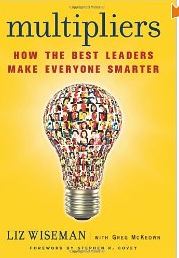
Greg McKeown, co-author with Liz Wiseman (former VP at Oracle Corporation) of Multipliers: How the Best Leaders Make Everyone Smarter, suggests the following steps:

Liz Wiseman

Liz Wiseman

Use more extreme criteria:

  • Do I love this career?
  • Do I love these career activities?

• “What am I deeply passionate about?
• “What taps my talent?
• “What meets a significant need in the world?

These can be organized as a Venn diagram of Talent x Market x Passion to reveal an intersecting area of optimal contribution.

  • What is essential?
    Eliminate the rest
  • Conduct a life audit.
    Eliminate an old activity before you add a new one.

Beware of the endowment effect or divestiture aversion, the self-confirmation bias of valuing something more once we own it.

Kahneman, Knetsch and Thaler found that when coffee mugs and pens of equal value were randomly distributed to volunteers, people were less willing to trade the item they were given for the other item.

The researchers concluded that “owning” either the pen or the coffee mug decreased the volunteers’ willingness to part with their objects, contradicting

Ronald Coase

Ronald Coase

Nobel prize winner Ronald Coase’s economic theorem which predicted that 50% of the objects would be traded.

To break this cognitive bias, Tom Stafford, psychology professor at

Tom Stafford

Tom Stafford

University of Sheffield and author of Mind Hacks, suggests asking “If I did not own this item, how much would I pay, invest, or sacrifice to obtain it?”

Similarly, McKeown argues for considered minimalism and simplicity in organizations, careers, and life.

-*How are you selective about your pursuits in career and life?

LinkedIn Open Group Brazen Careerist:
Twitter @kathrynwelds
Google+
Facebook Notes:
Blog: – Kathryn Welds | Curated Research and Commentary

©Kathryn Welds

Overcoming Decision Bias: Allure of “Availability Heuristic”, “Primacy Effect”

Dana Carney

Dana Carney of Berkeley’s Haas School of Business and Mahzarin Banaji of Harvard University investigated whether people prefer the first option they receive in their paper, “First is Best”.

Olympics gymnastic competitors are aware of this phenomenon, and typically prefer to perform first, to “set the standard” against which other competitors must excel.
Volunteers in one experience were shown pictures of two violent criminals and then asked which one deserved parole.

Mahzarin Banaji
Mahzarin Banaji

Most favored the first mug shot they viewed, no matter the order of viewing.
Similarly, 68% of respondents at a railway station in Boston preferred the first stick of gum they were offered, and volunteers preferred to buy a car from the first salesperson they met.
This is one reason that the first advertisement break on television costs 10-15% more than the second, according to Jonathan Allan, sales director at British broadcaster Channel 4.

Carney and Banaji concluded that people “consistently” the first choice if they have time limits or are distracted, and that this primacy effect is even more important online, because few people scroll through dozens of pages of search results.
Google page rankings, and dating sites such as Badoo, are aware of this trend, and offer enhancements to position results in a more eye-catching location.

Awareness of the human cognitive short-cuts that bias decision making can mitigate their effects.

-*What decision short-cuts do you use?
-*When have you seen these heuristics lead to decision bias?

Blindspot: Hidden Biases of Good People, Mahzarin R. Banaji, Anthony G. Greenwald

©Kathryn Welds

Organizational “Learning Agility” Interventions

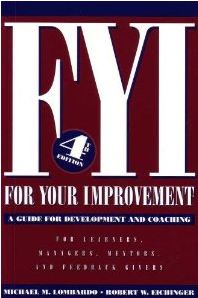
M.M. Lombardo and R.W. Eichinger introduced the concept of “learning agility” in organizations, and proposed its correlates to workplace performance.

They defined four elements of learning agility in employees:

·         People agility – know themselves, learn from experience, treat others with consideration, display calm and resilience under changing conditions

·         Results agility – obtain results under difficult conditions, inspire others to perform “above and beyond”, inspire confidence in other

·         Mental agility – think through problems with a fresh perspective, comfortable with complexity, ambiguity, communicating  reasoning

·         Change agility – curious about ideas, willing to experiment and develop skills.

Lombardo and Eichinger’s framework has been used by subsequent researchers to measure the impact of learning agility (“learning from experience”) on workplace performance.

De Rue, Ashford, and Myers point out that this concept “lacks conceptual clarity” in their recent article in Industrial and Organizational Psychology, and  they propose that learning agility is characterized by differences in speed of learning and flexibility in incorporating new information and skills.

In addition, they suggest that learning agility  includes  both cognitive processes and behavioral processes that can be enhanced by:

·         Cognitive simulations – visualizing scenarios to forecast issues and potential solutions

·         Counterfactual thinking – imagining “what might have been” if different choices had been taken to clarify cause-and effect relations

·         Recognizing patterns – categorizing apparently dissimilar experiences into repeating patterns

·         Seeking feedback  – proactively requesting corrective recommendations and varied perspectives from others, and making it “safe” to provide this information

·         Experimenting – trying new behavioral and thought patterns

·         Reflecting – considering and consolidating “lessons learned” to guide futures behavior decisions

Peter Senge

Peter Senge

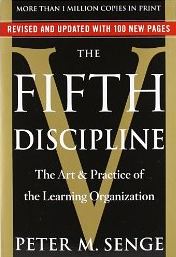
Much past research on learning agility has not fully considered the degree to which the organizational culture and climate provide a context of psychological safety and acceptance of risk-taking, but Peter Senge has called for this type of supportive context in his work on The Learning Organization.

-*How do you differentiate “learning agility” from elements of “Emotional Intelligence”?

LinkedIn Open Group – Psychology in Human Resources (Organisational Psychology)
Twitter: @kathrynwelds
Google+
Facebook Notes:
Blog: – Kathryn Welds | Curated Research and Commentary

©Kathryn Welds

Female and Minority Supervisor Influence

Katherine L. Milkman

Wharton operations and information management professor Katherine L. Milkman and Harvard Business School professor Kathleen L. McGinn, investigated how race and gender affect career mobility for young professionals, especially those entering career fields where they must be promoted to remain (law firms, universities, consulting firms).

Kathleen L. McGinn

They examined five years of personnel data and employee interviews from a large national law firm and found a correlation between the number of female supervisors and the probability of promotion and retention of junior-level female employees, published in Harvard Business School’s Working Knowledge as “Looking Up and Looking Out: Career Mobility Effects of Demographic Similarity among Professionals.”

The enabling benefit of demographically similar employees and supervisors was accompanied by a perhaps surprising correlation.
Work groups with a high number of same-gender or same-race underrepresented minorities had a higher attrition rate, attributed to employees’ perception that the competition reduced their chances for promotion.

Milkman and McGinn noted that placing many underrepresented employees (women and underrepresented minorities) in the same group may lead to structural marginalization, or “ghettoes” of low-power.
This effect was present in groups composed mostly of men.
In contrast, the exit decisions of white and Asian employees did not seem affected by working in groups with other white and Asian employees.

The researchers cited the massively unequal representation of women and minorities among partners in professional services organizations.
A 2009 study that showed women made up 46% of associates but 19% of partners across U.S. law firms, and racial minorities represented 20% of the lawyers across the country but only 6% of partners.

Milkman is currently analyzing data on the role that race and gender play in sponsorship or patronage in academia.
She sent emails to 6,500 professors at academic institutions across the country from purported male, female, white, or minority “students”  requesting a 10-minute meeting for one-time mentoring, either that day or next week.

She found that “female” and “minority” students received significantly fewer responses from prospective mentors, particularly when asked for assistance in the future.
She noted that these findings contrast with the popular expectation of less overt or unconscious discrimination in academic settings.

-*How have you seem race and gender affect career mobility in the past year?

LinkedIn Open Group – Diversity – A World of Change 
Twitter: @kathrynwelds
Google+
Facebook Notes:
Blog: – Kathryn Welds | Curated Research and Commentary

©Kathryn Welds

Human Decision Biases Modeled with Automatons

Yuval Salant

Yuval Salant

Yuval Salant of Northwestern University’s Kellogg School of Management, notes that research by psychologists and behavioral economists established that humans exhibit predictable biases in making decisions.

He created an algorithm-based mathematical model of how a machine would make choices with limited information.
Some automatons make the same type of predictable errors as humans, including the “primacy” effect (choosing one of the first items on a list) or the “recency” effect (selecting the last item on a list).

One of Salant’s automatons is based the decision-making strategy known as “satisficing”, or establishing in advance the criteria an option must fulfill to be selected.
This type of decision-making may pertain in selecting a meal, a residence, vehicle, vacation, or mate.

These three decision-making tendencies might be considered short-cuts, or heuristics, to avoid the exhaustive task of thoroughly analyzing every possible option.

As a result, computer scientists surmise that this type of “rational” (thorough) decision making does not scale for large problems, due to limitations of processing power and memory.
The same may be true for human decision-making in light of limitations to “working memory” (correlated with IQ), not to mention inevitable time constraints.

Salant’s most human-like automaton is a “history-dependent satisficer,” which may remember previously-considered and may modify its decision criteria based on available options.

He pointed to examples that support the decision biases he identified: people are more likely to vote for candidates who appear first on a ballot, to order one of the first items on a menu, to click on options at the top of a computer screen (such as an airline or hotel option).

-*What decision biases do you experience?
-*How do you neutralize your potential decision biases?

LinkedIn Open Group – Social Media Marketing
Twitter: @kathrynwelds
Google+
Facebook Notes:
Blog: – Kathryn Welds | Curated Research and Commentary

©Kathryn Welds
Investing in Women for Venture Capitalists, Angel Investors

Pemo Theodore

Pemo Theodore

Pemo Theodore, Founder of Ezebis, collaborated with Ai Ching, co-founder of  Piktochart to create an informative, sobering infographic about investing in women.

They note that only 15% of angel investors are women and only 11% of investing partners at VC firms in the United States are women.

Ai Ching

Ai Ching

Theodore and Ching  portrayed the meaning of these statistics in relation to women’s participation in the workforce, and other dimensions in this compelling infographic, using Ching’s inforgraphic-generating product, Piktochart.

-*What barriers and enablers have you observed for women entrepreneurs?
-*What infographic tools do you find most useful?

LinkedIn Open Group – Harvard Business Review
Twitter: @kathrynwelds
Google+
Facebook Notes:
Blog: – Kathryn Welds | Curated Research and Commentary

©Kathryn Welds