Tag Archives: Daniel R. Ames

Range Offers vs Point Offers for Better Negotiation Settlements

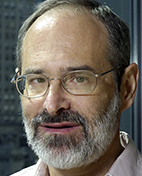
Daniel Ames

Daniel Ames

Many people avoid making negotiation offers as a range of values, because they expect that co-negotiators will “anchor” on the range’s lower value or higher value. 

Malia F Mason

Malia F Mason

However, range offers led to stronger outcomes in experiments by Columbia University’s Daniel R. Ames and Malia F. Mason.
This team suggested that these “dual anchors” signal a negotiator’s value awareness and politeness.

Range offers and point offers have varying impacts, depending on the proposer’s perceived preparation, believability, respectfulness, and reasonableness.

Negotiators’ credibility, interpersonal style, and understanding of value  were associated with the anchor value’s influence on agreements.

Ames and Mason tested three types of negotiation proposal ranges:

  • Bolstering Range in which the target point value as the bottom of the range and an aspirational value as the top of the range.
    This strategy usually yields generous counteroffers and higher settlement prices. They recommend using Bolstering Range Offers in negotiations.  
  • Backdown Range features the target point value as the upper end of the range and a concession value as the lower offer.
    This approach often leads to accepting the lower value and they do not recommend this approach.
  • Bracketing Range includes the target point offer and often has neutral settlement outcomes for the offer-maker.
    This tactic can be perceived by co-negotiators as more collaborative and less aggressive.
Martin Schweinsberg

Martin Schweinsberg

Extreme anchors are often seen as aggressive and unrealistic, may lead to negotiation breakdown, according to INSEAD’s Martin Schweinsberg with Gillian Ku of London Business School, collaborating with Cynthia S. Wang of University of Michigan, and National University of Singapore’s Madan M. Pillutla.
Even experienced, skillful negotiators said they were offended by extreme offers.
Likewise, less capable negotiators were more likely to walk away from these negotiations.

Gilliam Ku

Gilliam Ku

Point offers and range offers operated independently and interacted to  influence settlement values. 
They concluded that Bolstering Range Offers imply the co-negotiator’s reservation price and can positively influence negotiation outcomes, whereas Precise Offers influence the perception of offer credibility

  • When do you present a precise negotiation offer instead of a negotiation range?

RELATED POSTS:

Least Skillful Performers May Have Greatest Illusions of Competence

William Shakespeare

William Shakespeare

The Foole doth thinke he is wise, but the wiseman knowes himselfe to be a Foole,” wrote  William Shakespeare in As You Like It.
Charles Darwin decoded this observation with his update: “Ignorance more frequently begets confidence than does knowledge.”

Charles Darwin

Charles Darwin

Both view are applicable to the workplace and notoriously “clueless” players like Dilbert’s Pointy Haired Boss.

Pointy Haired Boss

Pointy Haired Boss

Incompetent performance often results from ignorance of performance standards in both cognitive skills and physical skills, found Columbia’s David Dunning and Justin Kruger of NYU in a series of experiments.

David Dunning

David Dunning

Volunteers performed humor, grammar, and logic tasks, then viewed their performance scores and again estimated their performance rank.
Competent individuals accurately estimated their rank, whereas incompetent individuals overestimated their ranks despite actual feedback.

Dunning and Kruger posited that incompetent people:

  •          Overestimate their skill levels,
  •          Overlook other people’s skills,
  •          Underestimate their lack of skill in relation to performance standards.

Justin Kruger

Justin Kruger

However, training may reverse this “insight blindness.”
Low-skill individuals in some cases can benefit from corrective feedback and recognize their original lack of skill after they participate in skill training.

The Dunning–Kruger effect describes unskilled individuals’ sense of “illusory superiority,” when they rate their ability as much higher than average although it is actually much lower than average.
In contrast, highly competent individuals miscalibrate other’s performance.

Joyce Ehrlinger

Joyce Ehrlinger

Kerri Johnson

Kerri Johnson

These observations were validated by Washington State University’s Joyce Ehrlinger, Kerri Johnson of UCLA, and Cornell’s Matthew Banner.

People also demonstrate “illusory superiority” when they estimate their ability to identify deception and to infer intentions and emotions (interpersonal sensitivity),  found Columbia’s Daniel R. Ames and Lara K. Kammrath of Wilfrid Laurier University.

Daniel Ames

Daniel Ames

Their results replicated previous findings that most people overestimate their social judgment and mind-reading skills, and showed that people who demonstrate least accurate social judgment and “mind-reading” significantly overestimate their relative competence.

Lara Kamrath

Lara Kamrath

Ames and Kammrath suggested that these inaccurate self-assessments are based “in general narcissistic tendencies toward self-aggrandizement.”

Different tasks elicit differing degrees of the illusory superiority bias, according to University of Michigan’s Katherine A. Burson, Richard P. Larrick of Duke University, University of Chicago’s Joshua Klayman.

Katherine Burson

Katherine Burson

When performing moderately difficult tasks, best and worst performers provided similarly accurate estimates of their skills.
However, when they performed more difficult tasks, best performers provided less accurate skill estimates than worst performers.

Richard Larrick

Richard Larrick

Burson and team proposed that “noise-plus-bias” explains erroneous judgments of personal skill across competence levels.

Dunning and Ehrlinger showed that people’s views of themselves and their skill change when influenced by external cues.
They note that this effect can limit women’s participation in STEM careers (Science, Technology, Engineering, Mathematics).

Joshua Klayman

Joshua Klayman

The team found that women performed equally to men on a science quiz, yet participants underestimated their performance because they assigned low judgments to their general scientific reasoning ability.
This inaccurate underestimate of abilities can dissuade many women from entering STEM careers.

The Dunning–Kruger effect may be culturally limited because one study found that East Asians tend to underestimate their abilities due to norms of humility, and see underachievement as a chance to improve themselves and cooperate with others.

-*How do you mitigate overestimate and underestimates of your skill performance?
-*Where have you seen inaccurate performance estimate affect long-range career achievement?

RELATED POSTS:

©Kathryn Welds

Work with Experts – But Don’t Compete – to Improve Performance

Francis Flynn

Francis Flynn

People can improve performance on tasks ranging across:

Emily Amanatullah

Emily Amanatullah

when performing individually but alongside an outstanding performer, according to Stanford’s Francis Flynn and University of Texas, Austin’s Emily Amanatullah.

They attributed performance enhancement to increased mental focus and physical effort, motivated by:

Robert Zajonc

Robert Zajonc

  • Social facilitation due to the expert role model’s mere presence, described more than 50 years ago by Robert Zajonc, then of University of Michigan
  • Social comparison” with “skillful coactors,” demonstrated by University of North Carolina’s John Seta.

    John Seta

    John Seta

However, performance declined when people competed directly with a strong performer, Flynn and Amanatullah reported.
They concluded that “high status coactors” enable people to “psych up” performance when not competing, but become “psyched out” when challenging the expert, based on their analysis of Masters golf tournament statistics over five years.

Ray Reagans

Ray Reagans

High status co-actors can achieve their influential position through demonstrated skill or their greater awareness of status dynamics due to better ability to “self-monitor,” found Flynn and Amanatullah with Ray E. Reagans of Carnegie Mellon and Daniel R. Ames of Columbia University.

Daniel R Ames

Daniel R Ames

People with greater self-monitoring ability tend to more effective in managing their “exchange relationships,” and generally establish a reputation as a generous “exchange partner.”

As a result, they are typically more likely than low self-monitors to be sought out for help and to refrain from asking others for help.

Co-action,” organizational status differences and interpersonal “exchange” all occur in organizations when employees work independently but in near proximity with others, and when people collaborate toward shared goals.

These finding suggest that working near expert colleagues can enable improve performance among co-workers, but competition for salary increases, promotions, access to special training, and other perks can undermine individual achievement by provoking anxiety.

Flynn and Amanatullah recommended that organizations and employees can showcase desired skillful performance by role models, while enabling employees to earn rewards and incentives through individual efforts rather than competition.
This recommendation may be impossible to implement in hierarchical organizations that identify “high potential” employees and differentiate performance through “stack ranking.”

-*How do you avoid the “psych out” effect of competing with highly skilled performers?

Follow-share-like http://www.kathrynwelds.com and @kathrynwelds

RELATED POSTS:

Twitter @kathrynwelds
BlogKathryn Welds | Curated Research and Commentary
Google+
LinkedIn Open Group Psychology in Human Resources (Organisational Psychology)
Facebook Notes

©Kathryn Welds