

Apollo Robbins
“Inattentional blindness” is an example of distraction and unawareness of the present moment.
Apollo Robbins’ illustrated the potentially serious consequences of inattention in his interactive Las Vegas, USA show, “The Gentleman Thief.”
He tells “targets” in the audience that he is about to steal from them, then uses visual illusions, proximity manipulation, diversion techniques, and attention control, to complete his imperceptible heists.
Unlike in real life, Robbins returns belongings to owners.
Former US President Jimmy Carter’s Secret Service agents were among those who reclaimed their belongings.
These illustrations help people improve perceptual capabilities.
This increased awareness can reduce traffic accidents, industrial mishaps, and security violations.
The U.S. Department of Defense deploys Robbins’ skills at its Special Operations Command research and training facility at Yale University.

Barton Whaley
Defense application of these perceptual manipulation skills were identified by Barton Whaley of the U.S. Naval Postgraduate School and Susan Stratton Aykroyd in their Textbook of Political-Military Counterdeception.
Their historical survey of deception and counter-deception practices noted that amateur magicians’ practices were more advanced than those used by U.S. political or military intelligence analysts in the 1970s.

Stephen Macknik
SUNY Downstate’s Stephen Macknik and Susana Martinez-Conde collaborated with Robbins on Sleights of Mind: What the Neuroscience of Magic Reveals about Our Everyday Deception.
Their empirical results supported Robbins’s observation that the eye will follow an object moving in an arc without looking back to its point of origin.
This perceptual tendency enables Robbins to distract audience members and to remove their possessions from their bodies.

Susana Martinez-Conde
Perceptual errors in illusions can suggest diagnostic and treatment methods for brain trauma, autism, ADHD, and Alzheimer’s disease.
These conditions may improve when patients practice observing illusion performances because they learn to train their attention and to focus on the most important aspects of their environment.
At the same time, they can suppress distractions that lead to disorientation and “inattentional blindness” (intently focusing a single task while overlooking things in plain sight).

Richard Wiseman
Psychologist and illusionist Richard Wiseman of the University of Hertfordshire demonstrated inattentional blindness when viewers failed to notice environmental changes while they focused on a card trick.
Wiseman used these perceptual anomalies as a metaphor.
He suggested that people can recognise opportunities in life when they intentionally increase their attention.

Daniel Levin

Daniel Simons
University of Illinois’s Daniel Simons and Daniel Levin of Vanderbilt University demonstrated that observers were unaware of a person in a gorilla suit walking near people passing a basketball .
With Harvard’s Christopher Chabris, Simons reported that half of the observers said they missed this unusual detail when they focused on counting the number of ball passes by one team.

Christopher Chabris
However, the same people easily recognized the gorilla when they were not asked to focus on a distraction task.

Edward Vogel
This finding shows that most people are unable to effectively “multitask” because they have limited ability to hold a visual scene in short-term memory (VSTM), suggested University of Chicago’s Edward K. Vogel and Maro Machizawa of Hiroshima University and separately by Vanderbilt’s René Marois and J. Jay Todd.
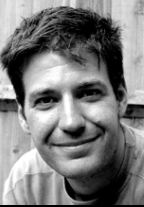
Gustav Kuhn
Gustav Kuhn of University of London collaborated with illusionist Alym Amlani and Ronald Rensink of University of British Columbia to classify cognitive, perceptual, and physical contributors in Towards a Science of Magic:
-

Ronald Rensink
Physical misdirection by a magician’s gaze or gesture,
- Psychological misdirection with a motion or prolonged suspense,
- Optical illusions that distort the size of an object,
- Cognitive illusions to prolong an image after the object has been removed,
- Physical force and mental force influence “freely chosen” cards.
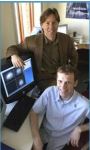
Rene Marois-J Jay Todd
Perceptual and cognitive illusions can cause people not to see things that are present.
This effect can lead to overlooking interpersonal cues, life opportunities.
and more dangerously, inattention in traffic accidents, and victimization.
Mindful awareness helps people pay attention to the present experience and to opportunities and to mitigate potential perceptual misinformation.
-*How to you maintain focus to reduce “inattentional blindness”?
Related Posts
©Kathryn Welds
 Kathryn Welds, PhD | Curated Research + Commentary
This blindness worries me most when I’m looking at my iPhone. I’m focused on that little screen and not too aware of what’s going on around me. Your post is a good reminder to “zoom in” and “zoom out” more often in all areas of life.
Thanks so much for stopping by, Jennifer. You never know what could happen when focusing on your iPhone! It’s not easy to pull focus away from the allure of electronic screens, eye contact or an object moving in an arc, but it may be possible to increase mindful attention to the larger context.
*Kathryn Welds* welds@post.harvard.edu 650 740 0763 *LinkedIn | **Blog **|**Google+ ** |Twitter@kathrynwelds **| Facebook notes *
On Sun, Feb 17, 2013 at 8:39 PM, Kathryn Welds | Curated Research and
Pingback: Does Workplace Co-Location Increase Collaboration and Innovation? | Kathryn Welds | Curated Research and Commentary
Pingback: Neuronal Recordings Suggest “Free Will” Might be “Free Won’t” | Kathryn Welds | Curated Research and Commentary
Pingback: Managing Workplace Interruptions | Kathryn Welds | Curated Research and Commentary
Pingback: Mindfulness Impedes Implicit Learning, but May Enhance Explicit Learning | Kathryn Welds | Curated Research and Commentary