Monthly Archives: August 2015

Three Approaches to Identifying a Career Path

-*What’s the best way to find your professional path?

Mark Savickas

Mark Savickas

Career interventions have evolved over the past 70 years from individual differences assessment to occupational development to current emphasis on life planning.
Vocational guidance was supplanted by “career education,” focused on fulfilling developmental tasks and adapting to occupational requirements.
More recently, “career counseling” built on the preceding approaches by considering each individual as the designer and author of a career path.

Mark Savickas of Northeast Ohio Medical University traced this incremental change, and noted that “each time that society has changed the prevalent form of employment, psychology has changed its methods of career intervention to help people deal with new identity issues and lifestyle problems.”

John Holland

John Holland

Early attempts to help people find their occupational paths focused on matching six personality prototypes incorporating six related value types with six associated vocational categories, thanks to John Holland of Johns Hopkins, who developed the Self Directed Search assessment.

Holland's Six Career Themes

Holland’s Six Career Themes

Individual were seen as “actors” who needed to match individual differences with occupations that best fit these characteristics.

John Crites

John Crites

Next came an emphasis on careers as a developmental challenge that requires adaptation and training to develop new attitudes, beliefs, and competencies that foster their vocational adaptation.

Donald Super

Donald Super

People were seen as “agents” striving to develop into an occupational role, with insight from assessments including the Career Maturity Inventory by University of Maryland’s John Crites and Career Development, Assessment, and Counseling (C-DAC) conceived by Donald Super of University of Connecticut.

Careers are currently seen as a “narrative construction” or a “life design project” drawing on emotion valence, autobiographical career stories and life themes that suggest professional construction and reconstruction.

Individuals are seen as “authors” of their career narrative in context of a life story.
Savickas developed this constructivist perspective to serve “workers in societies that have de-standardized the life course and de-jobbed employment” after applying Holland’s individual differences approach and developmental views of Crites and Super.

Three Career Development Approaches

Three Career Development Approaches


Paul Hartung

Paul Hartung

To enable this career narrative, Savickas and Northeast Ohio Medical University colleague Paul Hartung developed a structured career interview.
This “Autobiographical Workbook” asks people to share stories about self, identity, and career, including inquiries about role models, favorite magazines, how they made important decisions, and what their parents wanted for their lives to uncover prevailing interests, values, concerns, and precipitants to action.Career Construction Interview

Ludwig Wittgenstein

Ludwig Wittgenstein

This approach helps people “envision how to use work to actively master what they passively suffer” and “fit work into life rather than life into work” by collecting stories about “…how a person constructed a career, then deconstructs and reconstructs these stories into an identity narrative, and finally co-constructs intentions that lead to action in the real world.
Narrative Construction and Life Design perspectives echo Ludwig Wittgenstein’s observation that problems are solved not by giving information but by rearranging what we already know.

In this collection and rearrangement process, Savickas sees the individual as a career architect whereas a career consultant is like a carpenter who suggests recombinations in light of current needs and future goals while respecting interests, values, and strengths.

This process also enables new perspectives on more productive approaches to past challenges when encountered in future contexts, working around obstacles, and drawing on past examples of competence and self-efficacy.

  • Which perspective on career development most guided your selection of work paths?

Related Posts:

©Kathryn Welds

Higher “Purpose in Life” Reduces Adverse Health Outcomes

Lei Yu

Lei Yu

Purpose in Life – the sense that life has meaning and goal direction – is associated with reduced risks of adverse health outcomes including stroke, according to Rush University Medical Center’s Lei Yu, Patricia A. Boyle, Robert S. Wilson, Julie A. Schneider, and David A. Bennett collaborating with Steven R. Levine of SUNY Downstate Medical Center.

Patricia A. Boyle

Patricia A. Boyle

Older people with a greater sense of purpose are less likely to develop other undesirable health conditions including:

Robert S. Wilson

Robert S. Wilson

Yu’s team analyzed autopsy results on 453 older adults enrolled in the Rush Memory and Aging Project.

All participants underwent annual physical and psychological evaluations, including a standard assessment of Purpose in Life, and were followed until they died, at an average age of 90.
None of the participants had dementia when they entered the study, but 114 people had suffered a stroke.

Eric S. Kim

Eric S. Kim

Yu’s team extended earlier work by University of Michigan’s Eric S. Kim, Jennifer K. Sun, Nansook Park, and Christopher Peterson, demonstrating that Purpose in Life is associated with a reduced risk of clinical strokes in a group of participants aged 53 to 105 years.

This difference suggests that purpose in life is protective for silent infarcts, as well as clinical stroke.

Jennifer Sun

Jennifer Sun

At autopsy, Yu’s group observed macroscopic infarctions, areas of stroke damage visible to the naked eye, among 154 participants and microinfarcts, areas of damage visible with a microscope, among another 128.

Purpose in Life was judged annually using a modified 10-item measure derived from University of Wisconsin’s Carol D. Ryff and Corey Lee Keyes’ scales of Psychological Well-being.

Carol D. Ryff

Carol D. Ryff

Higher scores indicating a greater purpose, and every one-point increase, the likelihood of having one or more macroscopic infarctions decreased by about 50 percent.
In contrast, there was no link between purpose and microinfarcts.

These results persisted after adjusting for potentially confounding factors including vascular risk factors:

  • Body mass index,
  • History of smoking,
  • Diabetes mellitus,
  • Blood pressures.

    Corey Lee Keyes

    Corey Lee Keyes

    Other controlled factors include:

  • Optimism,
  • Childhood adverse experiences,
  • Loneliness,
  • Negative affect,
  • Physical activity,
  • Clinical stroke.Purpose in Life can predict later health status and outcomes, and is amenable to improvement by social participation with friends, community services, physical activity and health behavior modification.
    These positive lifestyle changes contribute to improved physical and mental health and enhanced quality of life throughout the lifespan.

-*How do you define you Purpose in Life?
-*What factors contribute to Purpose in your Life?
-*How do you intentionally increase your sense of Purpose in Life?

Follow-share-like http://www.kathrynwelds.com and @kathrynwelds

Related Posts:

Twitter:  @kathrynwelds
Google+LinkedIn Groups Psychology in Human Resources (Organisational Psychology)
Facebook
Blog: – Kathryn Welds | Curated Research and Commentary

©Kathryn Welds


Reinventing Performance Management to Reduce Bias: Strengths, Future Focus, Frequent Feedback

Steven Scullen

Steven Scullen

Most performance management systems set goals at the beginning of the year and determine variable compensation by rating accomplishment of those objectives.

These evaluations typically are considered in lengthy “consensus meetings” in which managers discuss the performance of hundreds of people in relation to their peers – sometimes called “stack ranking,” or more cynically “rank-and-yank.”

Michael Mount

Michael Mount

These year-end ratings don’t provide “in-the-moment” and “real-time” feedback about actual performance as it happens, so may be less useful in improving performance.

Assessing skills produces inconsistent data based on raters’ own skills in that competency and the value they attach to each performance objective, leading to unconscious bias.

Maynard Goff

Maynard Goff

This risk to performance rating validity was demonstrated by Drake University’s Steven Scullen, Michael Mount of University of Iowa, and Korn Ferry’s Maynard Goff, who considered 360 degree performance evaluations by two bosses, two peers, and two subordinates for nearly 4500 managers.

They found that three times as much rating variance was explained by individual raters’ idiosyncratic evaluation choices, rather than actual performance.

Manual London

Manual London

Sources of bias include halo error, leniency error, and organizational perspective based on current role, suggested by SUNY’s Manuel London and James Smither of LaSalle University, and validated by Scullen’s team.

These findings led the researchers to conclude “Most of what is being measured by the ratings is the unique rating tendencies of the rater. Thus ratings reveal more about the rater than they do about the ratee,” replicating similar findings by University of Georgia’s Charles Lance, Julie LaPointe and Amy Stewart.

Ashley Goodall

Ashley Goodall

To mitigate these biases in Deloitte’s performance management system, Ashley Goodall of Deloitte Services LP engaged Marcus Buckingham, formerly of The Gallup Organization, to analyze existing practices and develop an empirically-validated approach.

Goodall and Buckingham calculated the total annual hours required to conduct performance ratings using the existing process and found that managers invested 2 million hours a year.
This finding confirmed that one goal in revising the process was to increase speed and efficiency.

Marcus Buckingham

Marcus Buckingham

In addition, Goodall and Buckingham sought to increase the meaningfulness of performance management by focusing on discussions about future performance and careers rather than on the appraisal process.

They concluded a performance management system should be characterized by:

  • Reliable performance data, controlling for idiosyncratic rater effects,
  • Speed to administer,
  • Ability to recognize performance,
  • Personalization: “One-size-fits-one”,
  • Considering actions to take in response to data,
  • Continuous learning and improvement.

Deloitte logoDeloitte conducted a separate controlled study of 60 high-performing teams including almost 1300 employees representing all parts of the organization compared with an equal number of employees from an equivalent sample to determine questionnaire items that differentiate high- and lower-performing teams.

They found that performance and related compensation allocations could be more accurately based on managers’ statements about their intended future actions toward each employee rather than asking about team members’ skills.

Several items accounted for the vast majority of response variation between top performing groups and others, particularly At work, I have the opportunity to do what I do best every day.”

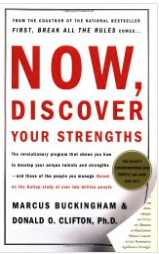
Now Discover Your StrengthsBusiness units whose employees said they “strongly agree” with this item were substantially more likely to be more productive, earn high customer satisfaction scores, and experience low employee turnover.

Other powerful predictors of performance were:

  • I have the chance to use my strengths every day,
  • My coworkers are committed to doing quality work,
  • The mission of our company inspires me.

Deloitte’s revised performance management system asks team leaders to rate four items on a 5-point scale from “strongly agree” to “strongly disagree” or yes-no at the end of every project or once a quarter:

  • Given what I know of this person’s performance, and if it were my money, I would award this person the highest possible compensation increase and bonus [measures overall performance and unique value],
  • Given what I know of this person’s performance, I would always want him or her on my team [measures ability to work well with others],
  • This person is at risk for low performance [identifies problems that might harm the customer or the team],
  • This person is ready for promotion today [measures potential].

These responses provide a performance snapshot that informs but doesn’t completely determine compensation.
Other factors include project assignment difficulty and contributions other than formal projects, evaluated by a leader who knows each individual personally or by a group considering data across several groups.

In addition, every team leader prioritizes once-weekly “check-ins” with each employee to ensure that priorities are clear and progress toward them is consistent.

Strengthfinder 2.0

Strengthfinder 2.0

Goodall and Buckingham opined that “radically frequent check-ins are a team leader’s killer app to recognize, see, and fuel performance,” in addition to using a self-assessment tool that identifies each team members’ strengths and enables sharing with teammates, team leader, and the organization.

These three “interlocking rituals” of the weekly check-in, quarterly or project-end performance snapshot, and annual compensation decision enable a shift from retrospective view of performance to more “real-time” coaching to support performance planning and enhancement.

Deloitte’s approach seeks a “big data“ view of each person’s organizational performance and contribution rather than the “simplicity” of a small data view summarized in a single stack-rank number.

-*How do you develop a “Big Data” view of people’s performance?

-*How do you enable continuous, “in-the-moment” performance feedback instead of once-a-year retrospective view?

Follow-share-like http://www.kathrynwelds.com and @kathrynwelds

Related Posts:

Twitter:  @kathrynwelds
Google+
LinkedIn Groups Psychology in Human Resources (Organisational Psychology)
Facebook
Blog: – Kathryn Welds | Curated Research and Commentary

©Kathryn Welds