

Oliver James
Some business leaders exhibit one or more of three difficult behavioral styles: Psychopathy, Narcissism, Machiavellianism, according to British psychologist and journalist, Oliver James.
He called these people “triadic managers.”
 Fictional comedies and dramas satirize the stress and distress wrought by such managers.
Each element of the toxic triumvirate has been empirically investigated by clinical researchers and social scientists.
The most extensively researched of the three personality trends is psychopathy, given its relevance to law enforcement. 
Psychopaths typically display:
- Callous manipulation, lying, and exploitation,
- Grandiosity, entitlement, and shallowness,
- Impulsiveness and thrill-seeking,
- Little interpersonal empathy and remorse.

Ronald Schouten
More than 3 million Americans and one in 10 on Wall Street are psychopathic, estimated Harvard’s Ronald Schouten, a former US federal prosecutor, who collaborated with criminal defense attorney James Silver.

James Silver
They noted that nearly 15 percent of the general population demonstrate “almost psychopathic” behavior, and many are employed as senior executives.

Robert Hare
Senior managers are four times more likely than the general population to display psychopathic tendencies, found University of British Columbia’s Robert Hare and industrial-organizational psychologist Paul Babiak.
They differentiated three types of workplace psychopaths:
- Manipulator,
- Bully,
- Puppetmaster.

Paul Babiak


Clive Boddy
Narcissists in global business and financial contexts share characteristics of psychopaths, noted Middlesex University’s Clive Boddy:
- Grandiose sense of self-importance, superiority, entitlement,
- Vanity and desire for attention,
- Exploitativeness,
- Lack of empathy.

Katarina Fritzon
About one percent of the general population and 16 percent of clinical groups meet the criteria for narcissism.
These people can excel in professions where they control others and elicit adulation.
Many well-known individuals in politics, finance, entertainment, and medicine meet these criteria.
Likewise, senior business managers were more likely than criminal psychiatric patients to have narcissistic, histrionic, or obsessive-compulsive personality disorders, reported Belinda Board and Katarina Fritzon, then of the University of Surrey.

Sam Vaknin
One “successful narcissist,” Sam Vaknin, recounted his career before and after his felony incarceration for securities fraud.
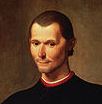
Niccolo di Bernardo dei Machiavelli
The third element of “triadic managers”, Machiavellianism, is characterized by:
- Detachment and coldness,
- Manipulation,
- Calculating maneuvers to advance self-interest.
Centuries after Machiavelli’s classic book, Columbia University’s Richard Christie and Florence Geis studied the Machiavellian personality and developed a personality assessment to identify these characteristics.
Given the likelihood of interacting with psychopaths, narcissists, and Machiavellian personalities in business, James conducted 50 interviews with “triadic managers” to uncover ways to deal with them.
He suggested:
- Closely observing others to more accurately and rapidly recognise psychopathic, narcissistic, and Machiavellian workplace behaviors,
- Managing others’ “perception of one’s performance,”
- Delivering measurable results,
- Selectively applying psychopathic, narcissistic, and Machiavellian workplace behaviors toward offenders while appearing sincere,
- Networking to maintain relationships and allies to support moving to a new role.
-*How do you detect and interact with colleagues who manifest characteristics of psychopathy, narcissism, and Machiavellianism?
RELATED POST
©Kathryn Welds
 Kathryn Welds, PhD | Curated Research + Commentary