Tag Archives: Francis Flynn

Ask for What You Want: You Have More Influence Than You Think

Most people underestimate the likelihood that requests for help will be granted, particularly after previous refusals, according to Stanford’s Daniel Newark and Francis Flynn with Vanessa Lake Bohns, then of University of Waterloo.
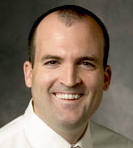
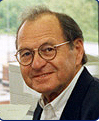
Francis Flynn

In fact, most people agree with a subsequent request, possibly to reduce discomfort of rejecting others’ overtures for help.

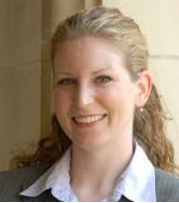
Vanessa Bohns

Vanessa Bohns

Participants estimated they would need to ask 10 people to get three people to lend their mobile phones for brief calls.
Results showed that volunteers had to ask just six people for help before they received assistance.
The team concluded that most people have a pessimistic bias about the likelihood that others will provide assistance.

In another study, volunteers requested two favours from people they did not know: 

1. Complete a brief survey
2. Take a letter to a nearby post office.

Help seekers predicted that people who refused the first request to complete the survey would be less likely to take the letter to the post office.

More people agreed to the second request than to the first request.
Requesters tended to “anchor” on the first refusal, and hesitated to make a second request.
This finding suggests that requesters have a greater chance of agreement after initial refusal, so it’s advisable to persist.

The researchers concluded that help-seekers and potential helpers analyzed requests according to different criteria. Help-seekers typically considered the magnitude of the “ask,” whereas potential helpers considered the inconvenience costs of saying “yes” compared with the interpersonal and self-image costs of saying “no.”

Requesters benefit from expanding the pool of those they ask, not just those who consistently agree.
Potential helpers to can assist by reducing help-seekers’ subjective discomfort even if they decline the request.

Mahdi Roghanizad

Mahdi Roghanizad

Bohns analysed interpersonal discomfort when people decide whether to commit an unethical act in research with University of Waterloo colleagues Mahdi Roghanizad and Amy Xu.

People who observed the unethical act but didn’t participate in it underestimated their influence over those who committed the actions.
Interpersonal discomfort caused participants to commit the asocial act to avoid conflict, they concluded.

Volunteers asked people they didn’t know to tell a small untruth or to commit a small act of vandalism after predicting the ease of enlisting others in these acts.
In related investigations, online participants responded to hypothetical vignettes about buying alcohol for children, and taking office supplies home for personal use.

These results suggest that most people underestimate their influence, particularly in situations that can evoke interpersonal discomfort, including in the workplace.

This pessimistic bias can limit employees’ willingness to:

  • Lead business transformation initiatives,
  • Recognize one’s own contributions to others’ performance issues,
  • Voice concerns about unethical workplace practices.

This underestimation bias may be reduced by:

  • Eliciting comparative judgments,
  • Objectifying an influence target,
  • Comparing actual degree of personal influence compared to perceived influence,
  • Considering the means of influence, including incentives, suggestions, reinforcements, punishments,
  • Invoking organizational culture. 

These findings suggest the benefit of asking for what you want, even after rejection and that you have more influence over others than you expect.

-*How do you assess your likelihood of getting what you want when you ask?

-*How likely are others to influence you by evoking social discomfort to increase your compliance?

RELATED POSTS:

©Kathryn Welds

Work with Experts – But Don’t Compete – to Improve Performance

Francis Flynn

Francis Flynn

People can improve performance on tasks ranging across:

Emily Amanatullah

Emily Amanatullah

when performing individually but alongside an outstanding performer, according to Stanford’s Francis Flynn and University of Texas, Austin’s Emily Amanatullah.

They attributed performance enhancement to increased mental focus and physical effort, motivated by:

Robert Zajonc

Robert Zajonc

  • Social facilitation due to the expert role model’s mere presence, described more than 50 years ago by Robert Zajonc, then of University of Michigan
  • Social comparison” with “skillful coactors,” demonstrated by University of North Carolina’s John Seta.

    John Seta

    John Seta

However, performance declined when people competed directly with a strong performer, Flynn and Amanatullah reported.
They concluded that “high status coactors” enable people to “psych up” performance when not competing, but become “psyched out” when challenging the expert, based on their analysis of Masters golf tournament statistics over five years.

Ray Reagans

Ray Reagans

High status co-actors can achieve their influential position through demonstrated skill or their greater awareness of status dynamics due to better ability to “self-monitor,” found Flynn and Amanatullah with Ray E. Reagans of Carnegie Mellon and Daniel R. Ames of Columbia University.

Daniel R Ames

Daniel R Ames

People with greater self-monitoring ability tend to more effective in managing their “exchange relationships,” and generally establish a reputation as a generous “exchange partner.”

As a result, they are typically more likely than low self-monitors to be sought out for help and to refrain from asking others for help.

Co-action,” organizational status differences and interpersonal “exchange” all occur in organizations when employees work independently but in near proximity with others, and when people collaborate toward shared goals.

These finding suggest that working near expert colleagues can enable improve performance among co-workers, but competition for salary increases, promotions, access to special training, and other perks can undermine individual achievement by provoking anxiety.

Flynn and Amanatullah recommended that organizations and employees can showcase desired skillful performance by role models, while enabling employees to earn rewards and incentives through individual efforts rather than competition.
This recommendation may be impossible to implement in hierarchical organizations that identify “high potential” employees and differentiate performance through “stack ranking.”

-*How do you avoid the “psych out” effect of competing with highly skilled performers?

Follow-share-like http://www.kathrynwelds.com and @kathrynwelds

RELATED POSTS:

Twitter @kathrynwelds
BlogKathryn Welds | Curated Research and Commentary
Google+
LinkedIn Open Group Psychology in Human Resources (Organisational Psychology)
Facebook Notes

©Kathryn Welds