
Øyvind Martinsen
Home | About Kathryn Welds, Ph.D., MCC, ABPP | Archives
June 5, 2013 9:07 pm
Øyvind Martinsen
BI Norwegian Business School’s Øyvind Martinsen identified components of creative personalities as key attributes for innovative problem solving in business organizations.
Martinsen’s study of 481 people included two groups of students in creative fields: advertising and performing artists, and a control group of lecturers and managers.
He found that creative individuals differed from the control groups in several dimensions:
Martinsen says that a less creative individuals can increase this capacity when their work environments encourage rule-bending and free thought, so organizations can modify policies and practices to convey acceptance of exploration.
Employees are often urged to take chances by innovating solutions, but sometimes these 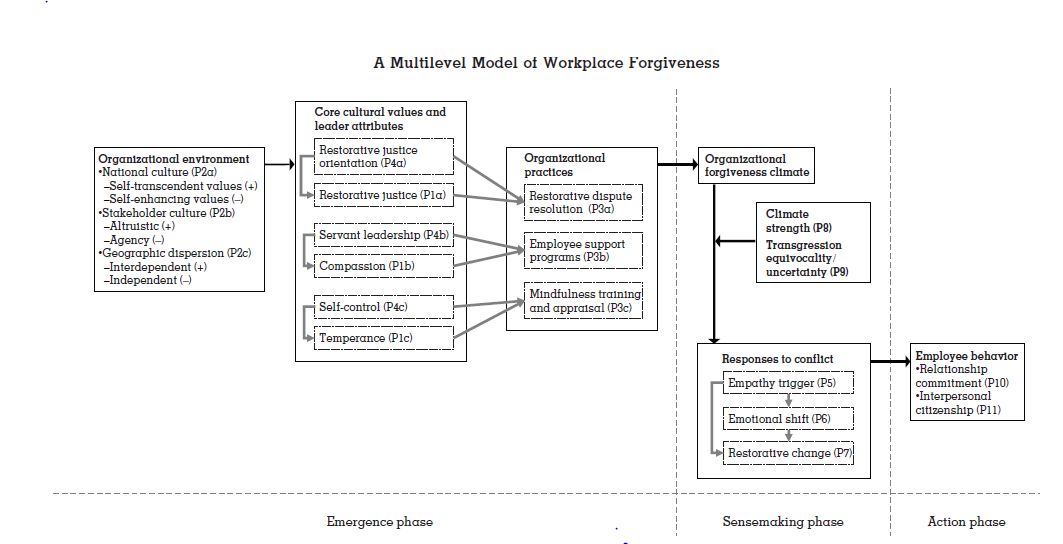 incubation efforts may not result in a commercial success — and organizations may not “forgive” the investment of time and money in speculative efforts.
University of Washington’s Ryan Fehr with Michele Gelfand of University of Maryland suggest that organizations should establish the conditions for innovation and for accepting that experimentation may provide “lessons learned” even when efforts cannot be brought to market.

Ryan Fehr
Their research investigated “forgiving organizations” that expand the individual practice of workplace compassion and mindfulness to an institutional level.

Michele Gelfand
Fehr and Gelfand propose a “sensemaking” organizational model based on restorative justice, temperance, and compassion to cultivate the climate of fearless innovation and confident exploration in high-support organizations, which benefit from process and product breakthroughs and related financial rewards.

Matthew May
Matthew May explored a multi-faced exemplar of innovation, Shibumi, imperfectly defined as “effortless effectiveness”, simply-expressed complexity, flawed perfection.

Baldassarre Castiglione
Shibumi shares some qualities with Baldassare Castiglione’s idea of “sprezzatura,” or making “whatever one does or says seem effortless, and almost unpremeditate,” Shibumi, says May, is typically achieved through an innovation-change management sequence of:

Trevanian
Film scholar Rodney William Whitaker, who wrote under the pseudonym Trevanian, opined that “Shibumi has to do with great refinement underlying commonplace appearances,” and architect Sarah Susanka observed that “…shibumi evolves out of a process of complexity, though none of this complexity shows in the result…to meet a particular design challenge.”

Sarah Susanka
May illustrated examples of familiar Japanese management principles including Hoshin (goal alignment) and Kaizen (continuous improvement), with less familiar principles:
 Innovation and creative problem-solving in any field can benefit from attention to Shibumi’s seven principles:

Antoine de Saint-Exupéry
Antoine de Saint Exupery captured this principle in his view that “Perfection is achieved not when there is nothing left to add, but when there is nothing left to take away.”
In another book, May offered 4 Ss of “elegant”, innovative, and austere solutions:


-*How do you establish the individual and organizational conditions for innovations?
-*How do organizations become “forgiving”?
RELATED POSTS:
Twitter: @kathrynwelds
Blog – Kathryn Welds |Curated Research and Commentary
Google+:
LinkedIn Open Group Psychology in Human Resources (Organisational Psychology)
Facebook Notes:
©Kathryn Welds
Posted by kathrynwelds
Categories: Change Management, Innovation, Resilience
Tags: Antoine de Saint Exupery, Øyvind Martinsen, Baldassare Castiglione, coping, Creativity, Datsuzoku, Fasching, forgiving organization, Fukinsei, Genchi genbutsu, Gestalt, Hansei, Hoshin, Innovation, Kaizen, Kanso, Kata, Koko, Matthew May, Michele Gelfand, mindfulness meditation, Resilience, restorative justice, Rodney William Whitaker, Ryan Fehr, Sarah Susanka, Seijaku, sensemaking, Shibumi, Shizen, Trevanian, workplace compassion, Yugen
Mobile Site | Full Site
Get a free blog at WordPress.com Theme: WordPress Mobile Edition by Alex King.
These may be attributes of very independent creative people. And, “creativity” may be differently defined. However, these are in high contrast to the MIT and Carnegie Mellon findings that high Collective Intelligence for complex problem solving comes correlates to higher numbers of women who take turns and have social sensitivity–to which I would add from Gender Competence, other relational competencies.
By Bonita Banducci on June 7, 2013 at 4:18 pm
Thank you, Bonita, for adding this important dimension and caveat to findings on personality characteristics associated with commercializable innovation and the allied notion of shibumi.
You are correct that the operational definitions of “creativity” and “innovation” may differ as well as the measures of success in relevant problem-solving. The findings you cite support the beneficial impact of women in groups seeking to maximize business profitability, such as Boards of Directory.
However, they contrast with other work that suggests that women’s contributions to group problem-solving are typically undervalued by both women and men, and that women often relinquish credit for their contributions and expertise in group problem-solving — unless most of the group members are women.
Please feel free to share these important references here! Thank you again, Bonita.
By kathrynwelds on June 7, 2013 at 10:01 pm
[…] whether this biological synchronization can induce a shared mental perspective that strengthens collaboration. This may have been the theory behind IBM’s company songs, and shared activities like physical […]
By Decrease Stress, Increase Collaboration through Group Singing? | Kathryn Welds | Curated Research and Commentary on September 1, 2013 at 6:33 am
[…] Innovator’s Personality Characteristics and Shibumi Principles Drive Innovation […]
By Working with Ambiguity at Work | Kathryn Welds | Curated Research and Commentary on September 22, 2013 at 7:36 am